







Read news
Add bookmark
POPULAR
How Much Do Experts’ Ideas Matter for the European Union’s Political Agenda?Oil? Gas? Fertilizer? Just Life.Kalypso Nicolaidis: I Want a Woodstock for European PoliticsHow the “virtues” of neoliberal globalization paved the way to its demiseZionists, lawfare and the malady called revengeEuropean Unity in the Interests of Security. Split along the North-South LineWhy capitalism is fundamentally undemocraticRegular Ones Made IrregularEurope: doctrinal shift towards violence. Transition to a war economy instead of a “liberal democracy”NATO’s frontline countries jockey for U.S. troops after Trump’s Germany withdrawal
Poland, Lithuania, Latvia, Estonia and Romania are supporting the war against Iran in the hope that Trump will decide to station his troops, to be withdrawn from Germany, in their territory.
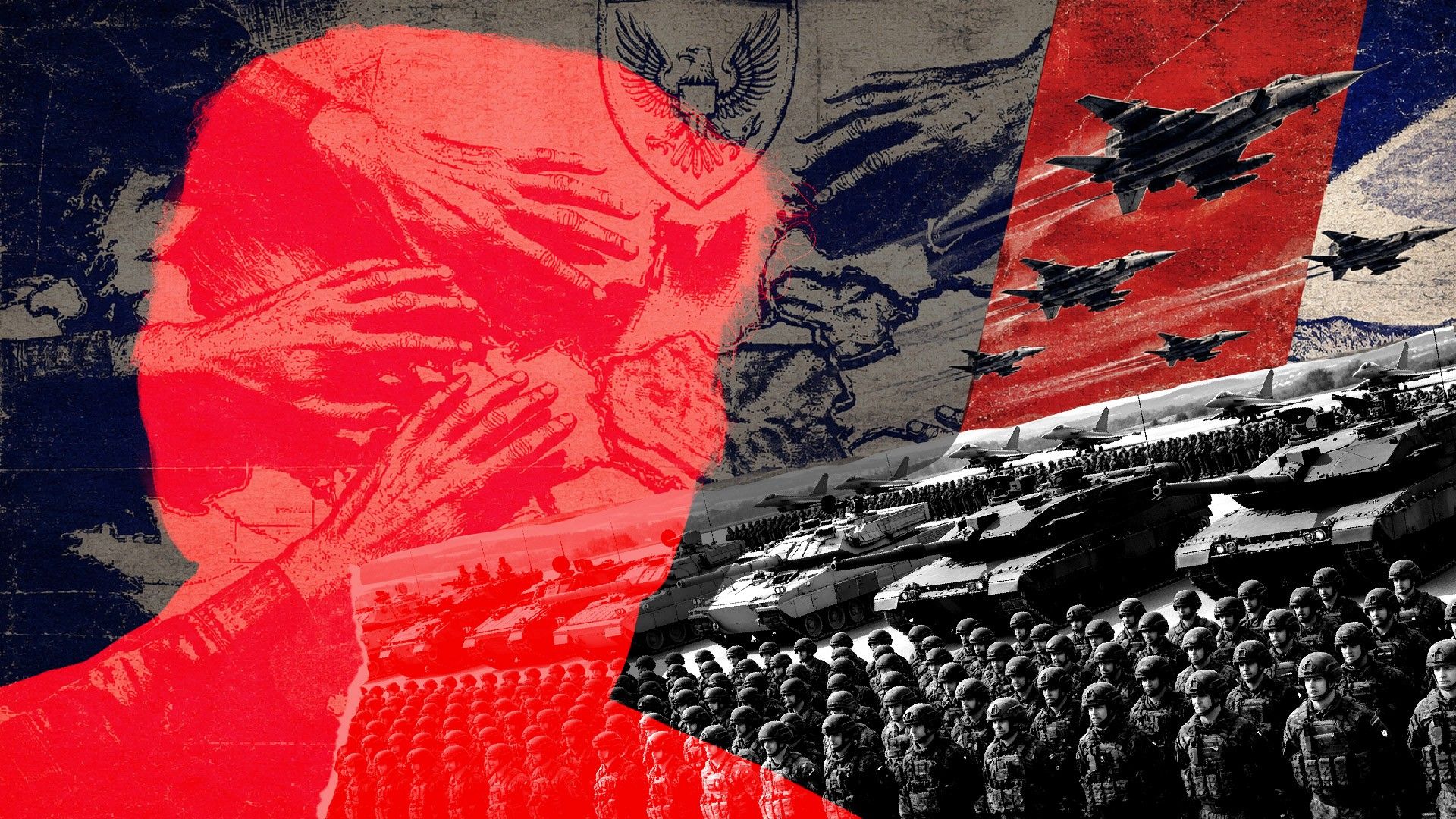
This, and other controversial issues around the U.S. troops withdrawal are discussed by POLITICO observer Victor Jack.
Poland, Estonia, Lithuania, Latvia and Romania have all expressed interest in hosting more U.S. troops after U.S. President Donald Trump said he would pull 5,000 or more soldiers from Germany.
‘We need more troops,’ Romanian Defense Minister Radu Miruță said. Polish President Karol Nawrocki and his Lithuanian counterpart Gitanas Nausėda said they would be ready to host more U.S. troops on their soil. Latvian Foreign Minister Baiba Braže echoed that sentiment. An Estonian defense ministry spokesperson stated that the country ‘highly values U.S. contribution and supports an expanded U.S. footprint to ensure robust deterrence and defense throughout the Baltics.’.
Eastern NATO countries, many of which border on Russia, have seen the USA and American troops on their territory as their primary security guarantor.
This is one reason why they have been muted in their criticism of Trump and supportive of the war in Iran. NATO countries on Russia’s border have jumped at the possibility to get more U.S. troops, leveraging the fact they remain in Trump’s good graces due to their high defense spending and support for the U.S. war effort – both in public statements and by granting American troops largely unfettered access to their military bases.
After he saw this trend, Trump stated he might move U.S. troops to Poland, ‘I have a great relationship with the president,’ he said, ‘so that's possible.’.
However, this is quite an artificial model that overlooks many realities.
The Polish authorities’ foreign policy orientations differ. President Nawrocki is oriented towards Trump, and Prime Minister Tusk, towards European allies. So Donald Tusk, as the political opponent of President Nawrocki, said that Poland should not ‘poach’ troops from allies. Warsaw would take any opportunity to increase the U.S. presence on its territory, but he would not allow the country to be used to break European unity.
In Germany, such redeployment of U.S. troops, promoted by eastern flank allies, may be opposed for economic reasons. The local authorities of German towns hosting U.S. troops would prefer the soldiers to stay. Economic incentives also can be seen behind Poland’s, Romania’s and the Baltic countries’ desire to take in new U.S. troops.
Besides, such rotation may be hard to achieve in practice. Not all those
countries are practically able to host an extra 5,000 troops. Poland and Romania have the necessary spare capacity to host more soldiers, with minor infrastructure upgrades, but in the Baltics, space is more constrained and some additional planning and construction would be needed.
Source: https://www.defensepriorities.org/in-the-media/natos-frontline-countries-jockey-for-us-troops-after-trumps-germany-withdrawal/