







Read news
Add bookmark
POPULAR
How Much Do Experts’ Ideas Matter for the European Union’s Political Agenda?Oil? Gas? Fertilizer? Just Life.Kalypso Nicolaidis: I Want a Woodstock for European PoliticsHow the “virtues” of neoliberal globalization paved the way to its demiseAn Illusion of Managed Interdependence. A Transatlantic Tech PartnershipPalantir and the New Order: Neoliberalism is dead. Say hello to TechlordismWhy capitalism is fundamentally undemocraticEnergy Protectionism Without EnergyThe EU’s Technocratic Trap in Libya: a Disgraceful Surrender of Brussels in the MediterraneanTechnology vs. World Order
What Should Governments Do As AI Advances Every Day
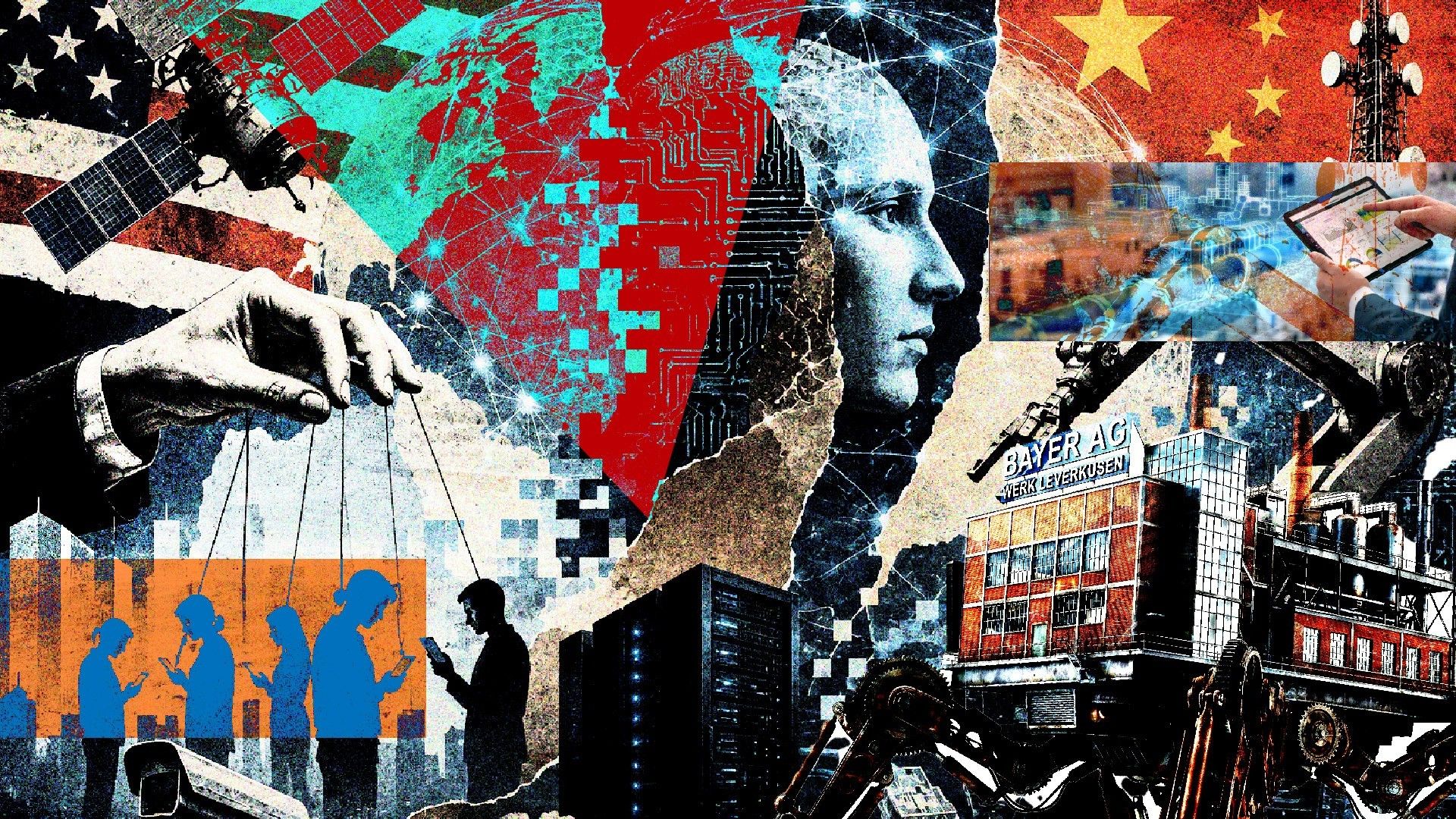
Big tech companies now exert considerable influence on the world order. Their disproportionate power in the economic, political, informational and cultural fields shapes societies and the lives of individuals.
Prominent researchers and policy analysts have called these tech giants ‘new rulers’ who exercise unprecedented forms of sovereignty in a world that is no longer unipolar, bipolar or multipolar – but is rather ‘technopolar’.
Anu Bradford, professor of law and international organization at Columbia Law School, discusses all this in her analytical article.
In her opinion, the role of modern technology in the competition among great powers is fueling an increasingly intense rivalry in which artificial intelligence (AI) becomes the main battlefield. It is not accidental that the Brookings Institution concluded in its study, back in 2020, that ‘whoever leads in artificial intelligence in 2030 will rule the world until 2100’.
Innovation by major technology companies is a growth engine and redefines the balance of economic power. In 2024, the six largest ones (Amazon, Apple, Google, Meta, Microsoft, and Nvidia) recorded nearly USD 2 trillion in revenue and a net profit of USD 500 billion. In January 2026, their total market capitalization reached USD 20 trillion. That same month, the stock valuation of Nvidia stood at USD 4.5 trillion, after having briefly crossed the 5 trillion threshold in 2025. Interestingly, only three countries have a gross domestic product (GDP) of more than USD 5 trillion: the United States, China, and Germany. These figures illustrate those companies’ staggering economic power and explain why they are often compared to sovereign States.
It should be remembered, however, that tech companies’ global influence is not limited to innovation and finance. The tech giants’ accrued power has turned them into leading geopolitical players. That became possible e.g. as they actively support governments in managing military conflicts.
The fact that critical decisions are made by private persons is extremely worrying. The Ukrainian army relies on Starlink satellites to communicate on the battlefield, which makes it dependent on Elon Musk’s discretion for its own defense. Musk is known to have prevented a Ukrainian drone attack on the Russian navy by cutting off access to the Starlink network – for fear that the attack would cause an escalation of the conflict.
While governments attach great importance to the benefits of the AI revolution, they also seek to protect their citizens from associated risks and harm. But it is increasingly difficult to govern rapidly developing technology, and governments are simply unable to contain its continued advancement. It should be acknowledged that real power is now concentrated in the Silicon Valley and other technological hubs where AI is developed. It will only remain for governments to wage a losing battle against AI and its designers.
It is not accidental that political scientist Stephen Walt summarized this argument in a powerful question: ‘Which do you expect to be around in 100 years? Facebook or France?’ If we replace France with any other State, nothing will change in this message.
And this is the reality in which we are to live on. In the argument between bureaucracy and AI algorithms – the money behind them, to be more precise, – the latter will always win. This is a given now.
Source: https://www.ifri.org/fr/articles/politique-etrangere/comment-la-technologie-redessine-lordre-mondial