







Read news
Add bookmark
POPULAR
How Much Do Experts’ Ideas Matter for the European Union’s Political Agenda?Oil? Gas? Fertilizer? Just Life.Kalypso Nicolaidis: I Want a Woodstock for European PoliticsHow the “virtues” of neoliberal globalization paved the way to its demiseThe Gulf War and Europe’s Helpless Energy PolicyEurope Losing Energy Security Battle to ChinaRe-industrialization of France: sounding promises, multi-billion euro programs and a miserable failureEnergy Protectionism Without EnergyWhy capitalism is fundamentally undemocraticEurope Keeps Making the Same Mistake, This Time with the Power Grids
Arthur Daemers from the French Institute of International Relations (IFRI) in his memo A Make-or-Break for Accelerating Electrification, in a restrained but clear manner, describes the size of the problem that the European Union is going to face if it tries to dramatically speed up the electrification of its economy. Even with all the academic reserve of the description, it becomes clear that Europe is once again following the well-known and tested scenario: to set extremely ambitious goals without creating any necessary industrial, infrastructural, and regulatory conditions to meet them.
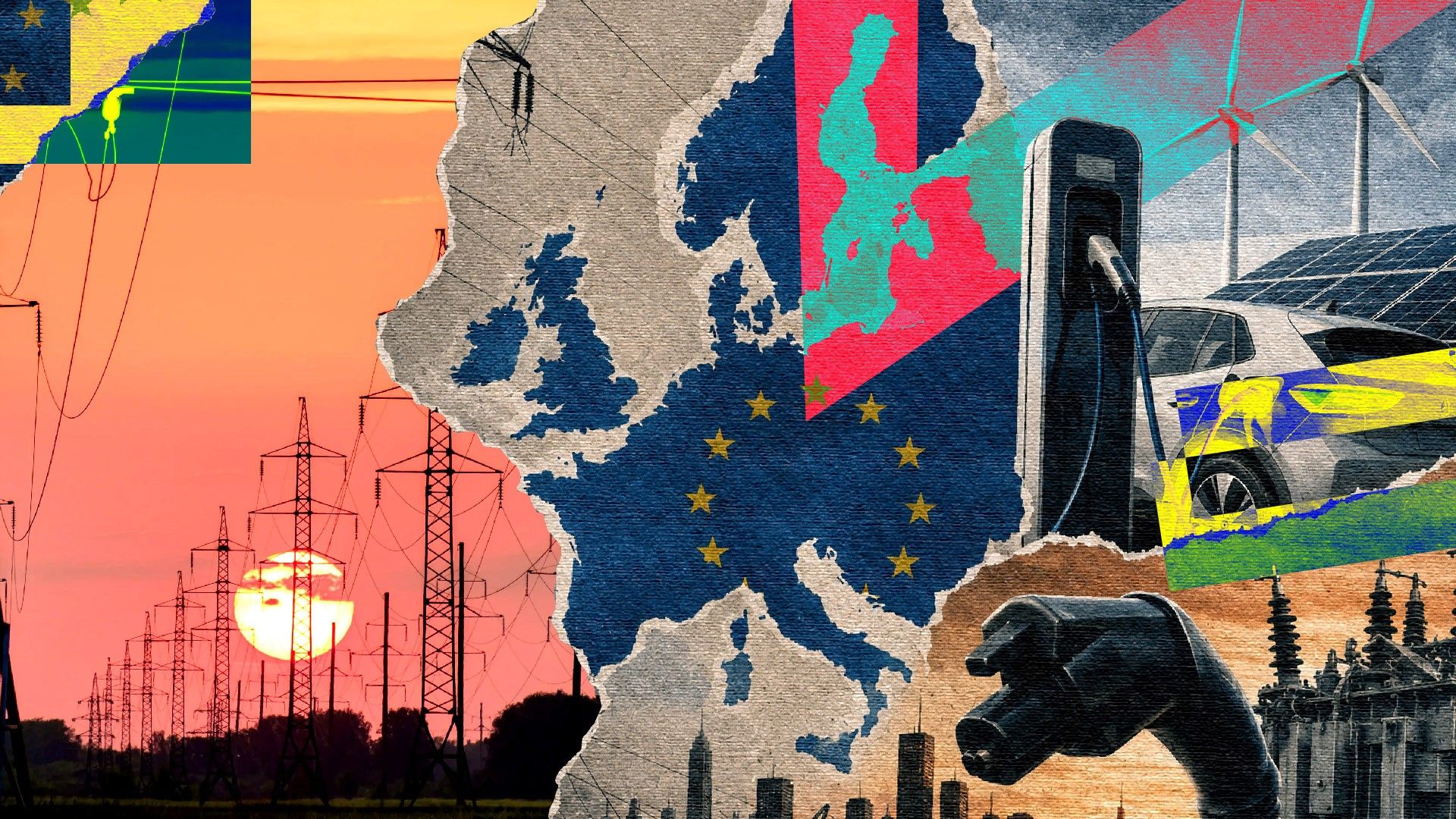
To integrate 100 GW of new renewable capacity every year and increase the electrification rate from 23 to 32% by 2030, Europe will have to build and upgrade electrical grids at an unprecedented level in the history of the continent. According to the European Commission estimates, the total investments into the grid should amount to around €1.2 trillion by 2040. However, the industry is facing a severe shortage of key equipment. Major European manufacturers of power transformers and high voltage cables have filled their portfolios until the end of the current decade. Lead times have become much longer in recent years, equipment and material prices continue to grow. At the same time the EU keeps a significant trade deficit with transformers and cables where a significant part of import comes from China.
The situation with planning and getting construction permits is even more alarming. In Germany thousands of projects remain at various stages of approval while many of them cannot progress any further for several years now. The project of the Suedlink backbone line roughly 700 km long is a good example. It has been in the process of planning for more than 10 years and even now construction has not fully begun at all sections. There are other countries in Europe that are used as an example, where similar projects are built much faster. The European Union continues to get bogged down in multi-level bureaucracy, lengthy environmental impact assessment procedures, and permanent conflicts with local communities.
The problem is not just a technical one. It is directly connected with the lack of long-term industrial policy and inability of European institutions and member states to agree on priorities and harmonize their actions for years to come. Equipment manufacturers rightly complain about poor demand predictability, and the grid operators are unhappy about the lack of long-term contracts and guarantees. As a result, there is a vicious circle: manufacturers do not rush to expand their capacity without confidence in future demand, and the operators cannot plan the construction of new facilities without extra capacity.
There is yet another typical and obvious confirmation of the systemic weakness of the European project: instead of preparing in advance the industrial base, supply chains, and regulatory environment for the implementation of large-scale infrastructure projects, in a systemic manner and with an adequate time reserve, European leaders continue to follow their customary principle – first they declare ambitious goals and then tackle issues as they arise. This approach has often led to a situation when the declared goals were either significantly delayed or met partially via significant increase of import and stronger dependency on foreign suppliers.
In case of electricity grids the risks look particularly serious. Even if the political rhetoric to support electrification stays, the actual implementation of these plans can be significantly delayed in several areas at once: shortage and higher prices for equipment, lengthy approval procedures, and lack of coordinated long-term planning between countries. As such, Europe risks ending up in a situation when it will continue to declare higher and higher decarbonization goals but at the same time it will be unable to physically meet them due to trivial shortage of equipment and construction permits.
It is particularly telling that many of these problems were quite predictable. The industry has been warning about the upcoming capacity shortage and the need for long-term contracts. Nevertheless, the EU never did any systemic work to prevent these problems from arising. Instead, the customary approach prevailed once again: to set goals, establish working groups, pass documents and hope that the market and national governments will somehow cope with it on their own.
While European political circles continue to live in a paradigm where it is enough to approve yet another strategic document and pump up numbers in the presentations, the reality is much more cruel. Without a serious acceleration of industrial network equipment manufacturing within Europe, without radical simplification and acceleration of permitting procedures, and without building long-term relations between the government and the manufacturers, it is highly likely that Europe will face the situation when the goals that look nice on paper will be too far from the possibility of their physical implementation.