







Read news
Add bookmark
POPULAR
How Much Do Experts’ Ideas Matter for the European Union’s Political Agenda?Oil? Gas? Fertilizer? Just Life.Kalypso Nicolaidis: I Want a Woodstock for European PoliticsHow the “virtues” of neoliberal globalization paved the way to its demiseEurope Risks Losing the Sahel Unless It Comes to Understand It (As Exemplified by Mali)Europe Still Needs China: Washington is the Main ThreatCatching Up: Europe’s Path to Strategic Autonomy in the Defense IndustryRe-industrialization of France: sounding promises, multi-billion euro programs and a miserable failureRegular Ones Made IrregularA Plan to Revitalise the World Trade Organization
The USA no longer wants to play the role of a hegemon in supporting the trade system. China is unable to play a leading role in the WTO. The EU is interested in preserving the rule-based trade order
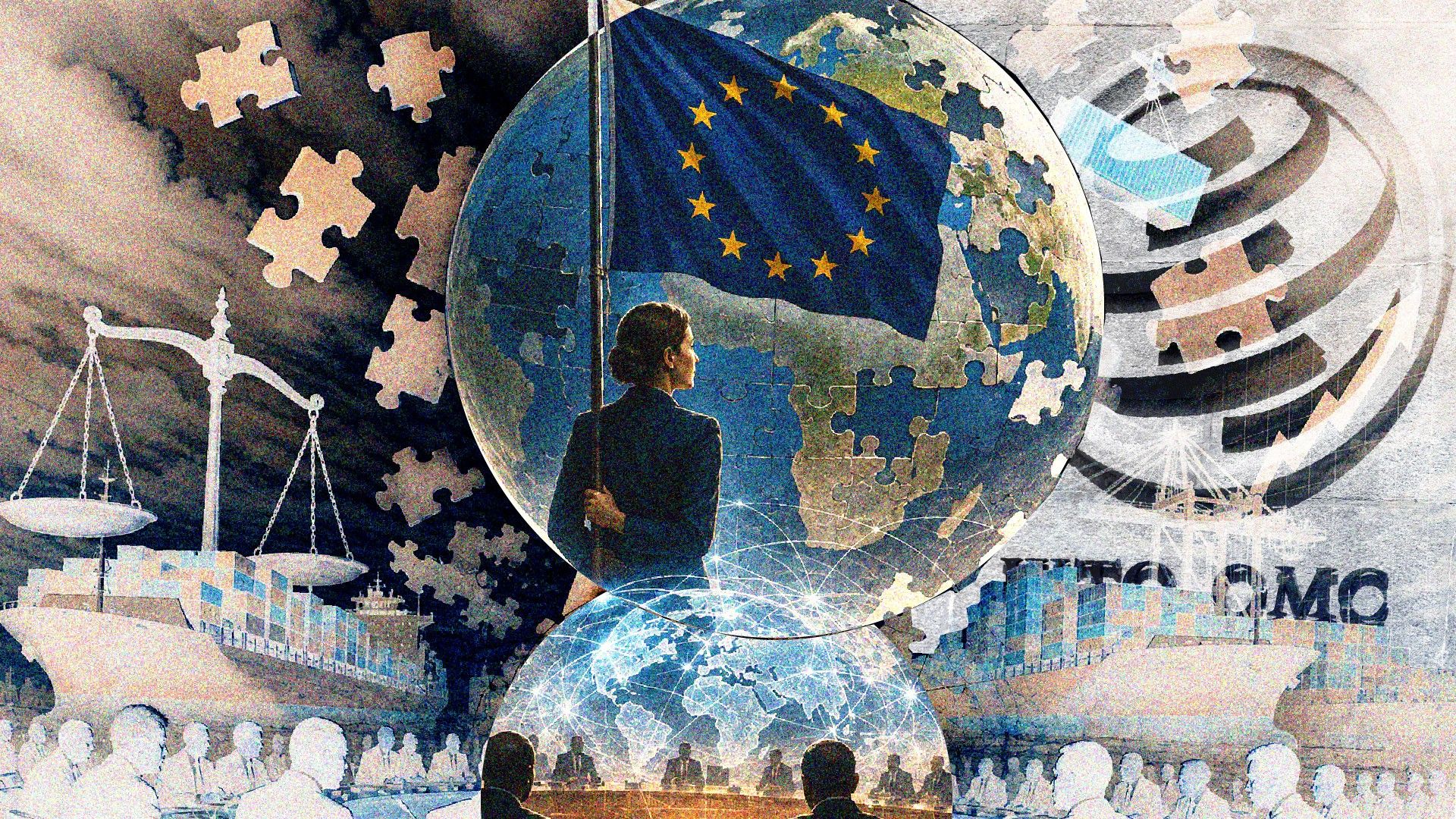
These three contradictory trends create insurmountable problems in reforming the WTO. They are described in the Bruegel Institute (Brussels European and Global Economic Laboratory) report entitled A plan to revitalise the World Trade Organization.
The failure of the 14th ministerial WTO conference in Yaoundé, Cameroon, in March 2026, without reaching an agreement on reforms and a final declaration, has illustrated a deep crisis. The most important factor that triggered the failure was the difficulty of achieving political compromise in the situation of geopolitical fragmentation.
Looking back, one can say that the Doha Development Agenda (DPA) launched in 2001 in a broad attempt to reduce trade barriers all over the world in the interests of the poorest countries created unrealistic expectations. The DPA failed in 2008 widening the development gap even further. It also created two additional problems that turned out to be unsolvable: the dead end in reforming agriculture and lack of coordination between obligations to provide access to markets and commercial realities. Now the access to markets situation is where it was in 1995.
The US, EU and China show three different approaches to the future of the global trade system. The US no longer wants to play the role of a hegemon in supporting the trade system based on the rules that they established initially.
The government of China values the status quo (the non-discrimination rule and obligatory reconciliation of disputes) and supports moderate reforms. However, due to its mercantilistic approach to the trade and industrial policy, China is unable to play a leading role in reforming the WTO.
The EU as well as small and medium size open economies are interested in preserving the rule-based trade order. It does not mean that they are happy with the existing situation. There are still deeply rooted reservations about the lack of equal conditions in trade relations with China, about the US protectionism and the enforced policy of the US and China.
The chronic trade deficit in the US is exacerbated by the lack of a relatively stable welfare state. No support for employees who suffered from negative external shocks led to a negative reaction to opening both bilateral and multilateral trade.
During his first term in office, President Trump blocked candidates to the WTO Appellate Body. He also led the US out of all the negotiations on free trade agreements. The Biden Administration continued this policy. The legacy of Trump's second term will most probably be high tariffs for some production sectors where the US is not competitive internationally and a set of agreements incompatible with the WTO combining regulated trade and asymmetric obligations.
Long term importance of security for the global trade system together with weakening of the US support and Chinese production depends on the evolution of internal economic policy of the US and China and the intensity level of their geopolitical competition.
These three factors are more important than the problems of development. Is it possible to agree on the reforms that are adjusted to these limitations while preserving the rule-based cooperation as much as possible? Ideally, it means taking action to reduce external disbalance and geopolitical tension. Without it only a moderate WTO reform can be approved.
Source: https://www.bruegel.org/policy-brief/plan-revitalise-world-trade-organization