







Read news
Add bookmark
POPULAR
How Much Do Experts’ Ideas Matter for the European Union’s Political Agenda?Oil? Gas? Fertilizer? Just Life.Kalypso Nicolaidis: I Want a Woodstock for European PoliticsThe European Union Intends to Fight Space Wars. Does the European Military Space Project Have Room for Development?Energy Protectionism Without EnergyNot All Dependencies Are Equal, but This Is Not Easier for EuropeThe Gulf War and Europe’s Helpless Energy PolicyEurope Losing Energy Security Battle to ChinaBetter coordination for a more efficient European energy systemThe Flaws in the European Union’s Proposed Industrial Accelerator Act and How to Fix Them
Reducing dependence on foreign suppliers raises costs, while a least cost decarbonization policy deepens dependence. The Industrial Accelerator Act (IAA), proposed by the European Commission in March 2026, leads to this dilemma. The shortcomings and conflicts in this law are analyzed in a report entitled The flaws in the European Union’s proposed Industrial Accelerator Act and how to fix them, published on the website of the Bruegel institute (Brussels European and Global Economic Laboratory)
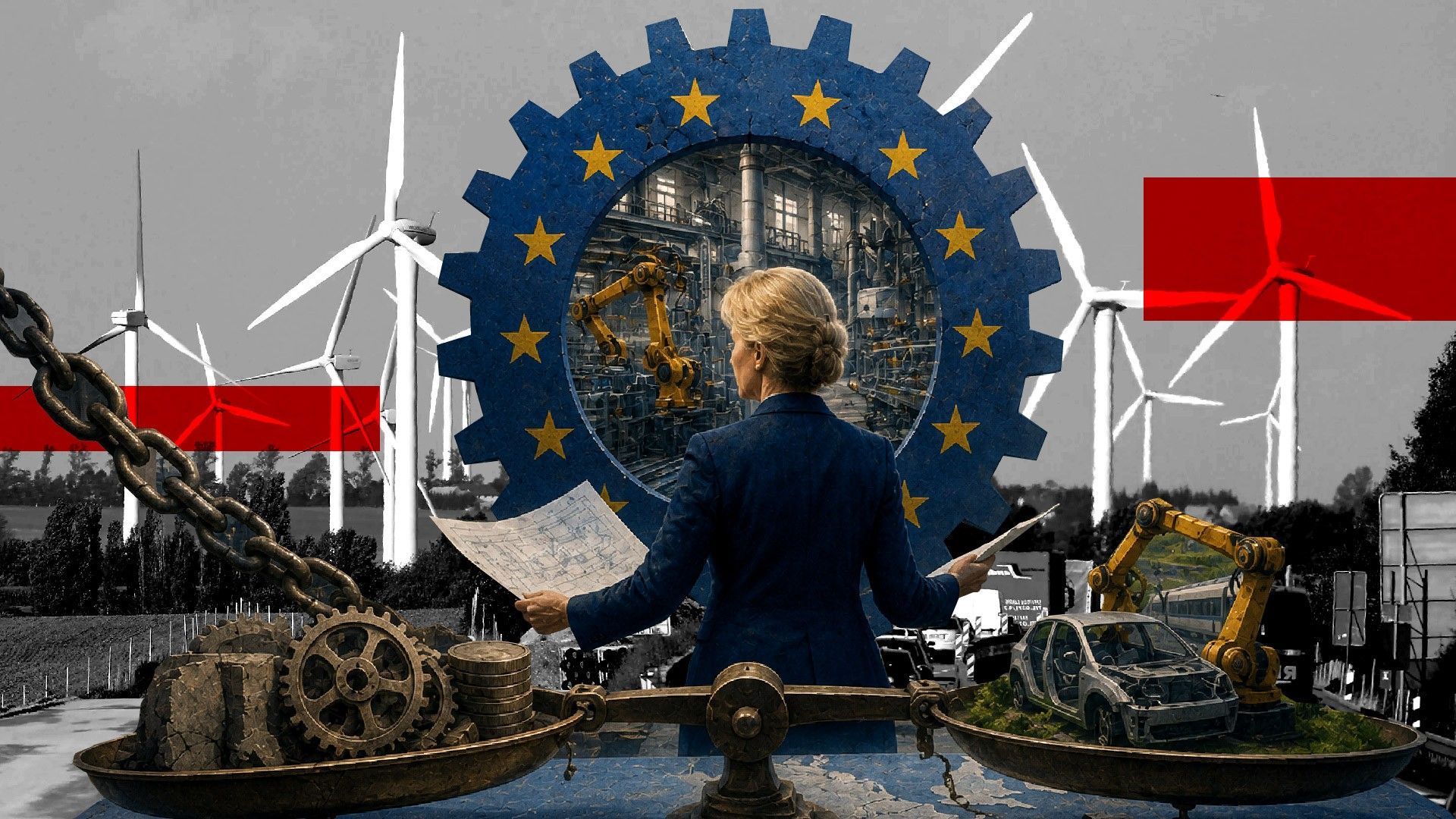
The IAA will impose new requirements on foreign companies that invest in the EU. These conditions will apply to third-country investors that control more than 40 % of global manufacturing capacity in certain strategic sectors. In practice, the threshold is mandatory for China only – regarding batteries, solar photovoltaic systems and some critical raw materials.
Together with subsidies, these measures are intended to provide support for European producers, but there is no recognition that such support should be temporary and intended to provide breathing space to adjust to the reality of Chinese competition. The risk of shielding domestic industries from foreign competition over the long term is that innovation will be disincentivized and prices for consumers will be raised.
The green industrial policy objectives of decarbonization, competitiveness and economic security are often complementary but, in some cases, conflict. Measures that improve resilience by reducing dependence on foreign suppliers may increase costs and slow clean-technology deployment, while policies focused solely on least cost decarbonization may deepen strategic dependencies.
These trade-offs are most visible in relation to China’s dominance of clean-technology supply chains. If the sole European objective is an energy transition at the lowest cost, then nothing should be done to restrict Chinese clean-technology imports. However, such a strategy would raise concerns about domestic manufacturers facing unfair competition and over economic security issues.
Welcoming cheap Chinese solar panels and electric vehicles would accelerate decarbonization and reduce costs for European consumers, but increase strategic dependence on the EU’s main supplier and its state-sponsored industry. Countervailing duties on Chinese EVs and tariffs on steel might buy time for European industry, but at the cost of higher consumer prices and slower deployment of clean technology.
True competitiveness extends beyond domestic markets and hinges on European firms’ ability of to compete globally, both on innovation and cost-efficiency. Excluding Chinese imports supports direct competitors but also raises economic concerns: relying on more expensive domestic or other third-country products would raise production costs for European manufacturers and hence the prices paid by consumers and downstream industries, posing a threat to broader industrial competitiveness. Europe risks losing export markets.
The challenge is to strike the right balance, but the IAA as proposed lacks an evidence-based assessment of why the chosen sectors are strategic, of the specific chokepoints that justify import de-risking, and ultimately of European industry’s capacity to remain internationally competitive.