







Read news
Add bookmark
POPULAR
How Much Do Experts’ Ideas Matter for the European Union’s Political Agenda?Kalypso Nicolaidis: I Want a Woodstock for European PoliticsOil? Gas? Fertilizer? Just Life.How the “virtues” of neoliberal globalization paved the way to its demiseEurope’s Rickety Shield: Faith Instead of Real ProtectionRadicalisation in Onlife Spaces: Europe’s home-grown terroristsEurope: doctrinal shift towards violence. Transition to a war economy instead of a “liberal democracy”Palantir and the New Order: Neoliberalism is dead. Say hello to TechlordismA European Democracy Shield: Fighting Foreign Interference – Or Tight CensorshipFrom Shield to Sword
Is Europe strong enough to take the offensive in this hybrid war era?
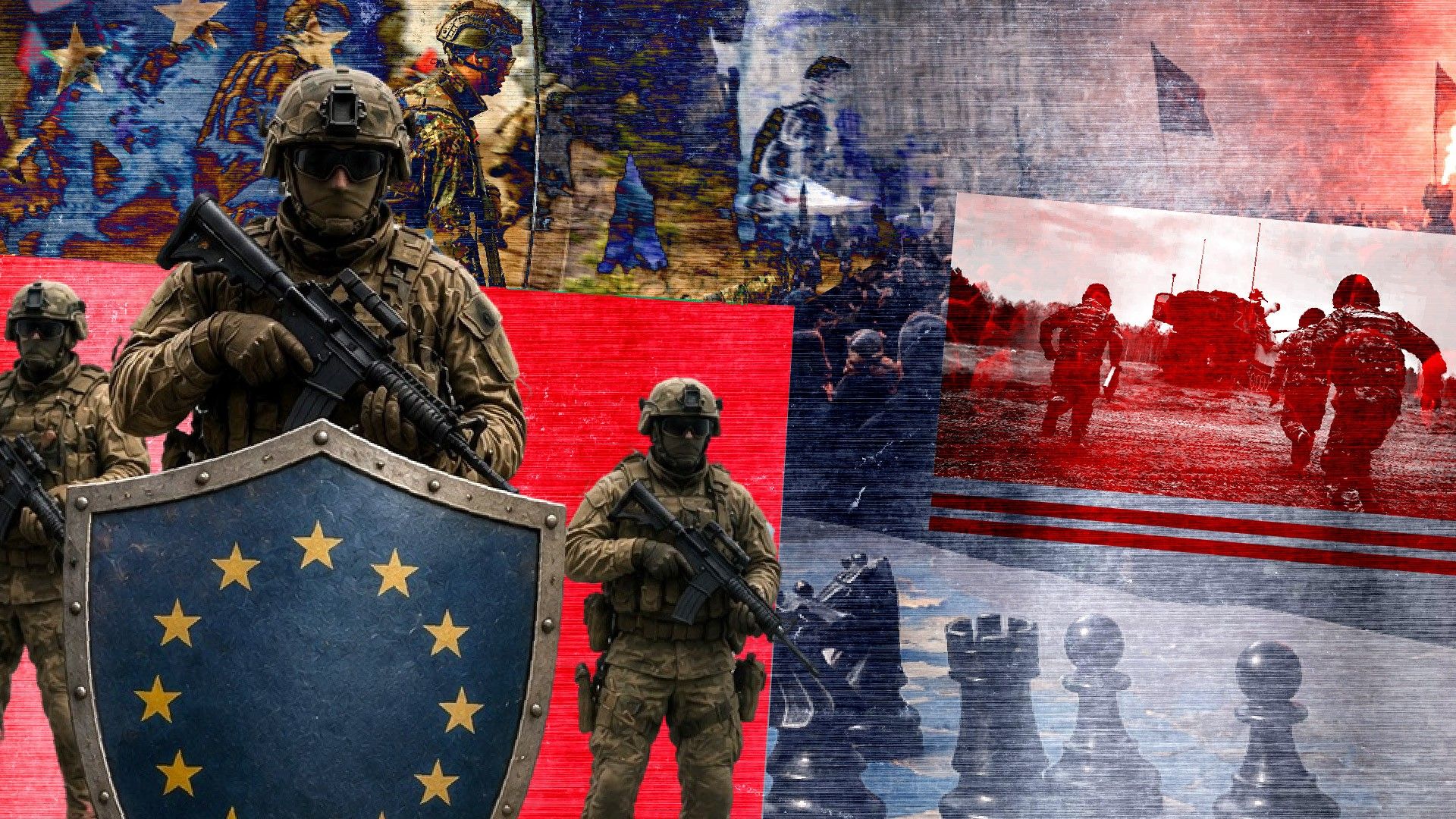
Europe faces constant asymmetric threats. These include drone incursions, infrastructure sabotage, coerced migration, vandalism, cyber-attacks, and large-scale disinformation campaigns. Russia and other States, including some of Europe’s partners, now aim such operations at the continent, weakening its democracies at home and its influence abroad.
This issue was examined by a team of authors from the European Council on Foreign Relations led by senior policy fellows Will Brown and Jana Kobzova. They concluded that European responses have mainly been defensive to date. The continent should now go on the offensive in the information, cyber, finance and kinetic domains. There is a big question: is Europe strong enough?
European countries are not formally at war. Yet their societies are under a barrage of attacks. Unidentified drones disrupt civilian airports. Criminal networks, often paid in crypto currencies, sever cables and darken railway stations in the dead of night. Neighboring States push migrants and refugees across borders, exploiting vulnerable people to inflame tensions. Leading European business figures face assassination plots. Cyber-attackers steal or damage European innovations and black out hospital servers.
In the meanwhile, on every phone and every screen, a tidal wave of lies and half-truths washes over citizens, helping turn certainty into fog, outrage into numbness. Society grows weary, mistrustful and slow to answer the call to defend itself. Europe is losing on this new front. What it lacks is courage and determination. Without this shift, Europe will remain a placid deer amid a pack of wolves.
After the fall of the Berlin Wall, the assumption was that democracy, liberal rights and respect for international law would spread naturally. Europe’s defense of democracy then rested and still rests on a relatively narrow set of policies.
The EU’s institutional response to asymmetric threats is deeply fragmented. The result is a patchwork of defensive activity that is no match for hybrid attacks from external adversaries.
There is no EU-wide legal definition of sabotage or an agreed framework for potential responses, as these issues fall into the purview of individual member States that are almost utterly unable to agree and reach a consensus.
A European looking out at the world in the cold light of day sees many foes and few reliable friends. Few can notice it now, but a full-scale war on their perceptions is already under way. Its weapons – sabotage, coordinated disinformation, illicit finance, and cyber-attacks – aim less at territory than at public trust, industry and democratic will.
The old world is gone. Mourning it will not help, however much Europe might want it.
Source: https://ecfr.eu/publication/from-shield-to-sword-europes-offensive-strategy-for-the-hybrid-age/