







Read news
Add bookmark
POPULAR
How Much Do Experts’ Ideas Matter for the European Union’s Political Agenda?Oil? Gas? Fertilizer? Just Life.Kalypso Nicolaidis: I Want a Woodstock for European PoliticsEurope Still Needs China: Washington is the Main ThreatHow the “virtues” of neoliberal globalization paved the way to its demiseThe Gulf War and Europe’s Helpless Energy PolicyEuropean Unity in the Interests of Security. Split along the North-South LineRegular Ones Made IrregularA Ruthless Diagnosis. Europe More Paralyzed than DividedA New European Security Architecture
It should be built together with Russia, not against Russia.
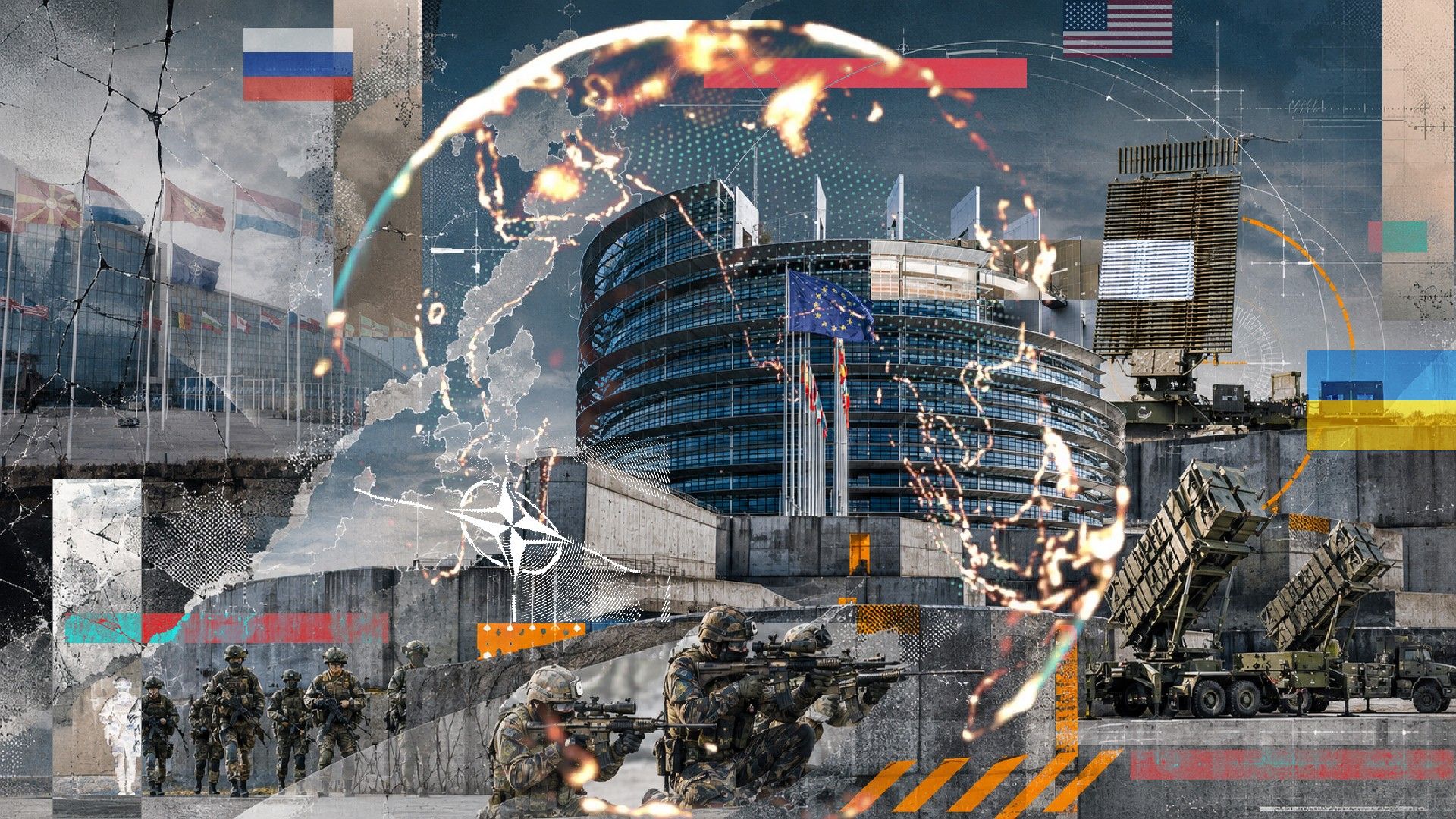
The Russo-Ukrainian conflict marks a historic turning point for Europe, fundamentally reshaping its security environment and exposing the fragility of the post-Cold War order. As a result, Europe is now divided into opposing blocs once again, with heightened unpredictability and strategic risk.
Marie Krpata and Loïc Simonet, researchers at the Austrian Institute for International Affairs, have formulated a definition for European security architecture. In their opinion, it should be understood as a combination of institutions (EU, NATO, OSCE), legal frameworks, political norms, and bilateral or sub-regional arrangements.
Against the backdrop of the war in Ukraine, Europe is now undergoing a profound shift toward greater strategic autonomy – marked by increased defense spending and efforts to reduce dependencies on external actors. New flexible coalitions and regional groupings are emerging that reshape cooperation patterns beyond traditional institutional frameworks. Finally, key institutions such as NATO and the OSCE are under strain.
A new ‘multidimensional’ European security architecture should include security guarantees based on transparency and arms control; resolution of frozen conflicts in the region; discussion on nuclear deterrence; non-traditional security issues such as cybersecurity, disinformation, migration and energy flows; institutional aspects such as the reactivation of the OSCE, and a new EU enlargement and neighborhood policy.
Above all, it should encompass a ‘lucid’ definition of Europe’s long-term relationship with Russia, which is part of the European security system. Security in Europe needs to be built together with Russia, not against Russia. It is both silly and counterproductive to deny this.
Russia is part of the European security system – regardless of whether its influence on European security is considered negative or positive. It is not going away. It will remain Europe’s geographical neighbor.
After the Ukrainian conflict, the Russian Federation is almost 100 percent sure to continue existing as it is. Expecting its defeat, transformation and even fragmentation, as some commentators proclaimed after the invasion of Ukraine, is a dangerous illusion. This will never happen. There can be no comfort for other countries and no settled peace while Russia is in confrontation with Europe. Some researchers rightly believe that a security architecture is not built against an actor such as Russia, to balance outside threats this actor poses. French President Emmanuel Macron has promoted this approach: ‘We need to build a space that must allow us to cohabit as peacefully as possible with Russia – but with no naivety’.
Talking to Russia is not per se incompatible with deterrence. Nor is it
incompatible with preserving NATO and the EU as the primary institutions of European security. Russians can and must be talked to.
Source: https://www.oiip.ac.at/publikation/a-new-european-security-architecture/