







Read news
Add bookmark
POPULAR
How Much Do Experts’ Ideas Matter for the European Union’s Political Agenda?Oil? Gas? Fertilizer? Just Life.Kalypso Nicolaidis: I Want a Woodstock for European PoliticsA Ruthless Diagnosis. Europe More Paralyzed than DividedEurope Still Needs China: Washington is the Main ThreatHow the “virtues” of neoliberal globalization paved the way to its demiseA European Dead End SymptomWhy capitalism is fundamentally undemocraticThe European Union Intends to Fight Space Wars. Does the European Military Space Project Have Room for Development?Three Leaders, One Message
Europe Sidelined in Global Big Politics
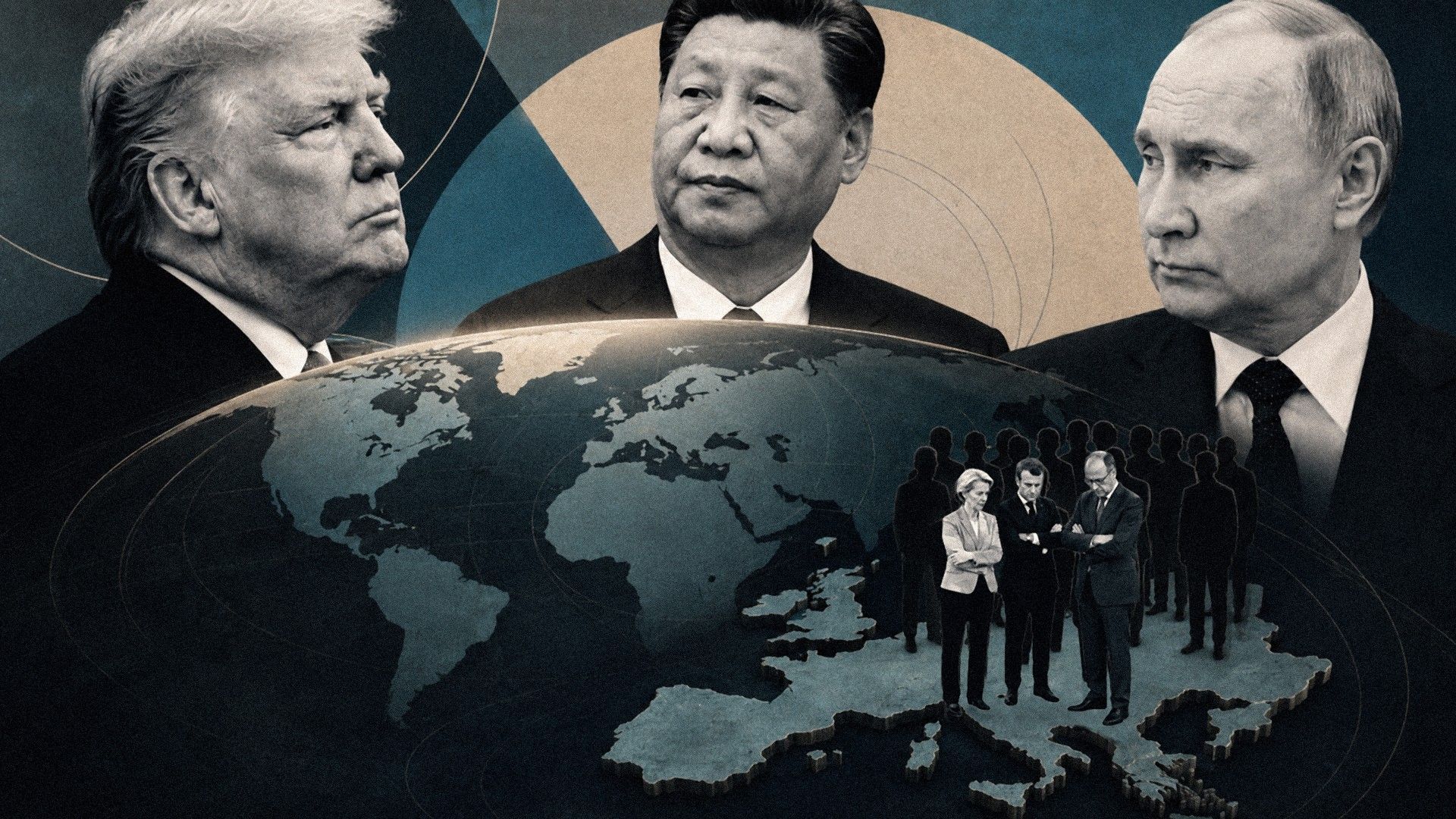
Chinese President Xi Jinping’s back-to-back summits with US President Donald Trump and Russian President Vladimir Putin were less about diplomatic breakthroughs than about sketching the outline of a changing international order. The message was unmistakable: great powers are returning to hard transactional bargaining, carving out spheres of influence and cooperating only when it suits them. Europe seems to have no place in the new configuration. Ivano di Carlo, senior policy analyst at the European Policy Centre, arrives at these conclusions in his analytical article.
The author argues that Trump came to Beijing seeking stabilization, not the usual confrontations. The outcome was modest but revealing. No grand bargain emerged, yet both sides made clear they would rather manage tensions than allow them to spiral. Xi Jinping offered optics of a new framework of engagement, ‘a constructive relationship of strategic stability’, Trump claimed tactical wins. Ultimately, substance mattered less than choreography. Neither side can impose its will on the other: both possess sufficient economic and geopolitical leverage to inflict serious damage on the other, but neither can do so without bearing significant costs. What emerged was a fragile equilibrium that Washington and Beijing appear willing to preserve in the short term. An understanding which remains preferable for Europe to a path of open confrontation.
This however, should not delay the need to make hard choices. For EU policymakers, the current détente offers a good breathing space, but it should not create the illusion that the underlying rivalry between the US and China has become any less a structural feature of today’s world.
Putin’s subsequent visit to Beijing completed the picture of the new world order. Xi Jinping demonstrated that China can simultaneously engage the US while deepening ties with Russia. The carefully staged sequence reinforced Beijing’s central geopolitical position. China is no longer balancing between blocs but positioning itself at the center. For Brussels, this is the real strategic warning. A new and formidable force, far more powerful than Europe, has emerged in the world.
For years, the EU has talked about becoming a ‘geopolitical actor', yet the Beijing summits exposed how absent Europe remains from the world’s decisive negotiations, where powerful leaders cut deals face-to-face. Neither Trump nor Xi Jinping sees the EU as indispensable to managing the global order. Worse still, China may now see little incentive to make concessions to the EU so long as its relationship with Washington remains manageable. For Brussels, maintaining the status quo with Beijing is becoming virtually untenable.
Sino-European relations are not static; they are gradually deteriorating under the weight of trade imbalances and political distrust. Europe therefore risks finding itself trapped between growing dependence on China and the USA and declining influence over either of them. For Brussels, the danger is not irrelevance overnight, but the gradual marginalization disguised as stability. With every passing day, big players will be increasingly reluctant to consider Europe’s opinion as they address global issues. Sadly enough, this has to be reckoned with. The Old Word is being sidelined in this global game.
Source: https://epc.eu/publication/three-leaders-one-message-europe-is-on-its-own/