







Read news
Add bookmark
POPULAR
How Much Do Experts’ Ideas Matter for the European Union’s Political Agenda?Oil? Gas? Fertilizer? Just Life.Kalypso Nicolaidis: I Want a Woodstock for European PoliticsThe Gulf War and Europe’s Helpless Energy PolicyEurope Still Needs China: Washington is the Main ThreatHow the “virtues” of neoliberal globalization paved the way to its demiseEuropean Unity in the Interests of Security. Split along the North-South LineWhy capitalism is fundamentally undemocraticEurope: doctrinal shift towards violence. Transition to a war economy instead of a “liberal democracy”Europe Trying to Match Incompatible Things Again
In a May 2026 report entitled Building Europe’s alternative fuels industry for military resilience, Irina Patrahau and Ron Stoop, experts at The Hague Centre for Strategic Studies, examine in detail how alternative fuels can strengthen Europe’s military resilience. The authors conclude that, theoretically, such fuels might reduce import dependence, but in practice their adoption by the military faces a number of serious obstacles and does not seem a viable solution for now.
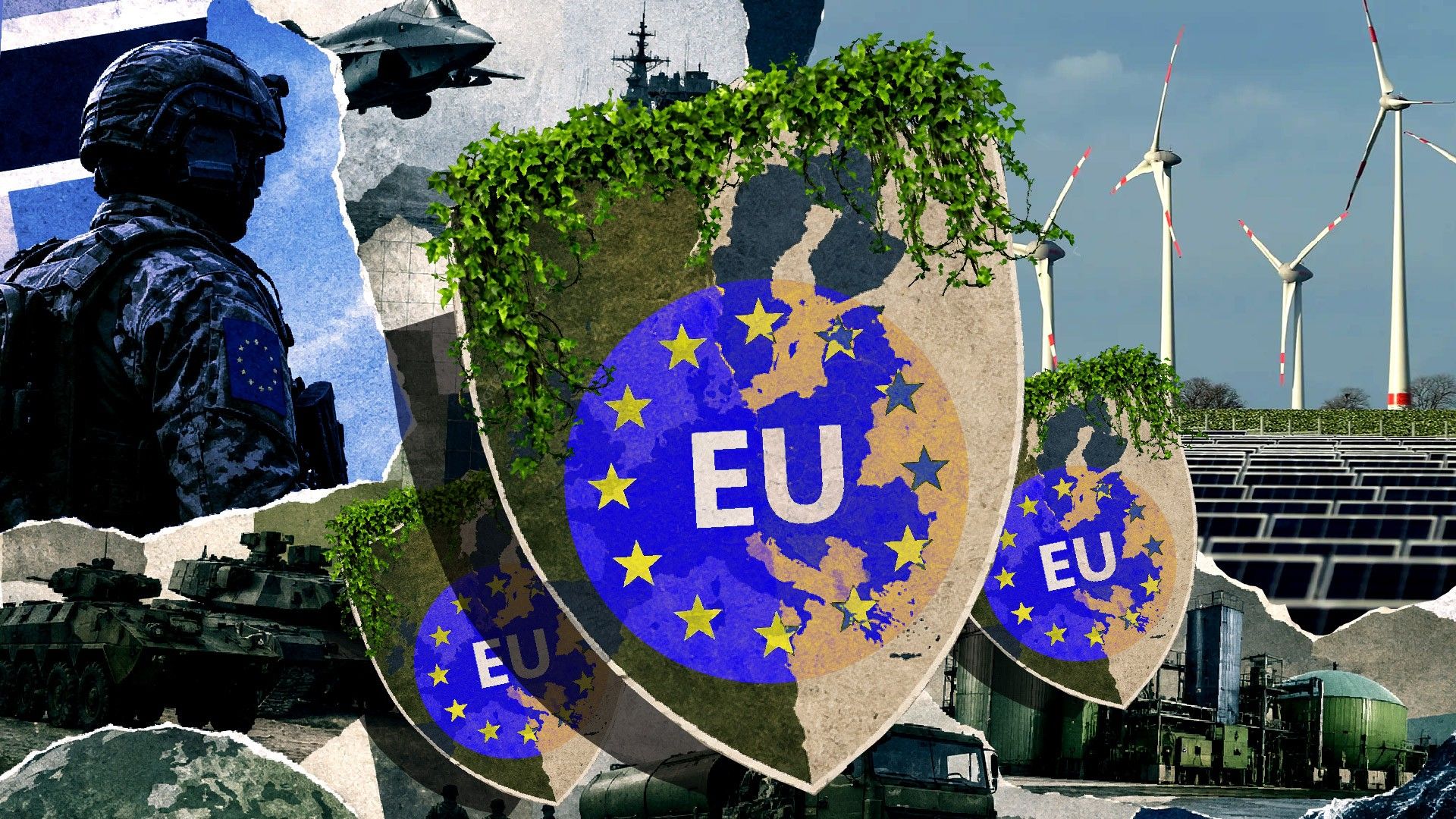
The report was prepared amid the 2026 war in the Middle East that has demonstrated once again Europe’s vulnerability to energy supply disruptions. The authors note that about half of the European Union’s jet fuel imports come from the region that is highly unstable now. And Europe’s military needs remain almost entirely dependent on traditional fuels.
Most tellingly, the authors themselves admit that even under the most favorable scenario for the production of alternative fuels, their contribution to military readiness will be negligible in the coming years. The production volumes are still too small, and the existing capacity will primarily cater to the civilian sector. In the case of a serious military conflict, the armed forces risk staying without guaranteed access to these fuels, as priority will be given to civilian consumers.
In another typical European exercise in wishful thinking, instead of honestly admitting that military adoption of alternative fuels requires serious political, financial and organizational efforts, a major part of the expert community continues harping on this idea as a relatively simple and affordable solution – while often ignoring the fact that for now Europe lacks sufficient production capacity or a clear-cut strategy to distribute those fuels between civilian and military needs in a critical situation.
The idea that alternative fuels could considerably enhance Europe’s strategic autonomy looks particularly ill-founded. Even if stepped up gradually, production will remain dependent on imported feedstock and technology. Besides, the authors point out that in the absence of special measures, such as long-term contracting, capacity reservation or a direct public stake, the military will simply be unable to secure priority access to such fuels if needed.
As a result, Europe risks finding its strategic objectives diverging, once again, from its real capabilities. Instead of concentrating on stronger traditional fuel security and developing domestic processing capacity, it may squander a lot of effort developing a business that will provide the military with neither the required volumes nor guaranteed availability in a near future. And this means that Europe will remain extremely dependent on external supplies in the case of a serious conflict.
It is especially alarming that even if the production of alternative fuels does grow, their distribution in a crisis situation remains uncertain. The civilian sector would probably be prioritized, with the military becoming residual consumers. This puts into question the very idea of using such fuels to strengthen military resilience. Barring clear capacity reservation and priority access mechanisms, all talk about strategic autonomy in this field looks rather declaratory than realistic. Once again, Europe risks wasting both time and resources on a solution that will provide no real defense if a serious military crisis hits.
Source: https://hcss.nl/report/building-europes-alternative-fuels-industry-for-military-resilience/