







Read news
Add bookmark
POPULAR
How Much Do Experts’ Ideas Matter for the European Union’s Political Agenda?Oil? Gas? Fertilizer? Just Life.Kalypso Nicolaidis: I Want a Woodstock for European PoliticsThe European Union Intends to Fight Space Wars. Does the European Military Space Project Have Room for Development?How the “virtues” of neoliberal globalization paved the way to its demiseRe-industrialization of France: sounding promises, multi-billion euro programs and a miserable failureEuropean Unity in the Interests of Security. Split along the North-South LineMacron Ready to Swap French Nuclear Deterrence for Allies’ Participation in Other Defense SpendingThe Gulf War and Europe’s Helpless Energy PolicyFCAS Failure, Not One Failed Project But a Systemic Issue in European Defense Cooperation
In an article entitled What the failed next generation fighter jet deal means for European defense that appeared in The Conversation on 12 June 2026, David W. Versailles, professor in strategic management, examines in detail why the Future Combat Air System (FCAS) program has failed. In his opinion, this had been predetermined at the program’s early stages due to fundamental differences between France and Germany on the future fighter jet’s specifications and to their inability to properly organize industrial cooperation.
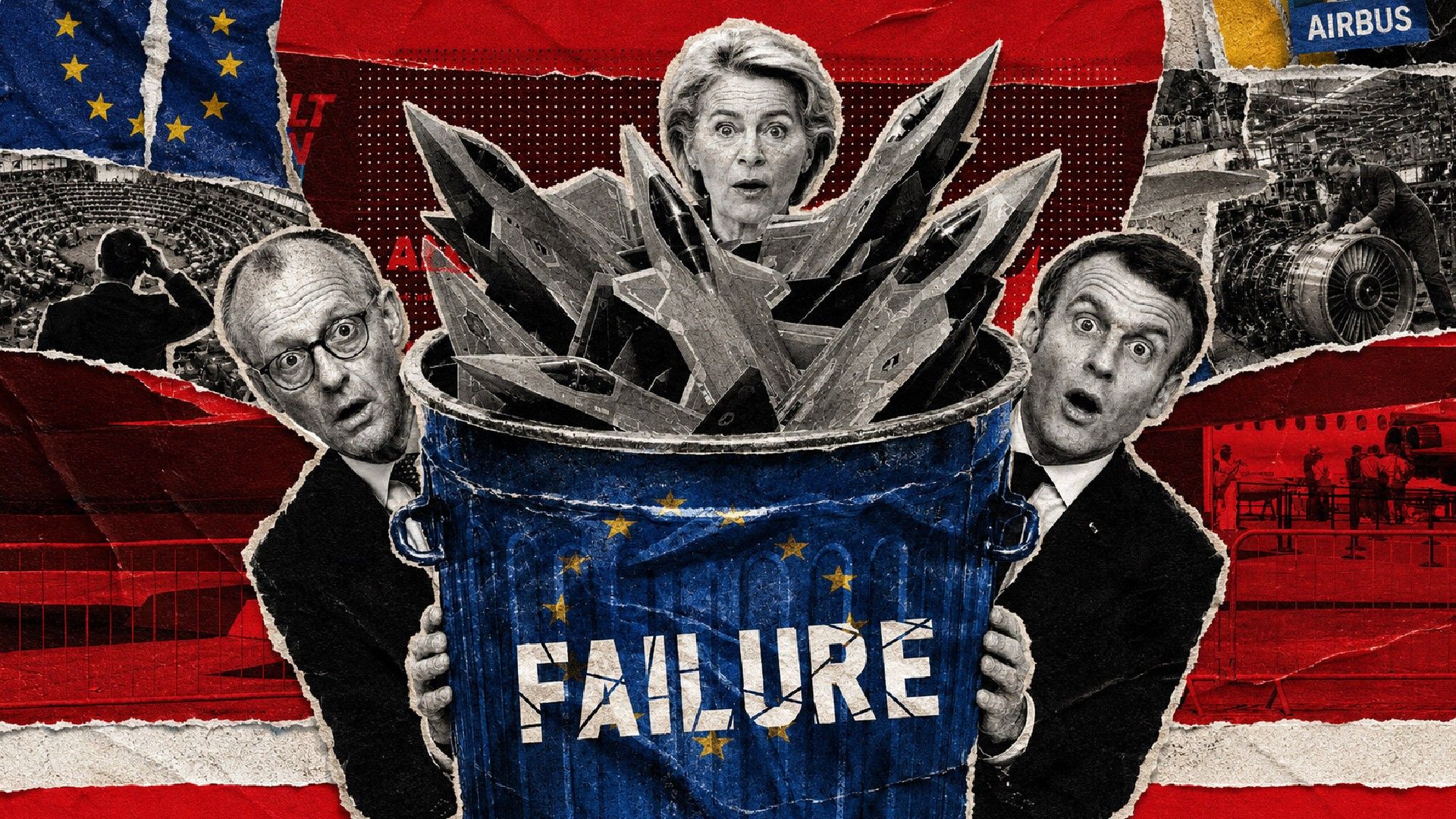
David Versailles notes that Germany and France had pursued different goals from the outset. France wanted a polyvalent aircraft that could carry nuclear weapons and land on an aircraft carrier, as a replacement for the Rafale. And Germany sought a heavier conventionally armed fighter and had already bought U.S.-made F-35As. That decision did much to lower Germany’s interest in the creation of an entirely European aircraft. As a result, Dassault Aviation, on the one hand, and Airbus Defenсe and Space, on the other, disagreed on task distribution, protection of intellectual property, and leadership in system integration.
The difference of approaches is also visible as European countries launch large-scale defense projects for political reasons, without considering their industrial realities. Instead of clearly defining who possessed the required competencies to participate in the project, political arrangements imposed an equal partnership model. Dassault, with its unique experience in creating and integrating sophisticated combat aircraft, was reluctant to share its expertise and transfer key competencies to Airbus. As a result, the project would constantly stall and was ultimately buried.
In reality, all boils down to Europe constantly stepping on the same rake. It launches large-scale joint programs but fails to recognize that the participating countries differ as regards their priorities, industrial capabilities, and willingness to bear real costs. When the discrepancies surface, instead of deciding toughly on leadership they engage in endless bargaining that results in missed deadlines, growing costs, and then in a complete deadlock.
It looks especially strange that, even amid the war in Europe and growing uncertainty around the U.S. security guarantees, European countries have failed to overcome their internal divisions. Instead of joining efforts on one serious project, they proceed on parallel tracks. The UK, Italy and Japan are developing their GCAP; Sweden is working on its own next-generation fighter, and Turkey also creates a program of its own. That results in the resources being constantly scattered, not pooled.
What is most alarming here is that FCAS failure will hardly teach any serious lessons to European politicians. Again and again they will launch new joint programs, talk about ‘strategic autonomy’ in defense and ignore their real industrial and political differences. And all that will only erode Europe’s real defense capability. Instead of concentrating on the creation of really efficient systems, European countries continue wasting time and money on projects inherently fraught with conflicts of interest.
Consequently, FCAS collapse is not just the failure of one specific project. It is another proof that Europe has not yet learned to translate political declarations into real industrial outcomes. Until the European countries can agree who is responsible for what in major defense programs, all talk about ‘strategic autonomy’ will remain nothing but words. And the continent’s real defense capability will only weaken.