







Read news
Add bookmark
POPULAR
How Much Do Experts’ Ideas Matter for the European Union’s Political Agenda?Oil? Gas? Fertilizer? Just Life.Kalypso Nicolaidis: I Want a Woodstock for European PoliticsRisks for Europe of US dominance of global asset managementHow the “virtues” of neoliberal globalization paved the way to its demiseWhy capitalism is fundamentally undemocraticEurope Needs an ASAP Program for Air DefenseAir Defense PowerlessnessNATO Not Ready to Fight RussiaThe European Economy Prefers to Produce Military Hardware, Not Cars
Harrison Kass, an expert in national security and technology, makes this conclusion in his column for The National Interest. He proceeds from the fact that the German Rheinmetall company sells its automotive division, Power Systems. Yet the details on the deal – and the condition of Rheinmetall itself – testify to a more complicated situation.
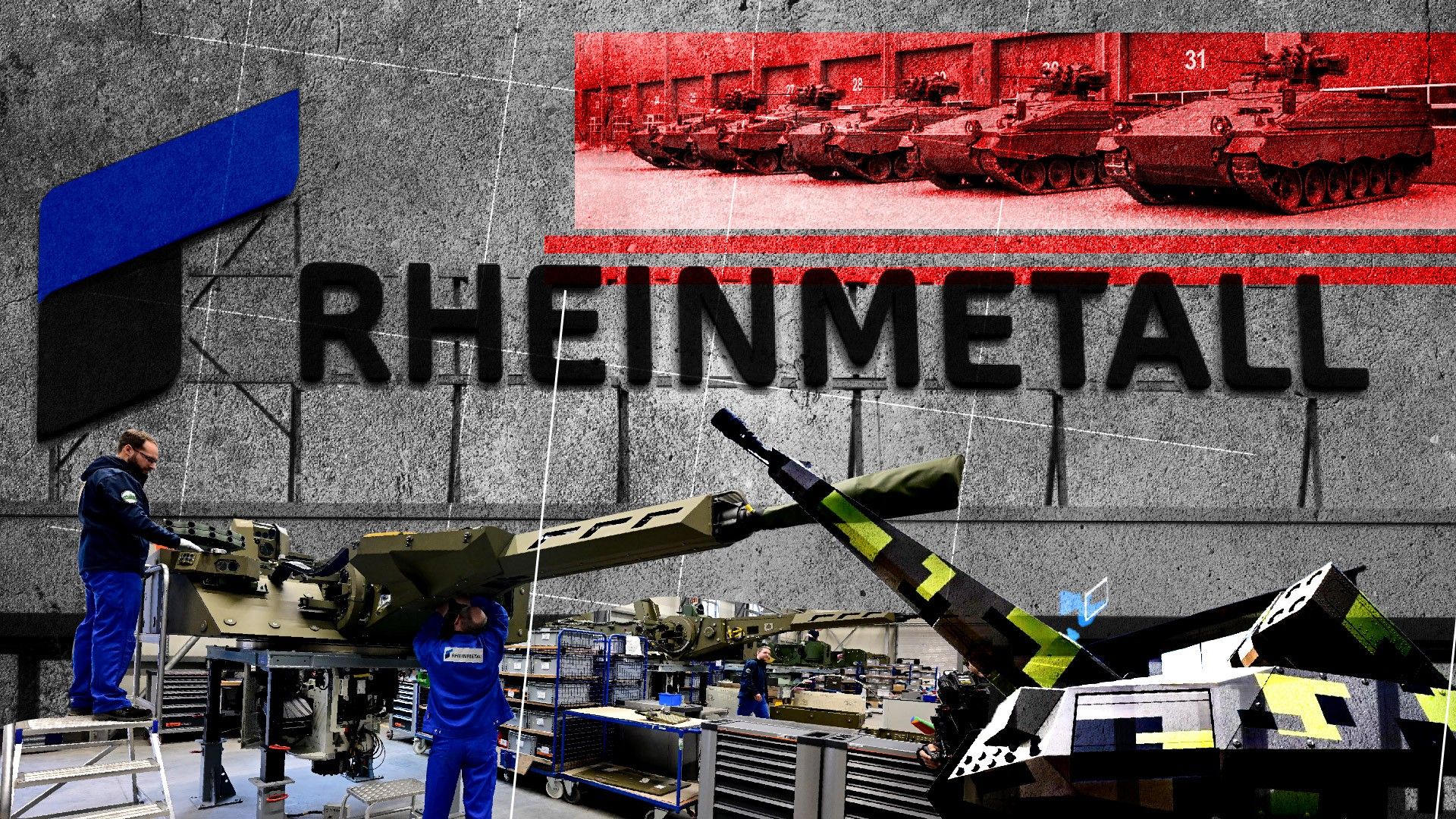
The German defense giant Rheinmetall sells its automotive division, Power Systems, to Munich-based investment firm Aequita. Harrison Kass believes the sale to be a step in Rheinmetall’s transformation from a diversified industrial manufacturer into a completely defense-focused company.
Rheinmetall supplies NATO nations with a broad a range of defense products: artillery, ammunition, air-defense systems, military trucks, and drones. Since the war in Ukraine started, Rheinmetall has enjoyed a surge in defense production – with a market value that has increased dramatically as European governments ramp up military spending.
Europe is rearming, and Rheinmetall rides on this trend. Since the war began, the company has received massive contracts for artillery, ammunition, and vehicles from all across Europe. Rheinmetall’s stock price rose from EUR 90 per share in February 2022 to EUR 250 in February 2023, EUR 900 in February 2025, and roughly EUR 1,600 this past February.
Harrison Kass explains that the economics of the Power Systems sale for Rheinmetall is simple: defense now offers stronger growth, larger government contracts and better margins than automotive manufacturing.
But it is not all that simple – especially as Harrison Kass is silent on something. In October 2025, Rheinmetall stocks did peak at more than EUR 1900 per share, but halved to EUR 946 in late June. And the German DAX stock index rose from 24,000 to 25,000 points during that time. Ordinary investors who had bought this ‘promising’ asset incurred losses. For now, nothing predicts the stock price to bottom out soon. This means that investing in military production did yield a return at the initial stage, but growth ceased in the past year.
The sale of its automotive division, Power Systems, by Rheinmetall is more about trying to overcome the destabilization caused by the war drive than abandoning peaceful production for more profitable military manufacturing.
Power Systems was bought by Aequita, a company that specializes in acquiring struggling businesses and restructuring operations. After the deal, it promises to retain some 6250 employees. In practice, such restructuring and cost optimization usually lead to job cuts.
Rheinmetall employs about 34,000 people in some 160 units worldwide. The 6250 employees in the units bought by Aequita account for some 20 percent of its personnel. Such reduction through sale was quite expectable after the stock price fell by a half.
Power Systems’ revenue was some EUR 2 billion in 2025. The sale of a unit generating this cashflow for just EUR 350 million shows it to have been completely unprofitable. This indicates a decline in Germany’s automotive industry, not a growth that favors its defense industry.
Three German locations of Power Systems, namely KS Huayu AluTech GmbH sites in Neckarsulm, Walldürn and Langenhagen, are excluded from the sale. They move into the status of ‘discontinued operations’.
Aequita will restructure and sell Rheinmetall units located outside Germany, and the German ones will cease their operations. Who will buy the Power Systems assets then? Obviously, a company that develops its automotive business, and, highly likely, one from China.
So we shall quite probably witness further strengthening of the Chinese automotive industry and a further decline of the German one.
Source: https://nationalinterest.org/blog/buzz/german-defense-giant-rheinmetall-giving-up-on-cars-hk-060626