







Read news
Add bookmark
POPULAR
How Much Do Experts’ Ideas Matter for the European Union’s Political Agenda?Kalypso Nicolaidis: I Want a Woodstock for European PoliticsOil? Gas? Fertilizer? Just Life.The Pact Enters into Force: Uncertainties and Risks of New European Migration GovernanceRegular Ones Made IrregularOn Externalization of Asylum, with Responsibility Offloaded to Third CountriesFinancing the EU budget: an assessment of five proposals for new resources18 Months After Mario Draghi’s Report About European Competitiveness Prospects. Two Perspectives on the State of AffairsEuropean Unity in the Interests of Security. Split along the North-South LineEuropean Pact on Migration: Unanswered Questions
The Migration Pact raises two questions: how to secure returns to non-EU countries and how to apply the Pact’s provisions in individual member States. If they stay unanswered, the Pact will not solve the migration problems. These conclusions follow from an article by expert Jean-Paul Tran Thiet posted on the Institut Montaigne website.
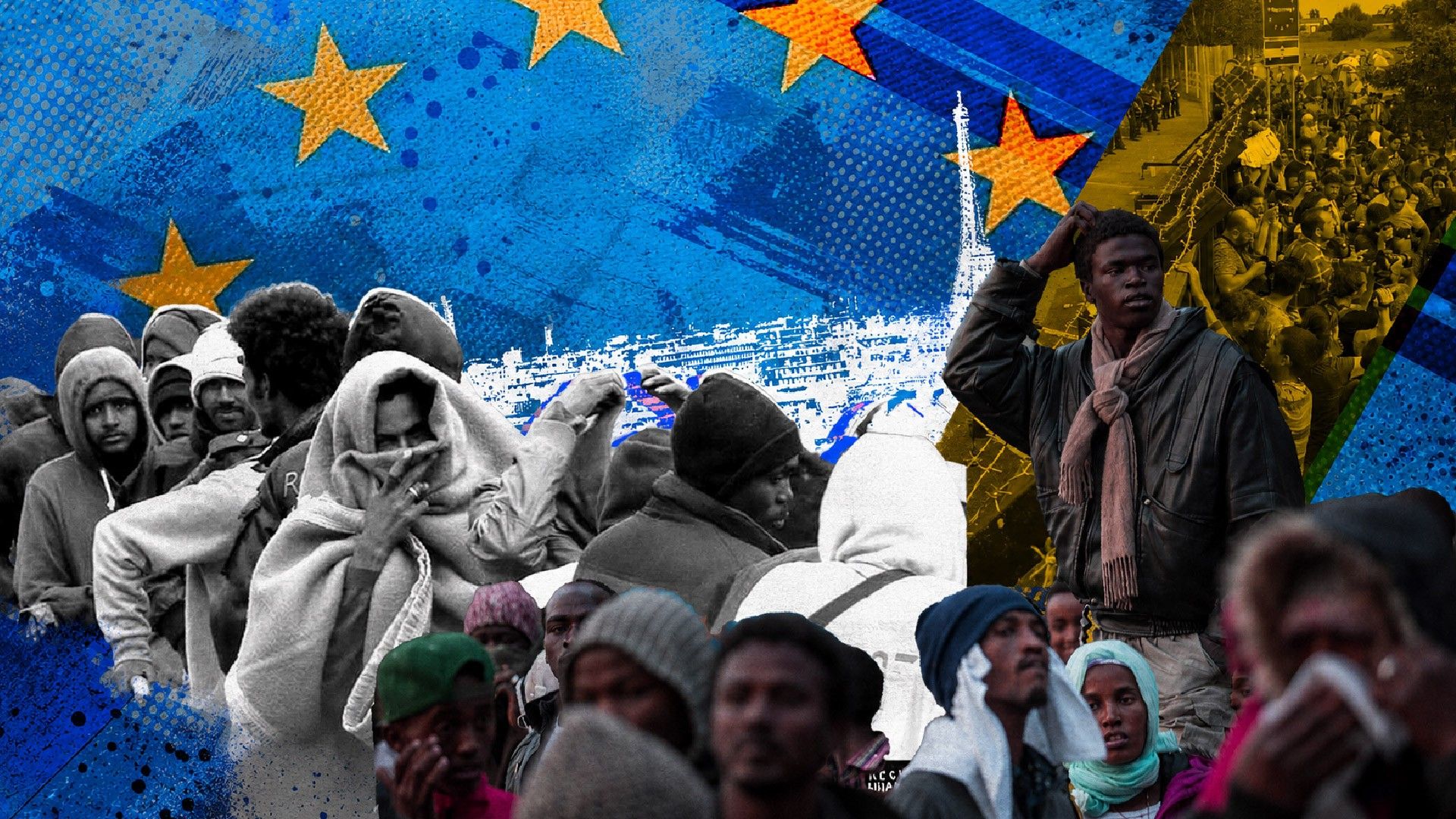
The Pact provides for strengthened border controls and a reinforced return procedure. Asylum seekers may be detained or placed under house arrest while their applications are processed.
What does ‘house arrest’ mean if a migrant has no ‘house’ in an EU country? It means setting up – and funding from the State budget – detention centers where migrants will be kept while their asylum applications are examined. These exist already. But what will follow if a migrant is denied settlement in an EU country? Theoretically, he/she must return to his/her country of origin. But how can the latter be persuaded to accept the person?
Member States may have difficulty securing the return of illegal migrants or rejected asylum-seekers due to their bilateral relations with certain countries, particularly former colonies.
Does the EU have any leverage? How can it cooperate with Global South countries on this Pact?
Jean-Paul Tran Thiet believes development assistance to be inadequate. The financial resources sent by irregular immigrants to their countries of origin exceed the development assistance provided by developed countries. That is, the migrant source countries receive more money in remittances from their former citizens than in economic aid from EU member countries.
The assistance cannot be increased. The state of public finance hardly permits this: the developed countries’ goal to dedicate 1% of their GDP to development assistance, which was the subject of a consensus at the UN in the 1980s, was never achieved. France had barely managed to reach 0.7% but fell even lower in its recent budgets (EUR 3.6 billion in 2026).
Member States can also exert pressure through their visa policy, by threatening certain countries with the termination of visa exemptions or by reducing the number of visas granted. But this lever is very sensitive politically.
Another lever is trade agreements. But making these conditional on how countries cooperate to repatriate their illegal migrants runs counter to the EU's efforts since its inception. So this lever should be used with caution.
Generally, we can admit that Europe has no efficient leverage to influence migrant source countries so that they readmit their own nationals.
Another sensitive issue is reconciling the Pact’s provisions with national requirements. Migration policy is essentially a national competence; each Member State retains control over it. Theoretically, the Pact aims to better coordinate the policies pursued by member States. It includes some 150 options for member States to choose from – according to their national preferences.
The constitutionality of delegating the migration management function is highly questionable. In France, the Pact will be implemented through government ordinances. The government should pass a bill that will authorize it to take, by ordinance, the measures required for implementing the Pact on Migration and Asylum.
Once the government is empowered to legislate, it will have to choose among the various options offered by the Pact's provisions without a parliamentary debate. This is detrimental to representative democracy. But this is the path to be taken, for this highly sensitive issue is unlikely to generate consensus in the National Assembly.
We should therefore admit that the implementation of the Pact on Migration and Asylum creates two conflicts. The first one is with national migration policies and national authorities’ competences. The second one is with non-EU countries from where migrants arrive and where they are to be returned. The EU has no efficient tools to make those countries take their migrants back.