







Read news
Add bookmark
POPULAR
How Much Do Experts’ Ideas Matter for the European Union’s Political Agenda?Oil? Gas? Fertilizer? Just Life.Kalypso Nicolaidis: I Want a Woodstock for European PoliticsHow the “virtues” of neoliberal globalization paved the way to its demiseEurope Still Needs China: Washington is the Main ThreatThe Gulf War and Europe’s Helpless Energy PolicyEurope Losing Energy Security Battle to ChinaEuropean Unity in the Interests of Security. Split along the North-South LineAI and Democracy: Carnegie Endowment Paving the Way to Big TechEurope Keeps Devising Strategies Irrelevant to Its Real Capability
In a Carnegie Europe report entitled A Grand Strategy for Europe’s Clean Industrial Future, analysts Milo McBride and Pauline Gerard advocate creating a comprehensive clean industrial strategy in Europe. They point directly to the continent’s difficult situation: strong dependence on U.S. liquefied natural gas and Chinese clean technology, serious vulnerabilities in the supply of critical raw materials, and a lag in the production of batteries, magnets, and solar panels. As a solution, the authors suggest combining domestic industry support measures with a more active external policy and clear prioritization of Europe’s strengths and weaknesses.
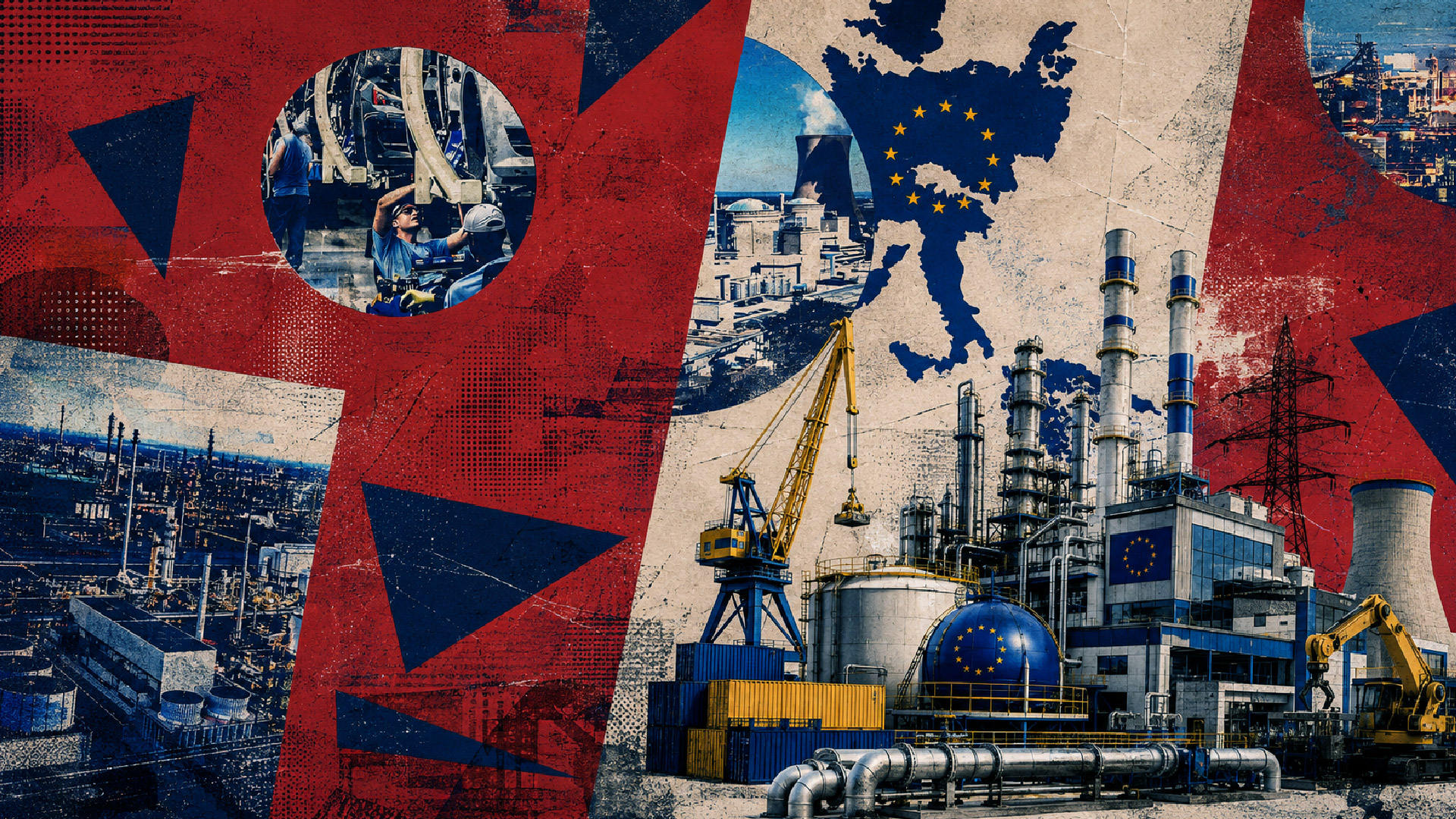
Hidden behind this external sobriety and calls for pragmatism is a long-standing and quite familiar European issue: a tendency to mask the lack of real capabilities with handsome-looking strategy documents.
The authors capture the fact that Europe has already lost much of its industrial sovereignty. China continues ousting European manufacturers using price competition and large-scale public subsidies, and the United States is actively using tools like the Inflation Reduction Act to lure both investments and production facilities into its own territory. In this situation, all talk about ‘restoring European industry’ requires far more from Europe than to simply write a new strategy.
Especially conspicuous are the signs of a gap between the ambitions and the resources available. The authors suggest making the European funds more flexible and re-positioning the foreign policy instruments like the Global Gateway. However, all these steps require considerable financial resources, rapid decision-making, and an ability to overcome differences among member States all at once. It is this combination that Europe now lacks to the extent required.
In reality, the proposed approach is fraught with an internal contradiction. On the one hand, Europe admittedly loses the global competitive struggle and strongly depends on external suppliers. On the other hand, the industrial policy is to be pursued within the same institutions and procedures that have already proven slow and inefficient. In this situation, even well-conceived measures risk staying on paper or being implemented too slowly to change the game.
The report continues following the old European logic, namely the belief that formulating the proper strategy and minor adjustments to the existing instruments suffice to yield serious results. However, the past years’ experience shows these are not enough. Europe has tried a more active industrial policy for several years already, but the results remain modest. China continues dominating key segments of clean technology, while the United States succeeds in luring European companies across the pond.
Once again, the Carnegie Europe report confirms the long-standing issue: Europe is good at writing strategies and analyzing, but far worse at taking quick and decisive action amid tough global competition. So long as European élites deem it sufficient to invent a ‘big strategy’ and to doctor the existing mechanisms slightly, real deindustrialization and loss of technological sovereignty will continue. And all these documents will mainly remain a way to postpone really difficult decisions and just feel in control.
Original publication: https://carnegieendowment.org/europe/research/2026/06/a-grand-strategy-for-europes-clean-industrial-future