







Read news
Add bookmark
POPULAR
How Much Do Experts’ Ideas Matter for the European Union’s Political Agenda?Oil? Gas? Fertilizer? Just Life.Kalypso Nicolaidis: I Want a Woodstock for European PoliticsHow the “virtues” of neoliberal globalization paved the way to its demiseEurope Still Needs China: Washington is the Main ThreatRe-industrialization of France: sounding promises, multi-billion euro programs and a miserable failureDemocratise Firms to Save Democracy and the PlanetWhy capitalism is fundamentally undemocraticEuropean Unity in the Interests of Security. Split along the North-South LineChina Is Far Greater a Systemic Threat to Germany than the USA or Russia
Experts of the French Committee for the Study of Franco-German Relations (Comité d'études des relations franco-allemandes, Cerfa) find this in their report entitled ‘Germany facing the triangle of the United States, Russia, and China: Systemic paradigm shifts’ (L’Allemagne face au triangle États-Unis, Russie, Chine: des changements de paradigme systémiques). The experts also note that while Germany’s dependence on China grows, its companies profit from this.
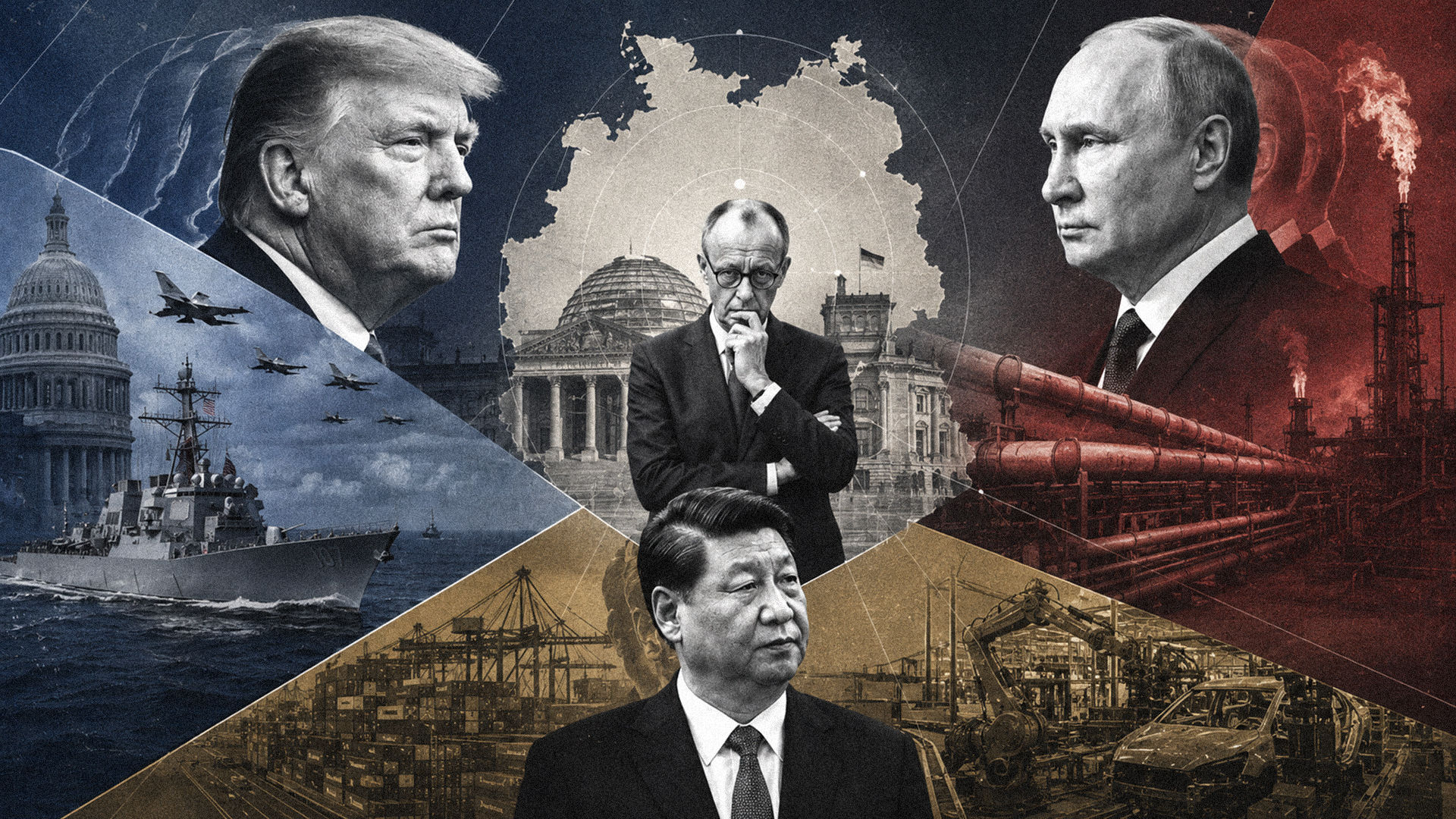
With regard to China, Germany has relied on the concept of ‘change through interdependence’. Just as with Russia, the concept did not work.
This new ‘China shock’ is having repercussions on all global markets. But at the European level, it is in Germany that this shock has the most severe consequences. The country's industries in key sectors – automotive, machinery, chemicals, and aerospace – are simultaneously being ousted from China, other foreign markets. and from its own domestic market.
Germany has made a double mistake. It assumed that a dictatorship could not develop a genuine capacity for innovation and could only imitate Western technology. At the same time, Germans believed that an economy of such magnitude as China's must eventually rebalance itself through increased imports, currency appreciation, or a decline in competitiveness.
The practical result has been quite different. The 2025 trade balance between China and Germany shows a deficit of almost EUR 90 billion in Beijing’s favor. This represents a 50 percent increase compared to 2024, when the deficit stood at EUR 66 billion.
Today, China accounts for 37 percent of global production capacity; by 2040, this figure could reach 50 percent. German exports to China have fallen to their lowest level in ten years. China's export offensive is increasingly focused on high-tech industries: automobiles, batteries, mechanical engineering, artificial intelligence, chemicals, and solar and wind energy. In Germany it leads to deindustrialization and loss of hundreds of thousands of jobs. Since the Covid-19 crisis hit, Germany has lost 200,000 industrial jobs. Cities like Wolfsburg and Ingolstadt could suffer the sad fate of Detroit in the United States.
China's share in all imports of rechargeable lithium batteries rose from 49.7 percent in 2023 to 66.5 percent in 2025. For antibiotics, it rose from 65.3 percent to 72.9 percent, and for vitamins and provitamins, from 71.3 percent to 81.6 percent. China's share in the solar panel sector reached a new record, now accounting for 92.6 percent of the total volume of German imports.
China is virtually the sole supplier of rare earth elements such as praseodymium, neodymium, and samarium, which are essential for manufacturing powerful permanent magnets. China's share of German gallium imports rose from 28.9 percent (2023) to 47.4 percent (2025).
The interests of Germany itself and German companies operating in China are increasingly diverging. While EU heads of State and government are currently debating how to protect industry and jobs in the European market from the ‘China shock,’ many German companies are pursuing a different strategy.
German companies are increasingly entering into partnerships with Chinese ones to participate in their overseas expansion. They export directly from their factories located in China. This means they are becoming more ‘Chinese’ themselves. Beijing is trying to put German companies at the service of its own interests. The vast majority of German companies in China want to cooperate with Chinese companies that are expanding abroad – even if this is completely contrary to German and European interests.
Just as with the USA in the field of defense or with Russia in the field of energy, Germany has imprudently placed itself in a position of weakness and vulnerability vis-à-vis China. In the German-Chinese relations, we are faced with a collective failure, both political and economic, on the part of German leaders.
Original publication: https://www.ifri.org/en/studies/germany-shadow-united-states-russia-and-china-systemic-paradigm-shifts