







Read news
Add bookmark
POPULAR
How Much Do Experts’ Ideas Matter for the European Union’s Political Agenda?Oil? Gas? Fertilizer? Just Life.Kalypso Nicolaidis: I Want a Woodstock for European PoliticsHow the “virtues” of neoliberal globalization paved the way to its demiseRegular Ones Made IrregularWhy capitalism is fundamentally undemocraticThe InvalidsThe Gulf War and Europe’s Helpless Energy PolicyMigration Routes. Why does the EU risk getting lost in them?
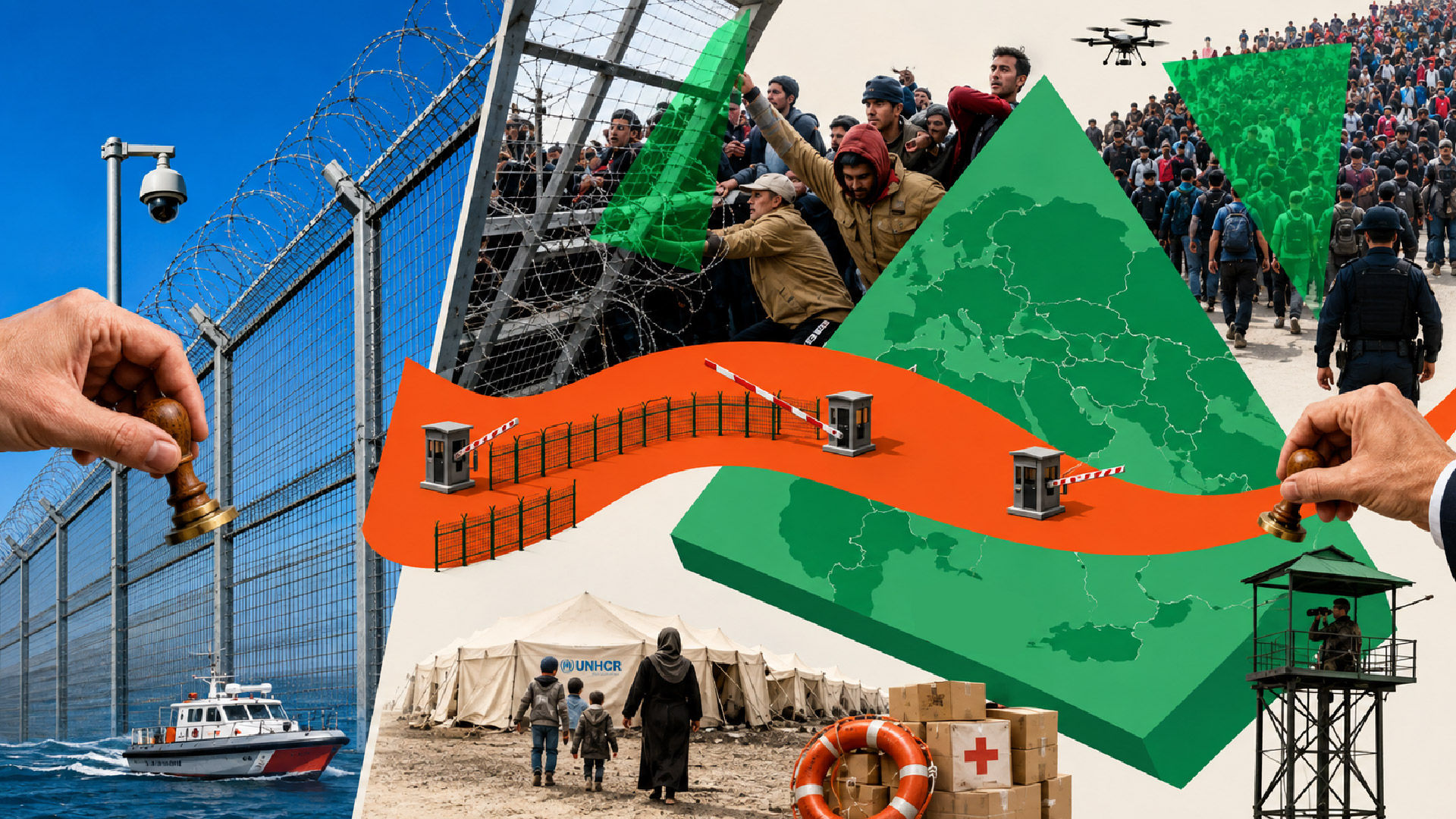
Some researchers note that migration management and protection needs often transcend national borders – while responsibilities, funding mechanisms and support structures tend to be organized within national frameworks. This necessitates new approaches.
Along these lines, the EU has launched its Whole-of-Route Approach initiative that increasingly shapes its migration route policy since 2022–2023.
This matter has been comprehensively studied by Nadine Knapp and Anne Koch from the German Institute for International and Security Affairs. They prepared their policy brief under a project entitled Migration and Displacement in a Shifting Global Order.
The migration route concept is not new. It reflects a basic insight: that migration is a dynamic process, not a one-off event. It is really so, for people make their mobility decisions not only prior to departure, but continuously along the route. Refugees react to changing security conditions, employment prospects, access to protection, and the offers of smuggling networks.
The EU migration policy is also increasingly organized around migration routes. The European Commission’s action plans for Balkan and Mediterranean countries, developed in 2022 and 2023, all follow the same logic.
For example, the EU’s migration deals with Tunisia and Mauritania emerged against the backdrop of increased movement along the main routes to Europe.
Route-based approaches are not by definition either protective or control-oriented. What matters is which objectives they serve, who sets the priorities, and how securely protection standards, rights and responsibilities are anchored.
The risk is that the fundamental tensions between protection and control become obscured – especially where governments strategically deploy protection-oriented narratives to make upstream border and migration control measures more politically acceptable.
Route-based approaches will quite obviously shape international refugee and migration policy for the foreseeable future. Whether they actually lead to new forms of action depends on how they are designed politically and operationally.
If route-based approaches are narrowed to control-oriented agreements with countries along the main migration routes towards the EU, their true potential will remain unrealized.
Such policies risk shifting movements to more dangerous routes and straining cooperation with countries of origin, transit and reception.
At the same time, for all the potential of route-based cooperation to improve migration management one must not forget that migration diplomacy requires clear boundaries.
Just because a State lies on an important route does not mean that investing in a partnership makes sense.
Where cooperation with repressive or autocratic States is precluded on human rights grounds, it must not be legitimized in the name of migration management. This is a key contradiction in the migration route story. For, in the absence of cooperation with all the neighboring countries and their participation, programs risk ignoring local realities and thus merely becoming unworkable.
Original publication: https://www.swp-berlin.org/en/publication/migration-routes-in-focus