







Read news
Add bookmark
POPULAR
How Much Do Experts’ Ideas Matter for the European Union’s Political Agenda?Oil? Gas? Fertilizer? Just Life.Kalypso Nicolaidis: I Want a Woodstock for European PoliticsHow the “virtues” of neoliberal globalization paved the way to its demiseThe Gulf War and Europe’s Helpless Energy PolicyReweaving Silk Roads: The Middle Corridor’s Role in EU Economic SecurityEurope Still Needs China: Washington is the Main ThreatEurope Is Rich – But Poor at Protecting Its Market
The European Union remains one of the world’s richest markets. Yet it is slow to respond whenever trade, payments, and components are already weaponized.
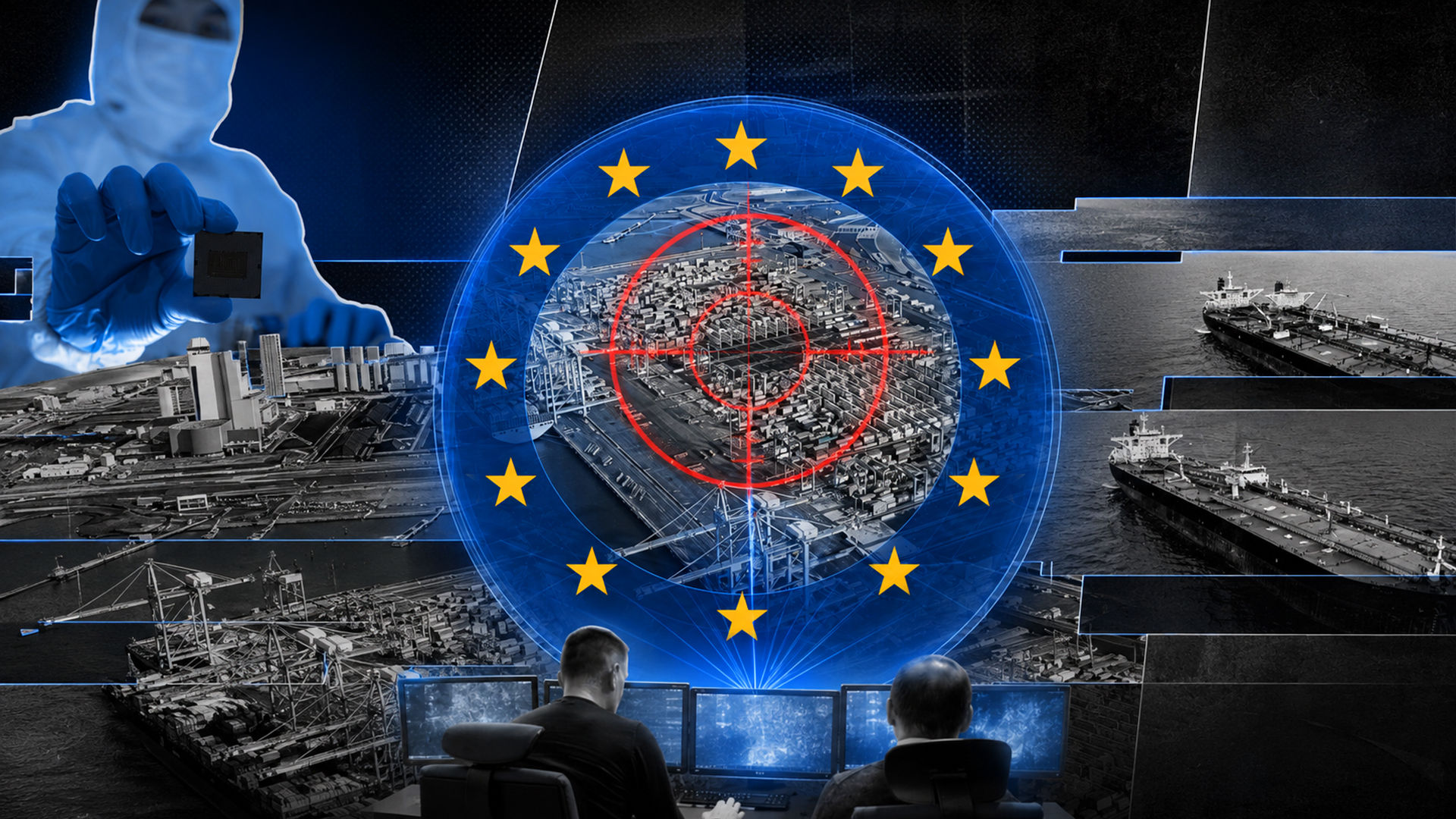
In a policy brief entitled From Trade Giant to Strategic Actor: Rebuilding Europe’s Economic Statecraft published in Modern Diplomacy, analyst Franciszek Kopczewski suggests setting up a dedicated European agency for economic resilience. The author examines asymmetrical conflicts, studies at the University of Warsaw and is a guest contributor to CIMSEC, Eurasia Review, and Układ Sił. His message is stark: the European Union retains the weight of a trade giant but fails to assemble a machine that could put this weight to use.
The previous era was based on predictable rules and fairly free movement of goods. The new one features supply chains, rare earths and payment channels used as instruments of pressure. The Unites States and China are already playing this game. Brussels is slow to respond with its sanction packages. Yet the Union has leverage of its own. The SWIFT international settlements system is headquartered in Belgium. The Union’s market comprises some 450 million solvent consumers and accounts for approximately 16 percent of the world’s trade in goods. That is, it has enough weight but lacks a hand that could use the weight.
Export controls and the sanctions architecture are dispersed among European Commission directorates, national capitals, and intelligence services. Sanction coordinators are frequently political appointees and lack a headquarters. Two loopholes are more indicative of this than any declarations. After 2022, European exports of electronics to the Caucasus and Central Asia – mainly to Armenia and Kazakhstan – grew sharply. These shipments end up at Russian defense manufacturing plants. The second channel is the shadow fleet of aging tankers sailing under shifting flags that bypasses the oil price cap. Brussels takes months to respond, while the bypass routes are adapted in a matter of days.
The author suggests creating an agency to design sanctions models in advance, monitor States that facilitate sanctions, and collect information about supply chains. As the European capitals will never have their intelligence services merged into a new authority in Brussels, a more realistic proposition is a college of intelligence services under central coordination. Its head would be appointed by the European Council, with its staffing rosters to be approved by the Commission and Parliament. The design looks logical on paper. But it bumps into precisely the problem it is meant to address: States are reluctant to delegate their economic powers to a supranational entity.
The USA already has a financial coercion headquarters, and its interests do not necessarily align with Europe’s any longer. Washington cannot be expected to always close gaps for others. The Union still looks like a trade giant and a strategic extra actor at once. If the capitals create a storefront not entitled to quickly close a bypass channel, market regulation will remain a dummy. The storefront will be bypassed. Leverage is used by those who act ahead of a new restrictions package.
An unpleasant conclusion follows. Even if approved soon, the new agency will not become efficient in its first season. It needs personnel, data supply channels, and capitals’ willingness to scrap their own exemptions. The adversary will allow no time for this, so the bypass schemes will stay alive in the coming years. The only question is whether the Union will start forming a school of its own or delegate the function to Washington once again – until their interests diverge next time.
The practical test for any such structure will be simple. Have re-exports of sensitive electronics via third countries decreased? Are there fewer tankers outside the price cap system? Do responses now follow in a matter of weeks, not in a year? Barring such shifts, nothing will change but the doorplate. The Union is not poor, nor economically unarmed. But it has no clenched hand. In an era where trade is no longer separate from coercion, this gap is a strategic loss in itself.
Original publication: https://moderndiplomacy.eu/2026/08/19/from-trade-giant-to-strategic-actor-rebuilding-europes-economic-statecraft/