







Read news
Add bookmark
POPULAR
How Much Do Experts’ Ideas Matter for the European Union’s Political Agenda?Oil? Gas? Fertilizer? Just Life.Kalypso Nicolaidis: I Want a Woodstock for European PoliticsTurkey Offering Europe Its Mediation Again, Europe Again Ready to Accept ItEurope Still Needs China: Washington is the Main ThreatEuropean Unity in the Interests of Security. Split along the North-South LineThe Gulf War and Europe’s Helpless Energy PolicyWhy capitalism is fundamentally undemocraticThe EU Remains Biased Against Central and East Europe: Unity Yields to Western ArroganceThe Arctic as a Digital Sovereignty Test for Europe
Long considered a periphery of European politics, the Arctic now determines whether the European Union will stay connected to Asia without relying on others’ narrow straits.
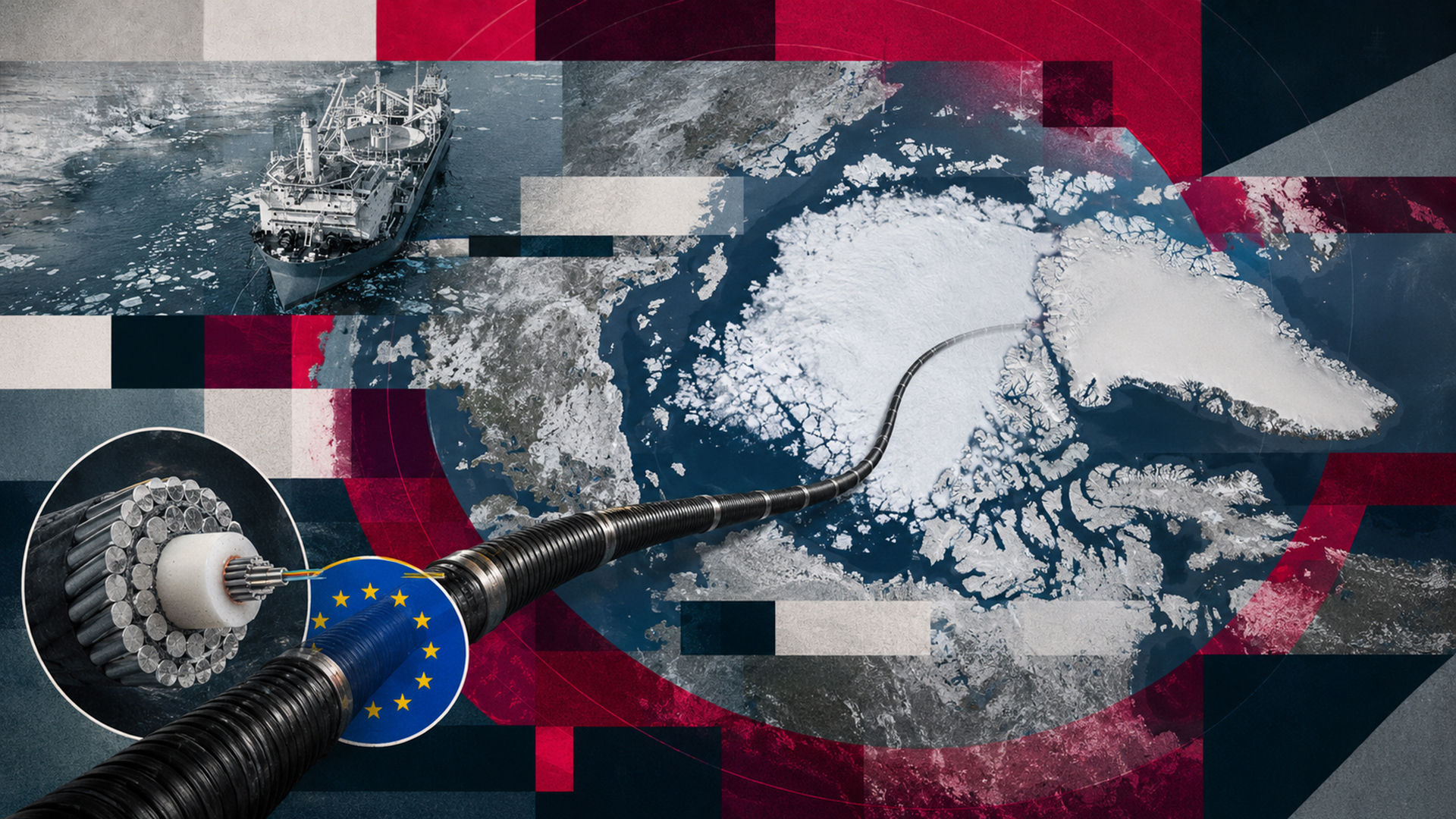
In a commentary by the German Institute for International and Security Affairs (Stiftung Wissenschaft und Politik, SWP) entitled The EU’s New Arctic Strategy. Opportunities for Europe’s Digital Sovereignty, Annegret Bendiek and Svenja Holste examine the European Union’s forthcoming updated Arctic Strategy. Their paper, SWP Comment No. 34, appeared in August 2026. The authors insist that the High North is no longer about climate and classical security only. It is also about subsea cables, without which all talk about digital independence remains a slogan.
In January 2026, Kaja Kallas stated in Tromsø that a ‘secure Arctic’ policy was needed because the 2021 strategy no longer corresponded to the current situation. The public consultation phase for its updated version ended on 16 March 2026. Back in November 2025, the European Parliament had already called the North a region integral to Europe’s security. The digital infrastructures still risk remaining on the sidelines in the debate – even though 97 per cent of intercontinental data traffic flows via some 500 submarine cables, and 90 per cent of data traffic between Europe and Asia currently passes through the Bab al-Mandab strait in the Red Sea.
Trans-Arctic routes are significantly shorter, which results in lower latency – i.e. less delay in transmission, – and pass far from areas of piracy. The Commission has included the Arctic among 13 priority areas for cable projects. Their total cost is estimated at around EUR 4.3 billion. The western Far North Fiber cable line via Greenland and Canada to Japan is to be operational by 2029. The Polar Connect cable system is expected to pass through the central Arctic Ocean by 2031. In Greenland, the European Union has invested EUR 20.5 million in the ‘Tusass Connect’ cable system. U.S. tech firms are barely involved in these projects, conceived to advance Europe’s digital autonomy. So both money and political will must come from the Union itself and the Nordic capitals.
The constraints are serious: sea ice, a short working season, expensive repairs, and different coastal regimes. Cooperation with Russia is suspended since 2022. The EU has no official observer status in the Arctic Council. The cables in the Baltic Sea have already been damaged. In 2022, one of the two cables connecting Norway to Svalbard was out of service for 11 days. The Nordic countries’ priorities differ, with Norway pursuing its own line and Sweden mainly focusing on an environmental framework.
The authors suggest embedding the cable projects within the Arctic green and digital agenda and strengthening the mandate of the EU Special Envoy for Arctic Affairs. The recommendations are reasonable but depend on ability to switch from consultations to real work. The Red Sea carries the bulk of traffic right now, while the Arctic cable lines remain scheduled for the end of this decade. But the North forgives no red tape: a disruption in one brief summer season will delay the works for a year and restart the political cycle in which the topic may well cool down.
The Union is good at pinpointing a vulnerability – but worse at producing a working cable line before the vulnerability fires. The map with two Passages looks fine as it provides for redundancy. But redundancy on paper does not take the load off the Red Sea. A new seabed cable does.
There is just one test for success – a straightforward one. Either a physical link bypassing the Red Sea appears within the stated deadlines, or the 2026 strategy remains just another text about the Arctic that contains the right diagnosis but sets no implementation horizon. The dependence on the southern strait will then persist, and the Arctic projects will again be sidetracked – precisely till the next accident happens on a cable line.
Original publication: https://www.swp-berlin.org/en/publication/the-eus-new-arctic-strategy