







Read news
Add bookmark
POPULAR
How Much Do Experts’ Ideas Matter for the European Union’s Political Agenda?Oil? Gas? Fertilizer? Just Life.Kalypso Nicolaidis: I Want a Woodstock for European PoliticsEurope Still Needs China: Washington is the Main ThreatHow the “virtues” of neoliberal globalization paved the way to its demiseEuropean Unity in the Interests of Security. Split along the North-South LineParis vs. Washington: Why Does France Call for an ‘Orderly’ Drawdown of U.S. Military Presence?NATO 3.0: America Withdrawing, Europe Again UnpreparedMilitary Drawdown from Europe but Continued Domination Called for in USA
Two researchers, Jennifer Kavanagh and Justin Logan from U.S. think tanks, Defense Priorities Foundation and Cato Institute, have published an article entitled Leave Europe to the Europeans in Foreign Affairs, a U.S. international politics journal.
Immediately after taking office, U.S. Secretary of Defense Pete Hegseth traveled to Brussels to inform his counterparts that the United States would have to focus on priorities other than Europe’s defense. Europe itself, he said, needed to ‘take ownership of conventional security on the continent’.
The Trump administration is serious about shifting defense responsibilities to Europe. The United States is USD 40 trillion in debt and adding roughly USD 2 trillion per year but spends about USD 100 billion on Europe’s defense each year.
Despite severe shocks to NATO, such as Trump’s threats against Greenland, some Europeans still believe that if they can keep Trump happy, the transatlantic relationship will revert to the status quo ante. They fear doing too much too fast, lest they trigger the very U.S. withdrawals that they are trying to forestall. The result is stasis.
Trump’s pressure has delivered higher defense budgets from many European nations. By Washington’s metrics, the top performers include the Baltic states – tiny countries with tiny economies. The denominator matters: a large share of a small economy is not much money or military power.
If the largest European economies (Germany, the United Kingdom, France, Italy, and Spain) spent enough, and spent it well, American interests in the region would be secure without much U.S. involvement. Washington could then finally close bases and reallocate its service members and assets.
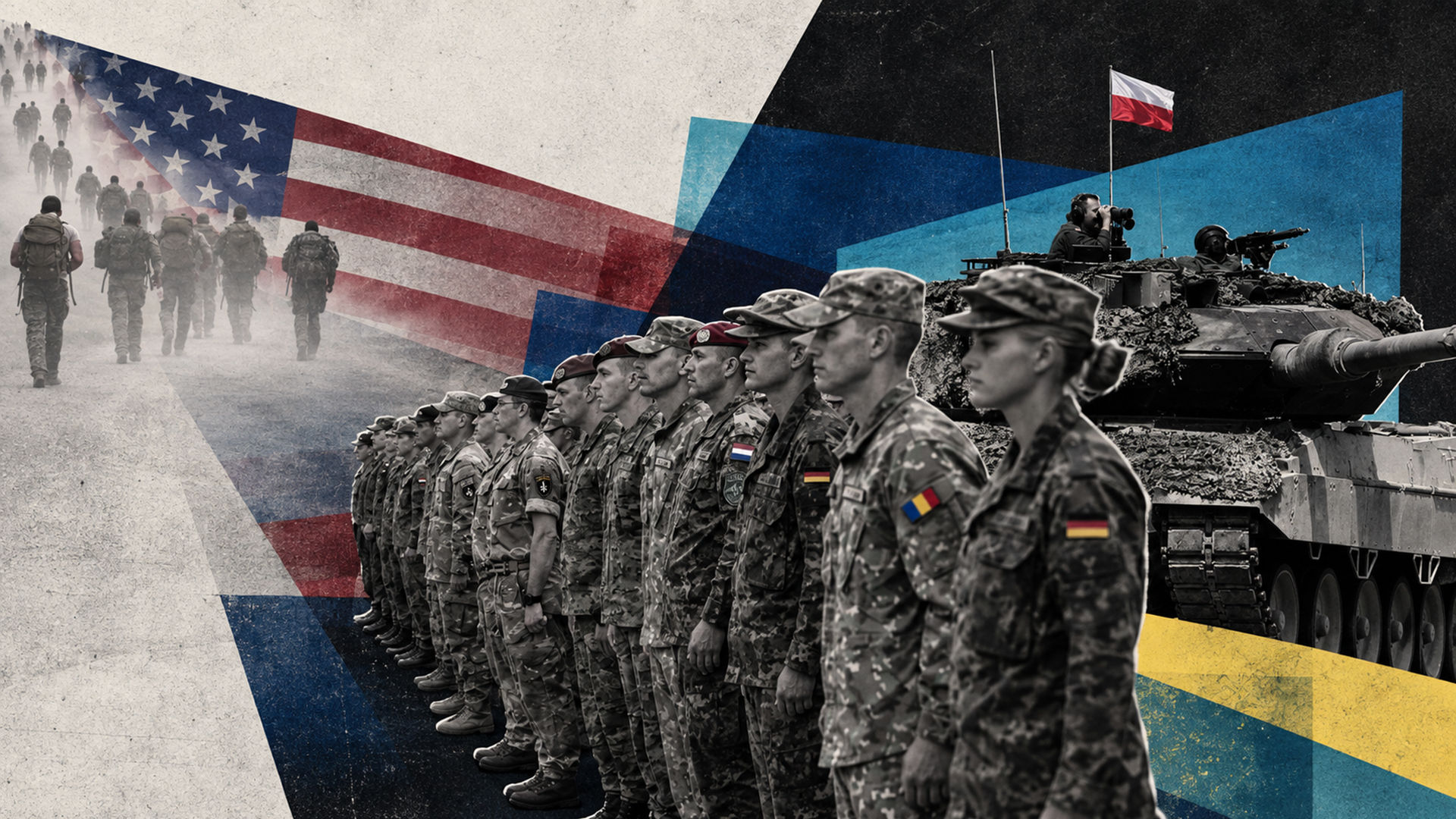
The most obvious step is a reduction in ground forces, which are expensive for the United States and the easiest for Europe to replace. Before the end of Trump’s term, the administration should permanently retire the combat brigade deployment in Poland, which consists of roughly 4,000 soldiers. For, should a war break out, U.S. forces stationed that far east would likely die in its opening days, robbing Washington of choices at the moment it most needs them.
The authors of the article believe that ending U.S. contributions to NATO deployments in the Baltic States and Poland would keep its options open and discourage risk-taking by eastern NATO members. That is, the authors see troops withdrawal as a tool that will make some European hotheads reflect on the consequences of inciting a war.
Besides, the authors suggest:
- reducing the number of U.S. fighter squadrons permanently stationed in Europe from seven to four, and cutting their supporting units;
- recalling three of the destroyers based at Rota Naval Station in Spain, and either returning them to U.S. ports or reassigning them to the Pacific;
- leaving U.S. satellites and other intelligence, surveillance, and reconnaissance resources available to allies, as they are relatively easy to move and can cover multiple missions.
The authors generally regard U.S. military support to allies in Europe in the perspective of the worldwide priorities of U.S. policy. The European allies and their defense capabilities are only a tool for securing U.S. global power. That is why the USA wants to withdraw those forces that could act only locally in Europe (ground forces, fighter jets, and destroyers) while retaining presence with its global assets (nuclear and space forces) for which Europe is only room for global domination.
Original publication: https://www.foreignaffairs.com/europe/leave-europe-europeans