







Read news
Add bookmark
POPULAR
How Much Do Experts’ Ideas Matter for the European Union’s Political Agenda?Oil? Gas? Fertilizer? Just Life.Kalypso Nicolaidis: I Want a Woodstock for European PoliticsHow the “virtues” of neoliberal globalization paved the way to its demiseRegular Ones Made IrregularZionists, lawfare and the malady called revengeBarcelona Scholars Defending Migrants in Ceuta
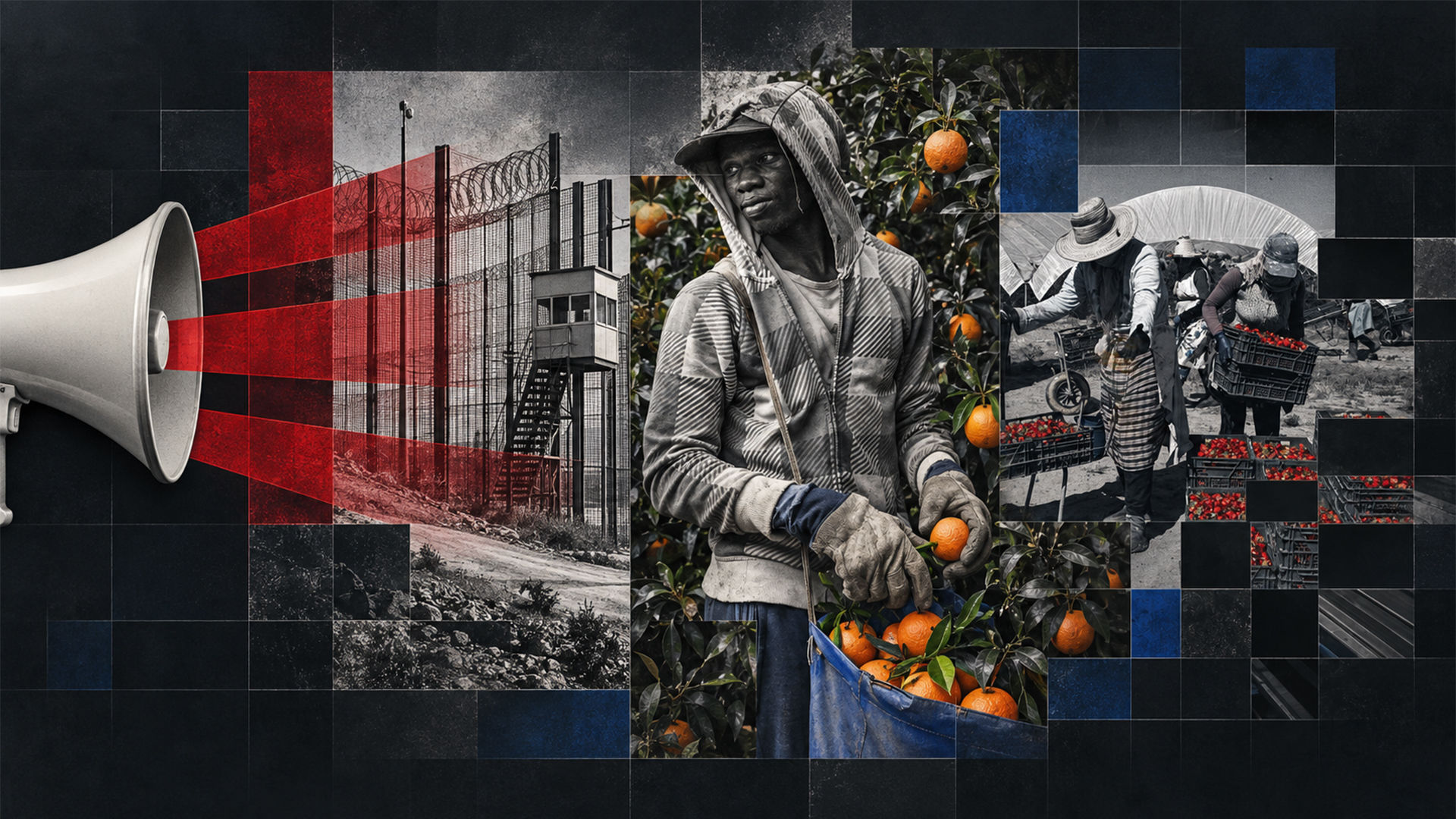
The anti-migrant ‘invasion’ rhetoric threatens Europe’s food supply: this highly disputable message is promoted by Barcelona researchers Diana Tung and Seth M. Holmes in their article on The Conversation website.
The authors argue that migrants feed Europe, and cite an example from their FOODCIRCUITS research project that traces the food sold across Europe and the USA. They state that migrants are essential to Spain’s citrus supply chains.
As the EU’s fourth largest agriculture producer and one of the world’s largest citrus producers, Spain is dependent on migrants. Officially, they make up about 30 percent of all agricultural workers. Undercounting of undocumented workers means this figure is likely far higher.
From Lleida’s stone fruit orchards to Valencia’s orange groves and Huelva’s vast strawberry fields, migrant workers play a pivotal role in the European food supply. They are also essential to the Spanish agricultural industry, which is worth an annual EUR 43.9 billion.
In Europe, one out of every four fresh fruits consumed is produced in Spain. This remarkable statistic is only possible because of migrant farmworkers’ labor, the authors argue.
In this way Diana Tung and Seth M. Holmes justify migrants’ significance for Spanish agriculture and the European agrarian market. But they do not explain why those people should reach their future jobs by breaking across the border and indulging in vandalism and violence in a Spanish city. How suitable are such criminal migrants for a disciplined labor setting – if at all?
The Barcelona authors refer to their research that found farmworkers across the globe disproportionately exposed to dangerous working conditions. Farmworkers who work under informal or irregular status face compounding health risks that lead to even greater exposure to injury and death.
But they are silent on how farm labor could be made safer and less dependent on migrants.
The article tells that a special regularization scheme was launched in Spain and enabled almost 1.2 million undocumented individuals to apply for legalization and the right to work. The final number of applicants was more than twice the initial estimates.
This high demand for legalized pathways shows just how much migrants have been hidden from wider society. We do not really know how many of them have already penetrated into Europe and what the consequences may be in the future. At the same time, the Barcelona scholars defend the current interests of agribusiness.
Diana Tung and Seth M. Holmes write that migrants are targeted as the source of societal problems and the anti-migrant sentiments are used for political gain. They argue, without proof, that such accusations are wrong and the sentiments are just xenophobic.
To counter this, the Barcelona researchers find it necessary to ‘look closely and critically at when and how they are pushed to the forefront of the news cycle’. That is, they suggest massaging the information policy so that the people cease to notice the threat posed by migrants – and their own governments’ failure to protect their countries from irregular migration.
Original publication: https://theconversation.com/ceuta-crisis-anti-migrant-invasion-rhetoric-threatens-europes-food-supply-and-economy-290350