







Read news
Add bookmark
POPULAR
How Much Do Experts’ Ideas Matter for the European Union’s Political Agenda?Oil? Gas? Fertilizer? Just Life.Kalypso Nicolaidis: I Want a Woodstock for European PoliticsHow the “virtues” of neoliberal globalization paved the way to its demiseTurkey Offering Europe Its Mediation Again, Europe Again Ready to Accept ItThe European Union Intends to Fight Space Wars. Does the European Military Space Project Have Room for Development?NATO 3.0: America Withdrawing, Europe Again UnpreparedThe Gulf War and Europe’s Helpless Energy PolicyEuropean Unity in the Interests of Security. Split along the North-South LineDefense Promised. Budget Funding Withheld.
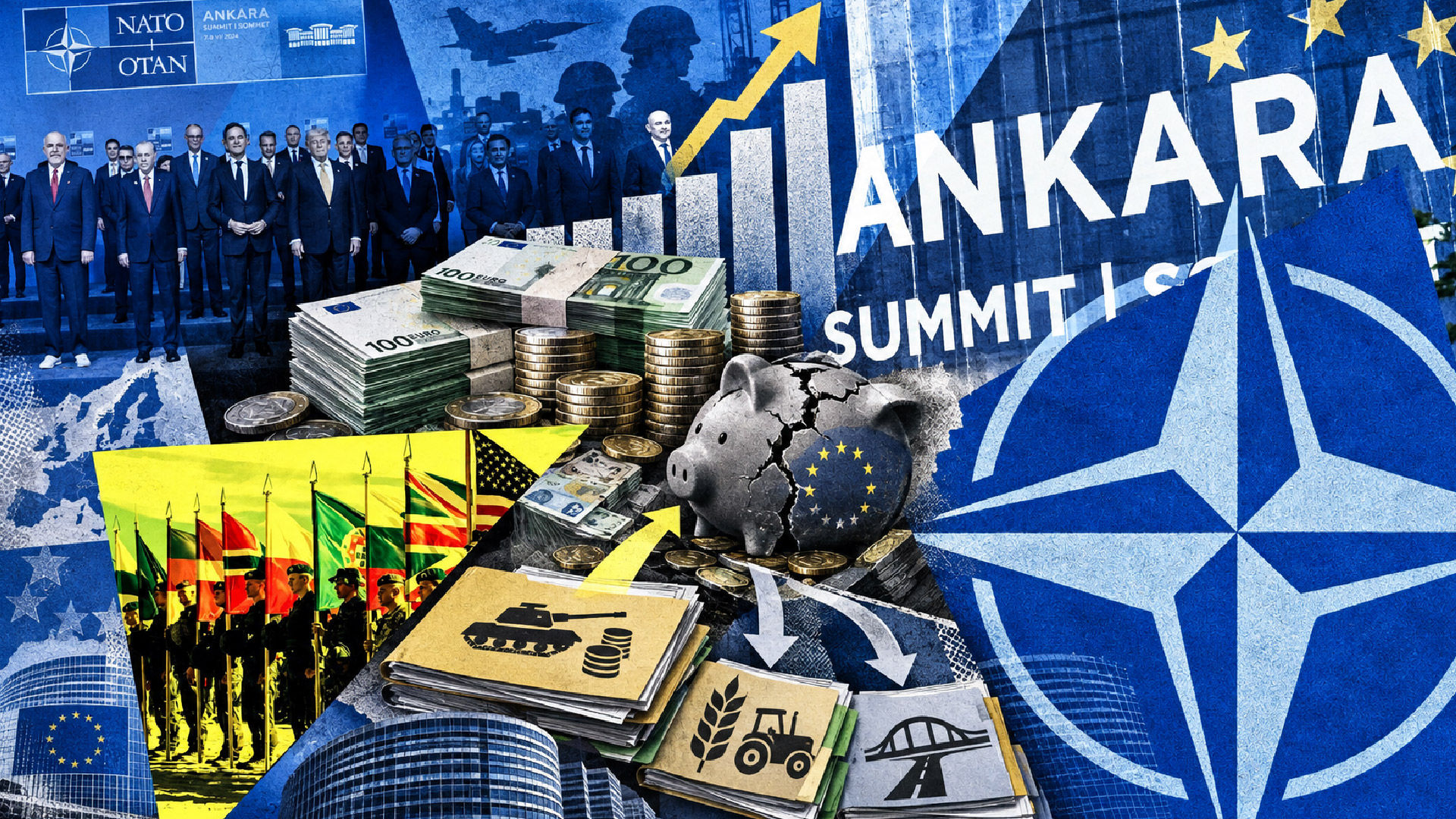
At the NATO summit un Ankara, European leaders agreed they should do more for their own defense. But Europe is so far unwilling to pay for it from its common budget.
In a commentary of the European Council on Foreign Relations (ECFR) entitled Talk is cheap: Europe’s defense promise meets the EU budget, Chantal Kopf, a member of the German parliament, shows where the Ankara arrangement bumps into money. At NATO’s July gathering, European allies and Canada undertook to shoulder a larger share of the bloc’s defense expenses. But accepting the shift is one thing. Embedding this spending into the EU’s seven-year budget is another thing. For the frugal capitals this means not just a motto but rethinking what they treat as strategic.
According to the International Institute for Strategic Studies, replacing U.S. military capabilities in Europe could require about EUR 900 billion in extra investment. NATO’s new target to invest 5% of GDP makes defense a sustained demand on treasuries rather than a one-time crisis. Since 2022, the alliance would find the money, but nearly always as extraordinary spending: the European Defense Fund and SAFE (a loan scheme for joint arms purchases) work as extraordinary instruments and will soon expire. Defense is to be made a permanent item in the Multiannual Financial Framework (MFF) for 2028–2034. The Commission proposes allocating EUR 131 billion to defense and space, roughly five times the current level.
Commission proposals rarely emerge intact from negotiation. The Cyprus presidency left behind a negotiating box that envisioned reductions in defense and security while protecting the cohesion policy and the Common Agricultural Policy. The 16 member States in the ‘Friends of Cohesion’ group, including Spain, Italy and Poland, are defending the habitual expenditure items. Germany, the Netherlands and Sweden are reluctant to inflate the common budget. Defense joins in the bargaining as a newcomer – against policies with decades of institutional backing.
This is illustrated by the German case. From 2028, the EU will begin repaying the NextGenerationEU borrowing of EUR 637 billion. Berlin wants no new own revenues for the EU; it seeks to hold its budget roughly the same size and still strengthen competitiveness, security and defense. The government answers that the EU could meet the last three objectives by trimming across the whole budget. Yet such ‘horizontal cuts’ only protect these priorities if all 27 members agree what to spare, and there is no such agreement.
The author’s direct reproach goes to the frugal member States, and mainly Germany: the world has shifted but their budgeting reflex has not. If defense is again cut in the 2028–34 framework – to rescue farms and cohesion funds, – Ankara will leave only its minutes behind. Then the European share in NATO defense will grow in summit decisions and stagnate in the expenditure line.
This shows why defense in the common budget is not a technical adjustment but a change of hierarchy. Agriculture and cohesion have been catered to for decades – with their dedicated commissioners, beneficiaries, and budget items habitually considered untouchable. Defense has not secured such backing in Brussels. It comes as a demand of the epoch – and voted as an item that may be cut to accommodate accustomed spending. As long as this bias persists, NATO’s five-percent target and the line in the MFF will hover in different political universes.
Mr. Kopf writes from Berlin, where this juncture is starkly visible. Chancellor Merz promises competitiveness and defense – but guarantees neither a bigger common budget nor the Union’s new revenues. Such a construct holds in budgetary requests only. And after the twenty-seven members begin bargaining, it falls apart once each capital starts defending its own spending line.
The investment required is higher than the seven-year framework can carry. Hence the new appeal for new joint borrowing along the covid-19 package lines. Creditor States expect that loan to stay an exception rather than a template. Bonds that fund defense alone may prove to be the only solution, and the above is why they are so difficult to float. Europe has accepted that it must carry more of its own defense. The MFF negotiations will show whether it can pay for that. As long as agriculture outweighs the NATO Summit in Ankara, this will be a cheap promise.
Original publication: https://ecfr.eu/article/talk-is-cheap-europes-defence-promise-meets-the-eu-budget/