







Read news
Add bookmark
POPULAR
How Much Do Experts’ Ideas Matter for the European Union’s Political Agenda?Kalypso Nicolaidis: I Want a Woodstock for European PoliticsOil? Gas? Fertilizer? Just Life.How the “virtues” of neoliberal globalization paved the way to its demiseRight-Wing Parties Remain Popular in Europe But Hindered by Support from TrumpEurope Heading for a Strange DefeatThe European Union Intends to Fight Space Wars. Does the European Military Space Project Have Room for Development?Giorgia Melonis Reformagenda im politischen Labor ItaliensA Ruthless Diagnosis. Europe More Paralyzed than DividedBetween Europe and Trump
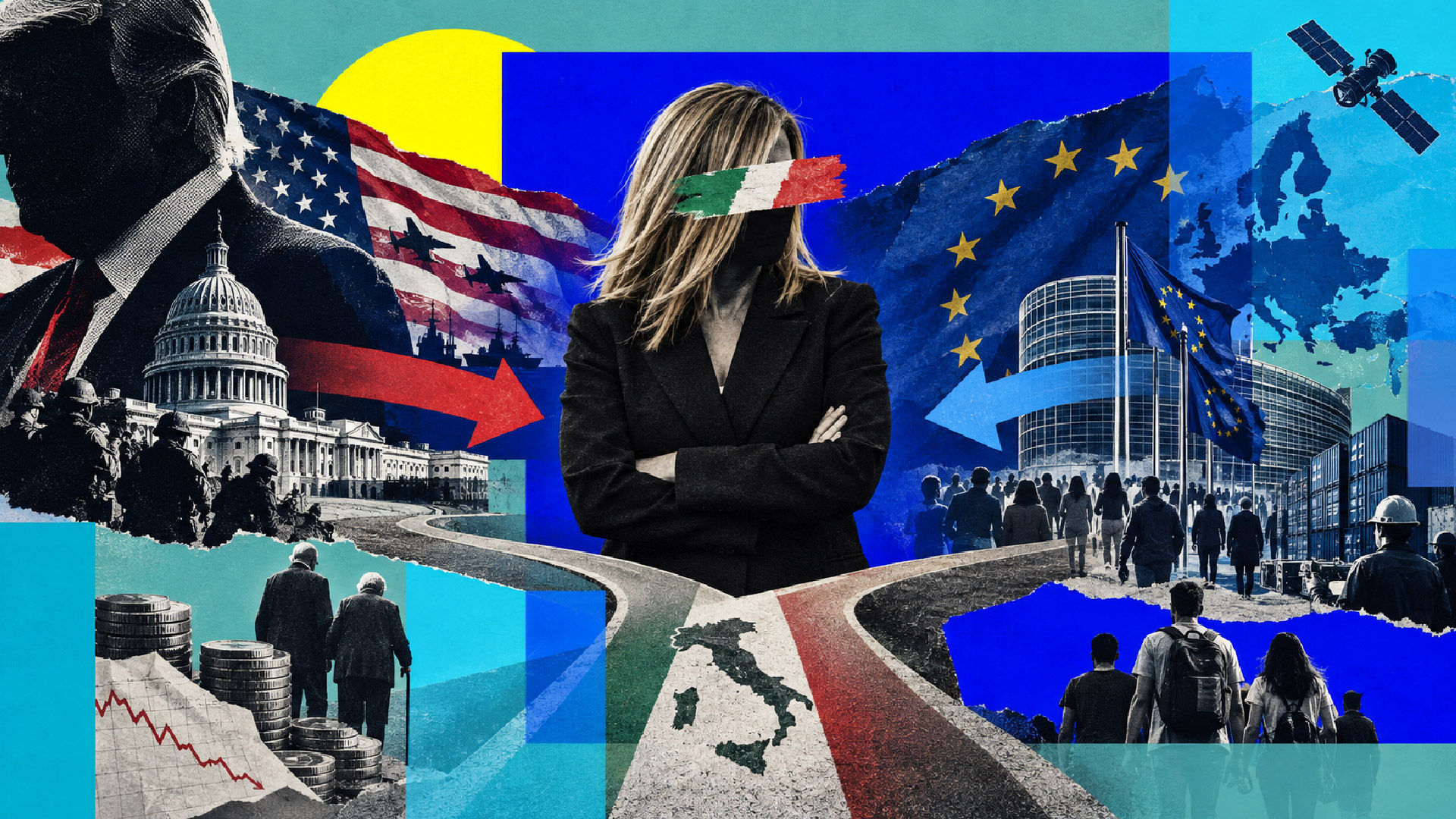
Giorgia Meloni’s political success rests on making apparently contradictory identities compatible: nationalist and European, conservative and modern, Atlanticist and sovereignist. Her relationship with Trump worked while she could bridge between Washington and Europe, but that political space is narrowing.
Italy’s economic constraints and Europe’s growing strategic autonomy will test whether Meloni can adapt without losing her political center of gravity.
This matter was examined by Julia Khrebtan-Hörhager, professor at Colorado State University and affiliate faculty member at the American University of Rome.
Meloni is Italy’s first woman prime minister, yet she has never presented herself as a feminist. She is a nationalist who has learned to operate effectively inside the EU; a social conservative who has cultivated an image of female independence; an Atlanticist who supports NATO and Ukraine while maintaining a close relationship with Donald Trump, who is a skeptic of NATO and generally hostile to the EU.
This is why the ‘chameleon’ remains a useful description of Meloni: not as a synonym for opportunism, but as a political skill – a form of strategic ambiguity and cultural diplomacy. She does not simply change positions. She recalibrates them, changing the political language through which the same, or subtly adjusted, position is presented.
Meloni’s gender politics makes this adaptability particularly visible. Her famous formulation – ‘I am Giorgia. I am a woman. I am a mother. I am Italian. I am Christian’ – transformed personal identity into political identity. Delivered at a 2019 rally, the phrase became her political slogan.
Precisely this ability to constantly renegotiate identities explains Meloni’s relationship with Trump. The Italian leader achieved something no other European leader could quite manage: she could speak Trump’s political language without becoming entirely Trumpian. She could maintain Washington’s confidence while reassuring European partners that Italy remained committed to the transatlantic relationship. Her very noticeable presence at Trump’s second inauguration, where she was the only EU head of government to attend, symbolized this exceptional position.
But the relationship has also exposed the limits of personal diplomacy. In August 2026, Meloni acknowledged that she had expected her relationship with Trump to be easier. She also revealed that the two had not spoken for several weeks. The problem is not simply that two politicians have fallen out. It is that the political gap between ‘Europe’ and ‘Trump’ is becoming wider.
Washington increasingly treats Europe as a competitor, criticizes European institutions and pursues an ‘America First’ agenda. Against this backdrop a European leader cannot indefinitely serve as both translator and bridge without confronting the interests on either side. Meloni’s political talent has always been her ability to make contradictions manageable. She can be nationalist and European, conservative and modern, socially traditional and personally independent, close to Trump and committed to NATO. But political chameleons have a problem when the landscape changes, and it is now changing rapidly.
The real test of her political adaptability is therefore no longer whether she can change colors, but whether she can decide where Italy is going or, better, where she wants to steer it. The 2027 parliamentary election may become a serious trial for her and return Italy into its accustomed state of political turbulence. In this situation, Meloni will have to use all her talent for political administration to keep the situation on the track needed for Italy. The big question is whether she will manage to prove herself in this renewed world – while originating from an entirely different era.
Original publication: https://www.iai.it/en/publications/c05/meloni-between-trump-and-europe-limits-political-adaptability