







Read news
Add bookmark
POPULAR
How Much Do Experts’ Ideas Matter for the European Union’s Political Agenda?Oil? Gas? Fertilizer? Just Life.The Vile BanknoteEurope Risks Losing the Sahel Unless It Comes to Understand It (As Exemplified by Mali)Kalypso Nicolaidis: I Want a Woodstock for European PoliticsGermany at Hybrid WarHow the “virtues” of neoliberal globalization paved the way to its demiseRadicalisation in Onlife Spaces: Europe’s home-grown terroristsWhy capitalism is fundamentally undemocraticFrance Late to Fight for Minds
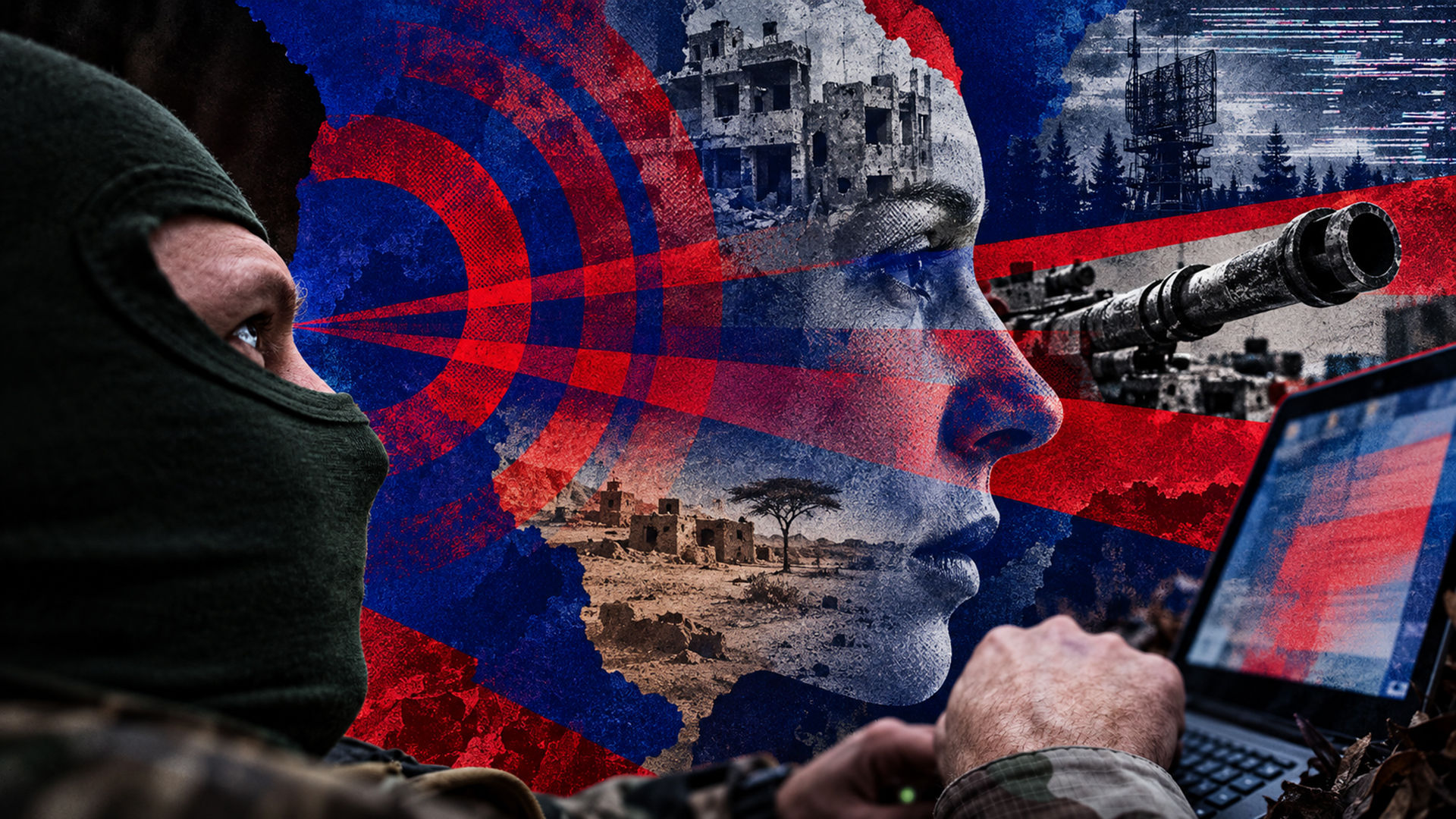
In a study published by the French Institute of International Relations (Institut français des relations internationales, IFRI) entitled ‘To convince in order to win. France and the structuring of an information warfare doctrine’ (‘Convaincre pour vaincre. La France et la structuration d’une doctrine de guerre informationnelle’), Laurent Bansept examines how Paris has been late to intervene in the information field and how it tries to close this gap. The author is an army colonel and specialist in intelligence and special operations.
Three recent confrontations have established this area as a strategic priority, he writes. Faced with ISIS and its industrialized digital propaganda, France could only offer belated and reactive communication. In the Sahel, disinformation campaigns delegitimized Operation Barkhane, directly contributing to the French withdrawal. As against Russia, hybrid warfare confirmed that the cognitive landscape is constantly fraught with conflict, well before a first shot is fired. In all three cases, strategic actors operated free of ethical constraints – while a democracy must respond by adhering to law and truth. The authors calls this asymmetry not as a weakness but a price to be consciously paid.
This awareness has driven real change. The 2022 National Strategic Review elevated influence to the status of a sixth strategic function, and the 2024-2030 Military Programming Law allocates four billion euros to cyber defense. Joint doctrine formalizes the concept of Influence and Information Warfare. In 2023, the Land Special Operations Command incorporated the Joint Center for Actions on the Environment (CIAE) – to understand environments, share perceptions, and train forces. France now officially embraces an offensive dimension in the information domain but renounces using lies as a means.
This is not enough, the author admits. France still lacks a guiding concept, a critical mass, and a culture of offensive narrative. Generative artificial intelligence has brought down the cost of entry into manipulation: an attack is structurally quicker than verification. Russia and China are already investing in militarized neural technologies. Dependence on foreign private platforms constitutes a sovereign vulnerability: the collaboration between the AMIAD military agency and the Mistral AI company just outlines an initial response, the author believes.
There is a key distinction here, that the army has difficulty maintaining. The military should act on the adversary while protecting civil society – without influencing it in a similar fashion. With this restriction in place, institutional influence is hard to reconcile with offensive action. That is why reforms at the headquarters run ahead of culture: the center has been established and the money has been used, but there is still no concept to guide the whole system.
The Sahel is more than a particular press service failure in this context. It is where the information field has pushed the French army out of a theater directly. If the adversary’s narratives have proven stronger than the presence of forces, then it is no longer an auxiliary domain. A doctrine that acknowledges this on paper but accords no agility on the ground leaves Paris in the same trap – honestly losing to those not bound by the ban on lies.
From the Algerian laboratory, through the post-colonial void, to the Balkan, Sahelian and Ukrainian challenges, France has accumulated a lag that its current headquarters can eliminate only partially. The cognitive field can no longer be considered the press service’s backyard. But a democracy that starts lying like its opponents will lose the only thing on which its narrative can rest at all. So long as Paris seeks a balance between an offensive posture and the taboo on lies, it will be quite aware of its lag but poor at shortening it.
Original publication: https://www.ifri.org/fr/etudes/convaincre-pour-vaincre-la-france-et-la-structuration-dune-doctrine-de-guerre