







Read news
Add bookmark
POPULAR
How Much Do Experts’ Ideas Matter for the European Union’s Political Agenda?Oil? Gas? Fertilizer? Just Life.The Vile BanknoteKalypso Nicolaidis: I Want a Woodstock for European PoliticsHow the “virtues” of neoliberal globalization paved the way to its demiseThe InvalidsEuropean Unity in the Interests of Security. Split along the North-South LineWhat To Think About Universal SuffrageThe Middle Corridor: A Geopolitical Dream with Dubious ProspectsVučić and Serbia Forcing the EU to Hear Their Position on EU Accession
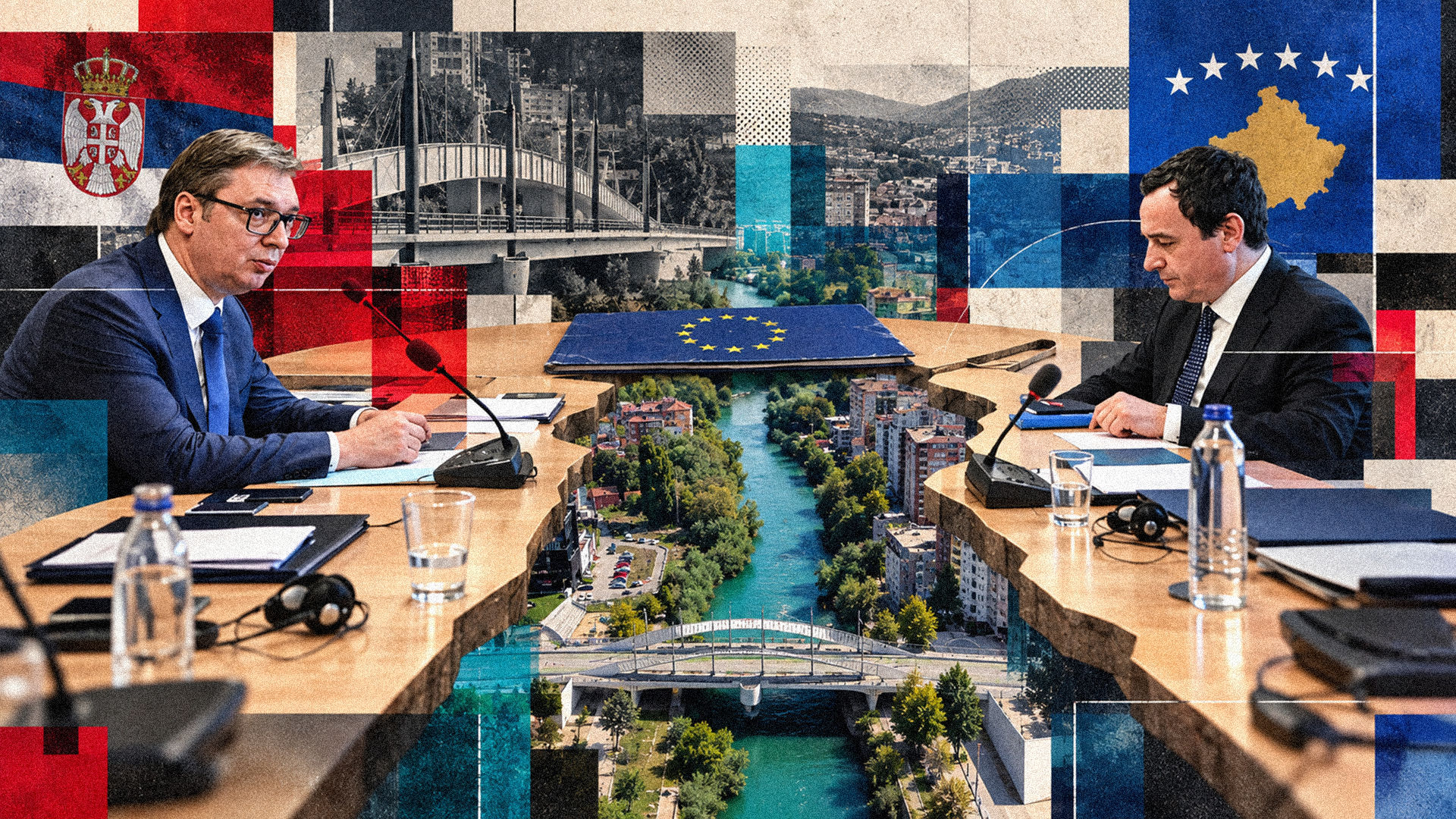
A Modern Diplomacy editorial spells out how support for Ukraine’s accession to the EU forces Serbian leader Aleksandar Vučić to engineer a new crisis between Serbia and Kosovo.
Eight member States have blocked Belgrade’s long-stuck bid to open Cluster 3, citing rule-of-law backsliding and Serbia’s refusal to align with EU sanctions on Russia. The accession talks have not meaningfully advanced since December 2021.
Serbia, a candidate since 2012, has a readiness index of 5.5, while Ukraine and Moldova that gained candidate status only in 2012 now score above it – with 5.85 and 5.87, respectively.
So the day after Zelensky visited Belgrade on August 8, Vučić suddenly announced that Serbia was consulting engineers about diverting the Ibar River away from Kosovo. ‘We have various reasons for changing the course of the Ibar,’ he said, ‘and then we will see what the Albanians will do.’ No route, no cost, no timeline — just a threat against a shared river, aimed at Pristina.
The Ibar is a transboundary river that flows from Serbia into Kosovo and feeds the Gazivode/Ujman reservoir that supplies water, hydropower and irrigation to hundreds of thousands of people in northern Kosovo. There it takes a sharp turn and flows into Serbia again. The plan is to cut this loop short and deprive Kosovo of the river’s waters.
The Ibar is governed by international water law. Kosovo had to respond as though the threat were real: acting president Albulena Haxhiu called it a matter for ‘international community’ involvement, and Environment Minister Fitore Pacolli invoked the Helsinki Convention to declare that ‘water resources cannot be used as an instrument of threat, pressure or destabilization’.
Getting a foreign government to publicly treat your engineering fantasy as a security threat is itself the win. It costs Vučić nothing to say it and forces Pristina, Brussels and NATO’s KFOR mission to spend real attention proving it should be taken seriously enough to condemn. The leverage was never in the engineering, it was in the uncertainty.
The main audience for this demarche is Brussels. Serbia cannot vote on Ukraine’s accession – it is not a member State – but it does not need a vote to benefit from the political mechanics around Ukraine’s progress.
A Balkans flare-up that requires EU attention is exactly the kind of event that forces that coupling logic into the room. Vučić does not need to out-argue eight blocking member States on rule of law; he needs Serbia to become a problem Brussels cannot table indefinitely while it fast-tracks Kyiv.
The problem is not a river in Serbia and Kosovo but Brussels’ limited resources. The Commission and the member States are simultaneously managing Ukraine’s fast-tracked accession clusters, a bruising fight over using frozen Russian assets to fund Kyiv, and enlargement fatigue across multiple files at once.
A Balkans crisis serious enough to need real attention, arriving now, competes for a sliver of institutional capacity that is already spoken for – which is precisely why raising the temperature costs Vučić little and buys him considerable notice.
Original publication: https://moderndiplomacy.eu/2026/09/07/serbia-kosovo-ibar-river-eu-leapfrog/