







Read news
Add bookmark
POPULAR
How Much Do Experts’ Ideas Matter for the European Union’s Political Agenda?Oil? Gas? Fertilizer? Just Life.Kalypso Nicolaidis: I Want a Woodstock for European PoliticsThe Vile BanknoteHow the “virtues” of neoliberal globalization paved the way to its demiseWhy capitalism is fundamentally undemocraticTurkey Offering Europe Its Mediation Again, Europe Again Ready to Accept ItReweaving Silk Roads: The Middle Corridor’s Role in EU Economic SecurityThe Gulf War and Europe’s Helpless Energy PolicyEurope’s Raw Materials Partnerships Remain on Paper
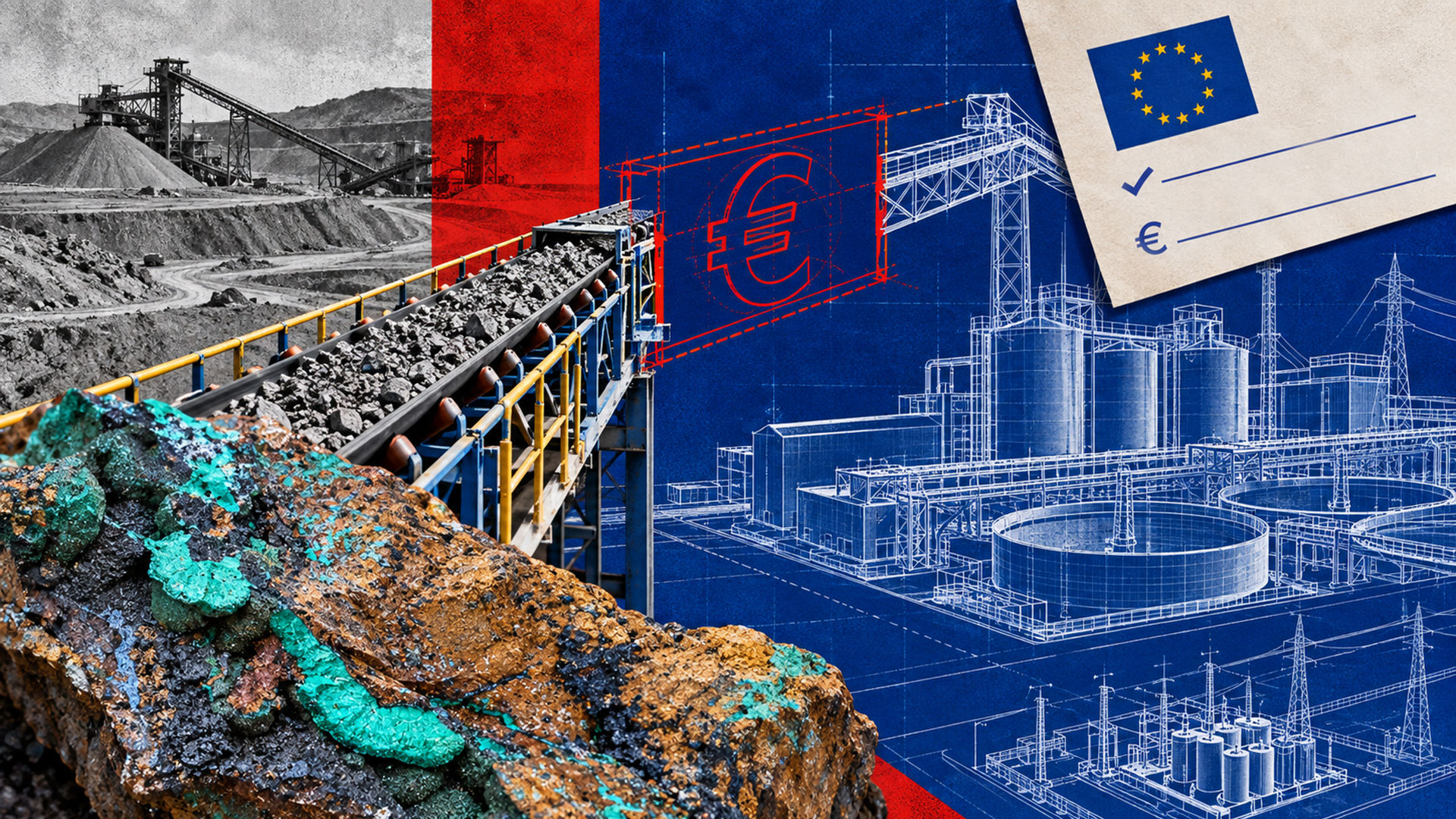
In a policy brief of The Hague Centre for Strategic Studies (HCSS) entitled Strategic by design. Making EU development cooperation work for critical raw materials, Irina Patrahau, Fiona De Cuyper and Isis Ketelaar examine why the Critical Raw Materials Act produces no working supply chains. Extraction and processing remain highly concentrated. The partnerships with resource-rich countries get suspended amid Brussels’ ambitions, investors’ demands and what the producers themselves want: local processing, jobs and skills, rather than a resource appendage role.
Development assistance is no substitute for a mine in this context. Direct funding of mines and plants is a capital-intensive business. Three layers of enablers are more efficient. The first one comprises geological exploration, skills development and the formalization of artisanal and small-scale mining. The second one includes roads, energy, standards and trade corridors; Europe is good at organizing export but not local processing. The third layer comprises justice, education, environmental protection, and security: barring these, the investor will not come even if a memorandum has already been signed.
The allocations for all these are being cut precisely as the inputs are declared strategic. Official development assistance from OECD countries declined by 23.1 percent in 2025 – the largest annual drop on record. Germany’s budget fell by 17 percent, with France and the Netherlands following.
The authors’ recommendations are austere: to maintain assistance funding in the next budget, to link the resource objectives with partner countries’ programs, and to integrate the competitiveness fund with development cooperation so that they do not live apart.
The Critical Raw Materials Act promised exactly ‘mutually beneficial’ partnerships. In practice, an investor sees a political and regulatory risk, while a producing country faces European traceability requirements that its own institutions cannot meet. Assistance could help close this gap but has been cut in a second consecutive year.
If development falls below cohesion once again in the 2028–2034 Multiannual Financial Framework, the raw materials strategy will remain a set of memoranda. China is already building export and processing facilities in those same countries. Europe offers standards, but these produce no supply chain without money
The policy brief’s cover image shows the Lobito corridor, which is not accidental. Europe is good at showing export logistics and worse at negotiating what will remain in the country after the shipment. The producer will compare this with somebody who is already building a plant and port nearby – not with a Brussels memorandum. So long as assistance is cut, this comparison is not in the EU’s favor: the Union comes with a traceability standard and goes away without a processing stage. This is why the three layers – skills, infrastructure, and institutions – either come in a package or do not work at all.
The new programming cycle offers precisely a chance to link raw materials and development at the level of countries, not slogans. The chance is easy to disrupt: if the assistance line is cut, integration will remain a circular devoid of money. Then the Union will buy a paperborne promise once again – and will then be surprised to find the ore going to another processing facility.
And the producing countries are already formulating their own price proposal: not access to subsoil against a memorandum, but domestic processing, skills, and taxable base. The European due diligence rules only strengthen this requirement, which cannot be met without institutes and laboratories. So development assistance is not a charity superstructure over a raw materials policy but the only layer that can turn a paper partnership into a shipment chain at all. To cut it while demanding ‘live projects’ means to demand an outcome without a tool.
Barring this, Europe will remain just another buyer next to China. The producer sees this. An agreement without an access road, justice, and locally added value is not a chain but minutes. With assistance being curtailed and inputs called strategic, the gap only widens.
Original publication: https://hcss.nl/report/strategic-by-design/