







Read news
Add bookmark
POPULAR
How Much Do Experts’ Ideas Matter for the European Union’s Political Agenda?Oil? Gas? Fertilizer? Just Life.The Vile BanknoteKalypso Nicolaidis: I Want a Woodstock for European PoliticsEurope Still Needs China: Washington is the Main ThreatEurope Again Racing After a Train That Has Long LeftEurope Unable to Cope with China’s Lightning-Fast ResponsesEurope Losing Energy Security Battle to ChinaThe Gulf War and Europe’s Helpless Energy PolicyChina Bets on Europe Missing the October Deadline, Too
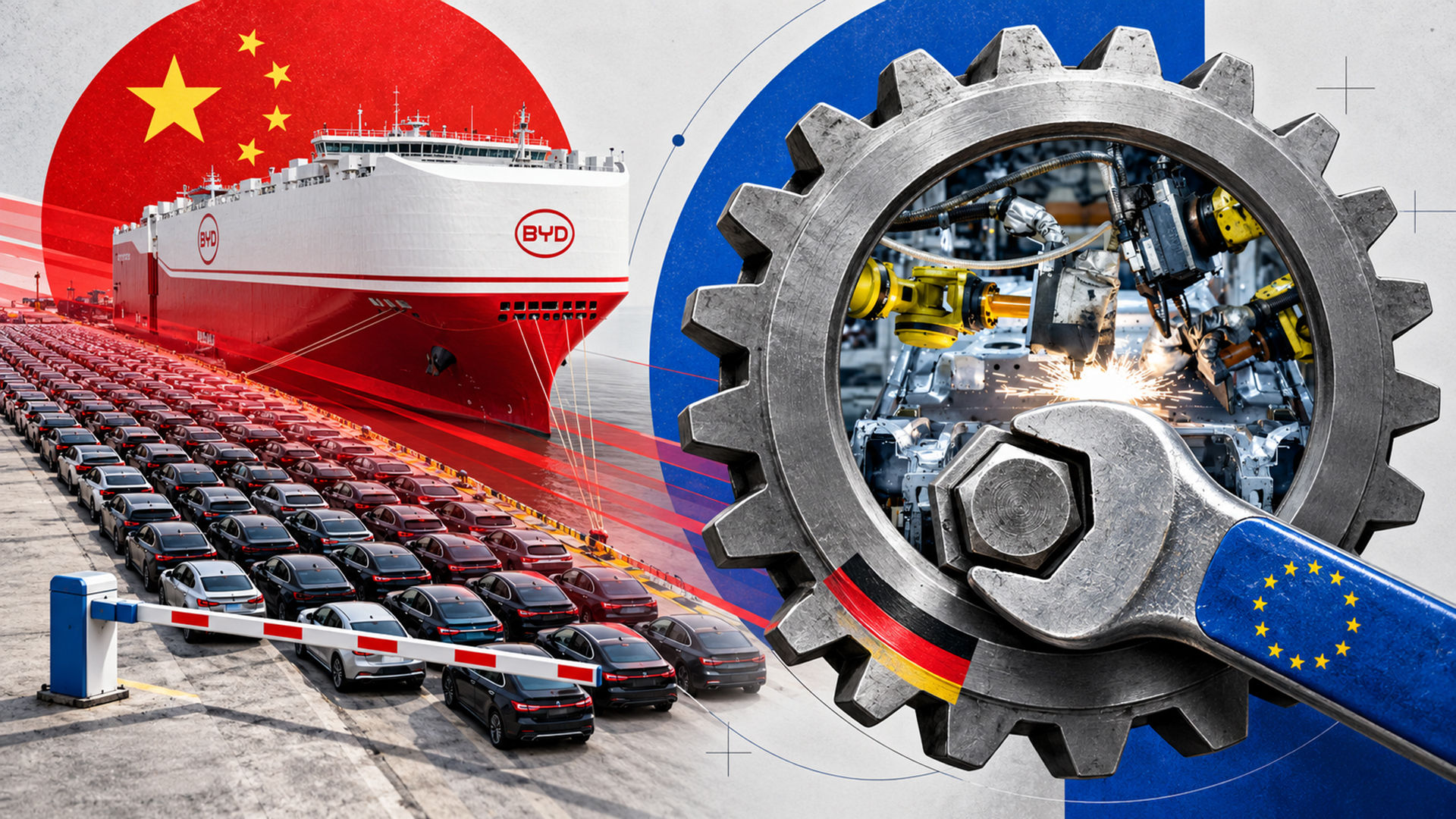
European officials have set October 2026 as a deadline for achieving results in rebalancing trade relations between the European Union and China. The deadline nears, but Beijing is again betting Europe won’t push back.
The Brookings Institution has issued a collection of experts’ answers to one question, entitled Europe’s China Shock 2.0: Where does it go from here? Ryan Hass, Daniel S. Hamilton, Constanze Stelzenmüller, Kari Heerman and Carlo Bastasin share their opinions on how Europe should respond to China, and try to predict the future of the European Union’s relations with that country.
EU trade commissioner Maroš Šefčovič warns that China’s exports to the EU keep rising while Europe’s market share in China shrinks, so the status quo is no longer an option. ‘Tangible results’ are expected by October 2026.
Mr. Hass suggests the most forceful wording for Beijing’s calculations. Europe is weak politically, divided on China, and unprepared for a trade war amid a real war in Ukraine and a quarrel with President Trump. The Chinese market is shown as a chance that European companies cannot miss. In case of a trade war, China has its own sticks. Its surging export wave hits the sectors of autos, chemicals, green energy, machinery, and industrial tools. The only question is whether Europe will respond now – or later, after the sectors lose ground.
Mr. Hamilton recalls that the duties, steel import cuts, and sanctions for supporting Russia are already in place, but it is too early to expect any decisive action. China is adept at manipulating capitals that fear staying without critical minerals. Yet China is twice as dependent on the EU for strategic imports as the EU is on China. Europe does have cards such as chipmaking equipment, automotive chips, and specialized machinery. But the Union is slow to play them.
Ms. Stelzenmüller reduces the story to Germany. When Germany blocks, smaller European economies hesitate. Merz has sharpened his tone; economics minister Reiche pursues her own line, and the Alternative for Germany wins the elections in the east. Ms. Heerman warns that market protection is not equal to competitiveness. China’s surge reflects weak domestic demand, and European trade defenses at the borders will not correct that demand. Mr. Bastasin adds that the former shocks also represent Europeans’ own managerial failures.
The Union has a set of defenses in place, including anti-subsidy and anti-dumping duties on electric vehicles, clean technology investigations and the forthcoming Industrial Accelerator Act, which could block some Chinese products from public contracts and deals. Beijing responds with countermeasures rather than changes to its model. So the dispute is not about October figures but whether Berlin is willing to pay for rigidity within its own coalition.
Without coordination with other major markets, European defenses will stop the goods at Europe’s borders and redirect them to a third country. The sector will be preserved on paper. The scale needed for investment will be gone. This is Ms. Heerman’s fork between resilience today or competitiveness tomorrow.
The intra-German division is more important here than the Brussels calendar. The chancellor sharpens his tone, the government’s economic segment trades access, and the eastern elections may leave him without room for toughness. Beijing reads this better than the October date. Unless and until Beijing settles its internal dispute, the ‘tangible result’ will become a press release expression again: China will nod and keep exporting, and European industries will continue losing market share both domestically and in third countries.
Mr. Hamilton’s card of equipment, automotive chips and specialized machinery works only if there is willingness to use it. The latter bumps into fears of minerals retaliation and a divided Europe, not a lack of regulations. So long as the fears outweigh the card, the October deadline remains a mark in the calendar, not a juncture.
Uneven impact within the Union makes a common response even more problematic. The automotive and chemical industries’ decline hits some countries harder than others, and dependence on Chinese minerals has the tightest grip precisely on potential hardliners. So the October deadline works as a test not for Šefčovič but for Berlin’s and some other major capitals’ ability to pay a domestic price for their common line. Until the price is quoted out loud, Beijing rightly assumes none will be paid – once again.
The expert opinions gathered in this publication provide no single recipe. But they draw a common picture. Beijing thinks October will pass as all previous deadlines did. So long as Beijing argues with itself and Brussels prepares a toolkit usable without a mandate, China Shock 2.0 gains strength.
Original publication: https://www.brookings.edu/articles/europes-china-shock-2-0-where-does-it-go-from-here/