







Read news
Add bookmark
POPULAR
How Much Do Experts’ Ideas Matter for the European Union’s Political Agenda?Oil? Gas? Fertilizer? Just Life.Kalypso Nicolaidis: I Want a Woodstock for European PoliticsThe Vile BanknoteHow the “virtues” of neoliberal globalization paved the way to its demiseRadicalisation in Onlife Spaces: Europe’s home-grown terroristsEurope Heading for a Strange DefeatRegular Ones Made IrregularEuropean Unity in the Interests of Security. Split along the North-South LineEurope in Decline
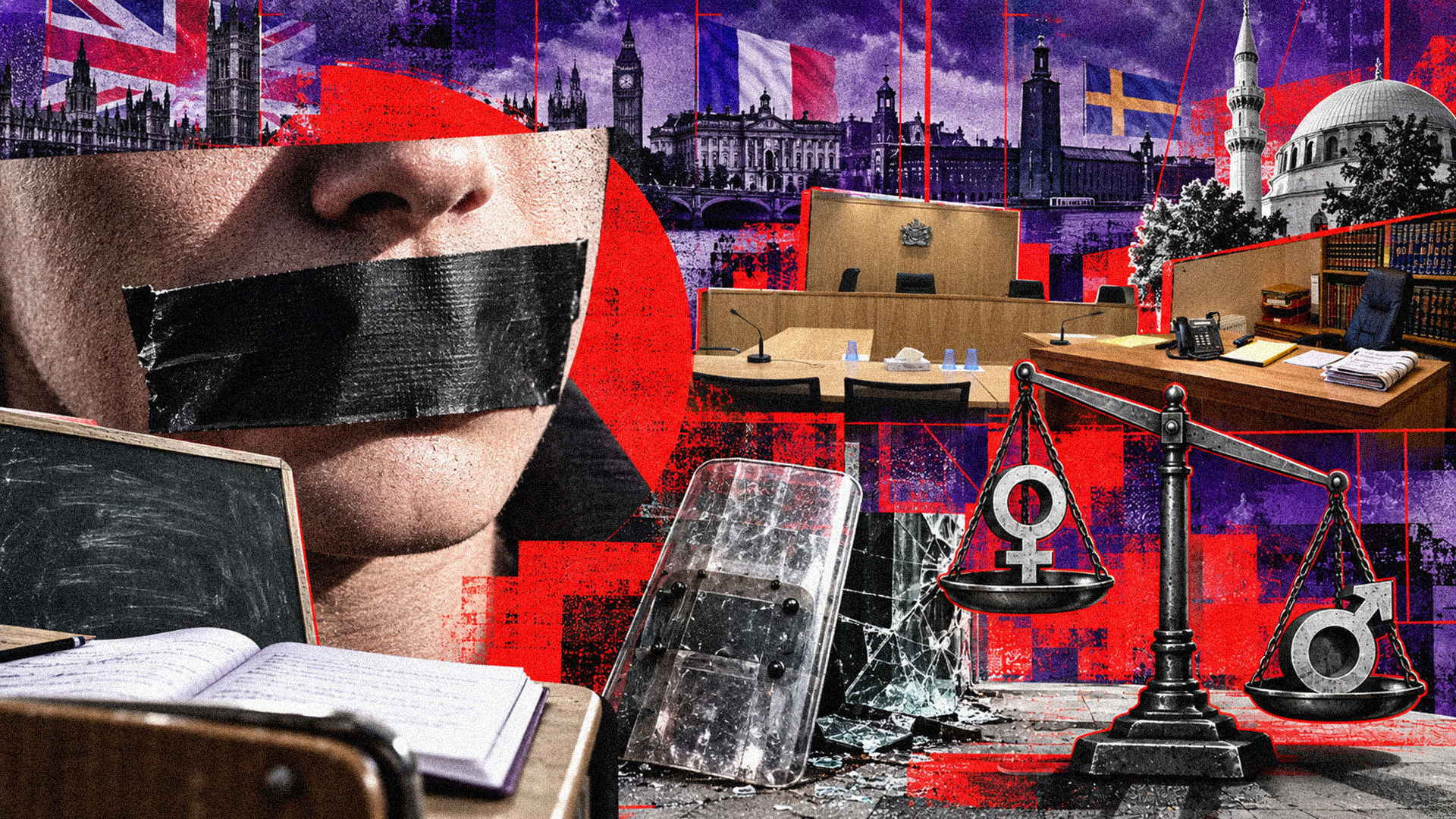
When it comes to immigration from a country whose core religion is dramatically different from the host country’s, the question ceases to be purely economic. It moves into the RMC (religious, moral, cultural) domain.
The issue is much more complicated and calls for a review of the key differences in the religious, moral, and cultural areas and how those differences give rise to parallel social structures that often ignore all the host country’s societal norms. It was examined by Nathaniel Rendell, an American finance professional with years of experience in the consulting industry. His study was published by the American Security Council Foundation. He has arrived at quite specific conclusions that are not in Europe’s favor.
The Islamization of the Old World produces a lot of fundamental values-related conflicts that not only generate waves of crime and violence but also bring in and entrench alien values and morals. This results in imminent transformation of European society that becomes less and less European.
Ironically, Americans have been much quicker than Europeans to consider all the negative implications of uncontrolled migration.
The most evident example cited with respect to Britain is Sharia councils. They have existed in the country since the 1980s and may number up to 80 or 85.
The councils were initially established to enable Muslim communities to address family issues, particularly marriage-related, in the light of Islamic principles.
The Sharia councils’ recommendations are not legally binding and take no priority over British law. However, abuses are increasingly reported – including unfair treatment of women in family disputes, acceptance of polygamy, discriminatory approaches to child custody and inheritance, and actual connivance at domestic violence.
France is catching up with the UK in this respect. Here migrants also begin forming their parallel structures. Due to a strict policy of secularism (laïcité), there are no official counterparts of the UK’s Sharia councils in France: this State does not recognize religious courts. However, informal Sharia-based forms of mediation and so-called ‘Islamic reconciliation’ do exist in some suburbs of major French cities.
Mosques and community leaders often take part in adjudicating on family disputes, marriage and divorce outside the secular legal systems. The law on separatism (Loi confortant le respect des principes de la République) was specially intended to combat such parallel structures. Nevertheless, they still exist perfectly well.
According to official statistics, the proportion of persons of African origin among those suspected of sexual violence and gang-related crimes is 8 to 17 (!) times higher than their demographic share.
Even in quiet Sweden, Muslim community leaders and imams often mediate family disputes, marriage, divorce and inheritance along Muslim lines.
Parents are recommended to ‘adjust’ to the values that children face at Swedish schools and to turn to religious authorities if they consider a child’s views and attitudes wrong. Besides, at schools with a high proportion of immigrants’ children there have been repeated demands to serve halal food only, teach boys and girls separately and exempt pupils from certain subjects on the curriculum.
Has Europe gone too far? Its readiness to accept religious, moral and cultural differences reflects an openness intrinsic in Western values. The people should really be taught to be tolerant and accept cultural differences. But the issue goes beyond differences in food or holidays and relates to fundamentally divergent key values that shape a society.
The Americans see one solution: severe punishments including long prison sentences, deportations, and even death penalty in some cases. Whatever falls short of such measures enables the groups in question to keep gathering political clout and gradually altering their host countries for themselves. Force is indispensable here, and bullies understand it quite well. This has come home to the USA – that has taken successful steps in this direction – but not yet to Europeans. Will it?
Original publication: https://ascf.us/guest-contributors/soft-crusades-iii-cultural-institutional-shifts/