







Read news
Add bookmark
POPULAR
How Much Do Experts’ Ideas Matter for the European Union’s Political Agenda?Oil? Gas? Fertilizer? Just Life.The Vile BanknoteKalypso Nicolaidis: I Want a Woodstock for European PoliticsThe Big Lie That Is Repeating ItselfWith The Arrival Of Fall, The Winds Of Change Are BlowingEurope is going down like the Titanic because it has learned nothing from its pastHow the “virtues” of neoliberal globalization paved the way to its demiseThe InvalidsFrom Allure to a Feral Society
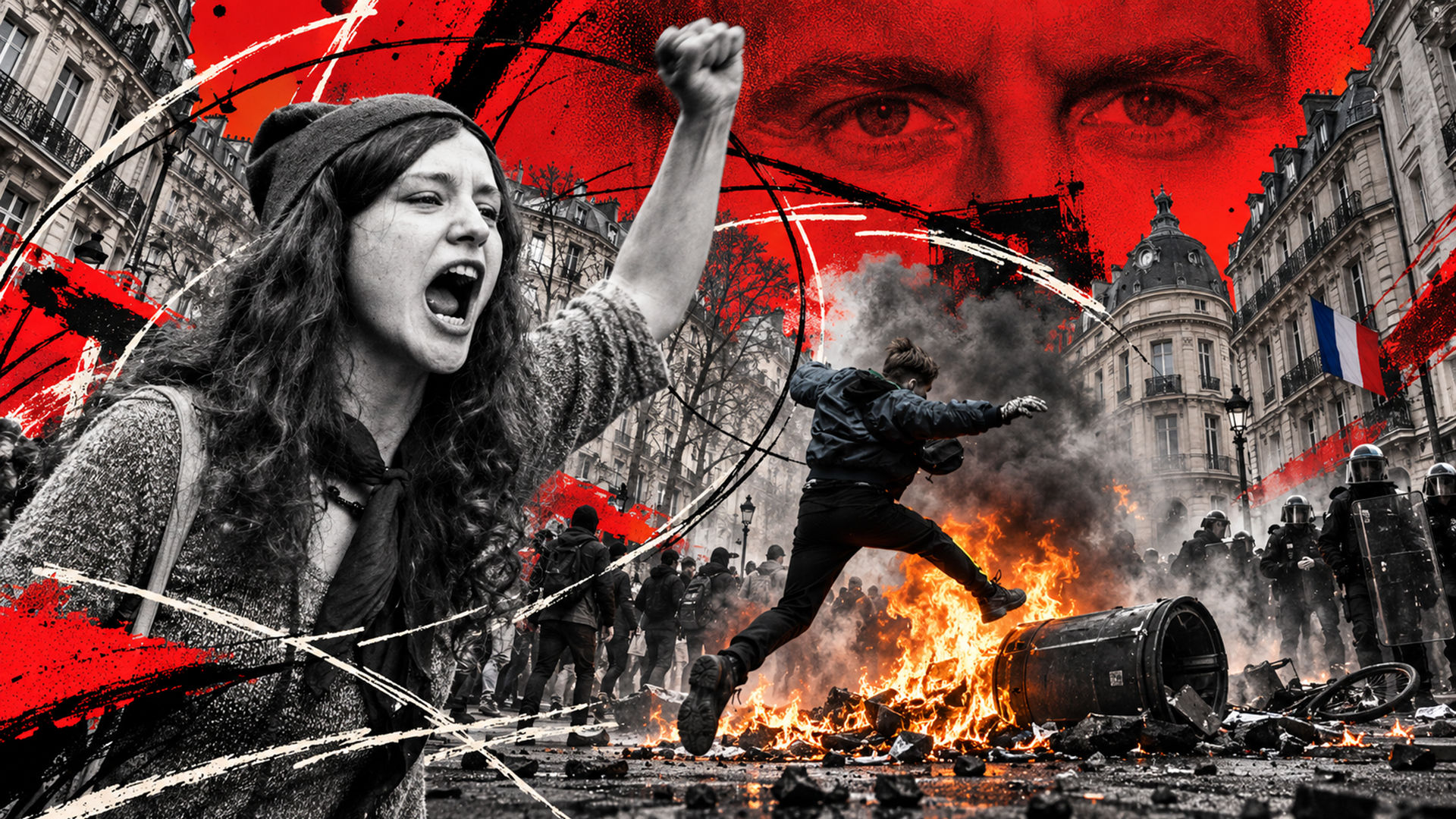
The current unrest in France carries echoes of the revolutionary manifestations of 1968 and France’s long tradition of taking to the streets, but they are also the product of a stranger, more troubling side of contemporary France. This issue was examined in detail by Muriel Zagha, a writer and radio host specializing in French culture. Her article has appeared in the Engelsberg Ideas publication.
Street rioting looks and feels painfully in a French context, and there is much truth to it. France has long been known for its bursts of civil unrest, stretching back centuries.
But if today’s riots have a historical point of reference, it is that of the student marches of May 68.
That movement had started with a minor protest initially triggered by male students being barred from female dormitories, and then spread to the Latin Quarter in Paris and to other university towns. Barricades were erected and there were clashes with the French riot police.
But only when millions of factory workers joined in and started lengthy wildcat strikes, that effectively brought the country to a standstill, did the protests gain real momentum.
Meanwhile, the striking workers had different objectives – better pay, better working conditions, better representation in the workplace – and they did not see the student demonstrators as political allies.
Today, whenever French university and high-school students build barricades, wave home-made banners and chant slogans, they are to some degree quoting and re-enacting the historic myth of May 68 – the utopian image of a revolution anchored in French society.
Yet something else appears to be at play in the demonstrations currently unfolding.
These began in two of the more disadvantaged banlieues outside Paris, and originally demanded quite concrete things: better teaching and learning conditions and attention to the issues faced by schools, that students feel the authorities have left without due support.
However, according to the government, within days the situation was exploited and inflamed by the interventions of MPs from La France Insoumise (France Unbowed), the far-left party of Jean-Luc Mélenchon. The original protest, demanding better teaching and learning conditions for students feeling neglected and ignored by the government, is now overshadowed by uncontrolled rioting.
But the principal feature of today’s developments is increasingly visible manifestations of hostility towards France proper.
The young bourgeois protesters of May 68 may have waved the flag of Vietnam, but some of the current rioters from the more deprived and entrenched suburbs are wrapped in the flags of Algeria and Morocco and are voicing support for Palestine.
The reasons for this are complex and rooted in long-standing problems of French society.
Today’s unrest does is certainly reminiscent of France’s long tradition of street riots, but it is also a fruit of contemporary France that increasingly uses the word ensauvagement (society becoming feral).
It is maybe precisely here that the current riot differs from prior revolutionary upheavals. Rioting appetite is still there, but the shared utopia – a vision of the future that could justify altering the existing order – is now gone. France has been engulfed in primeval violence – with her society going wild just for the sake of the process.
Original publication: https://engelsbergideas.com/notebook/frances-riots-revolution-without-utopia/