







Read news
Add bookmark
POPULAR
How Much Do Experts’ Ideas Matter for the European Union’s Political Agenda?Oil? Gas? Fertilizer? Just Life.Kalypso Nicolaidis: I Want a Woodstock for European PoliticsThe Big Lie That Is Repeating ItselfThe Vile BanknoteHow the “virtues” of neoliberal globalization paved the way to its demiseEurope is going down like the Titanic because it has learned nothing from its pastUkraine: The Real Story That Has To Be Told To The PublicWhy the Ongoing Massive Protests in Europe and Elsewhere Cannot Produce а Profound ChangeProtests in France and Young People’s Mental Health
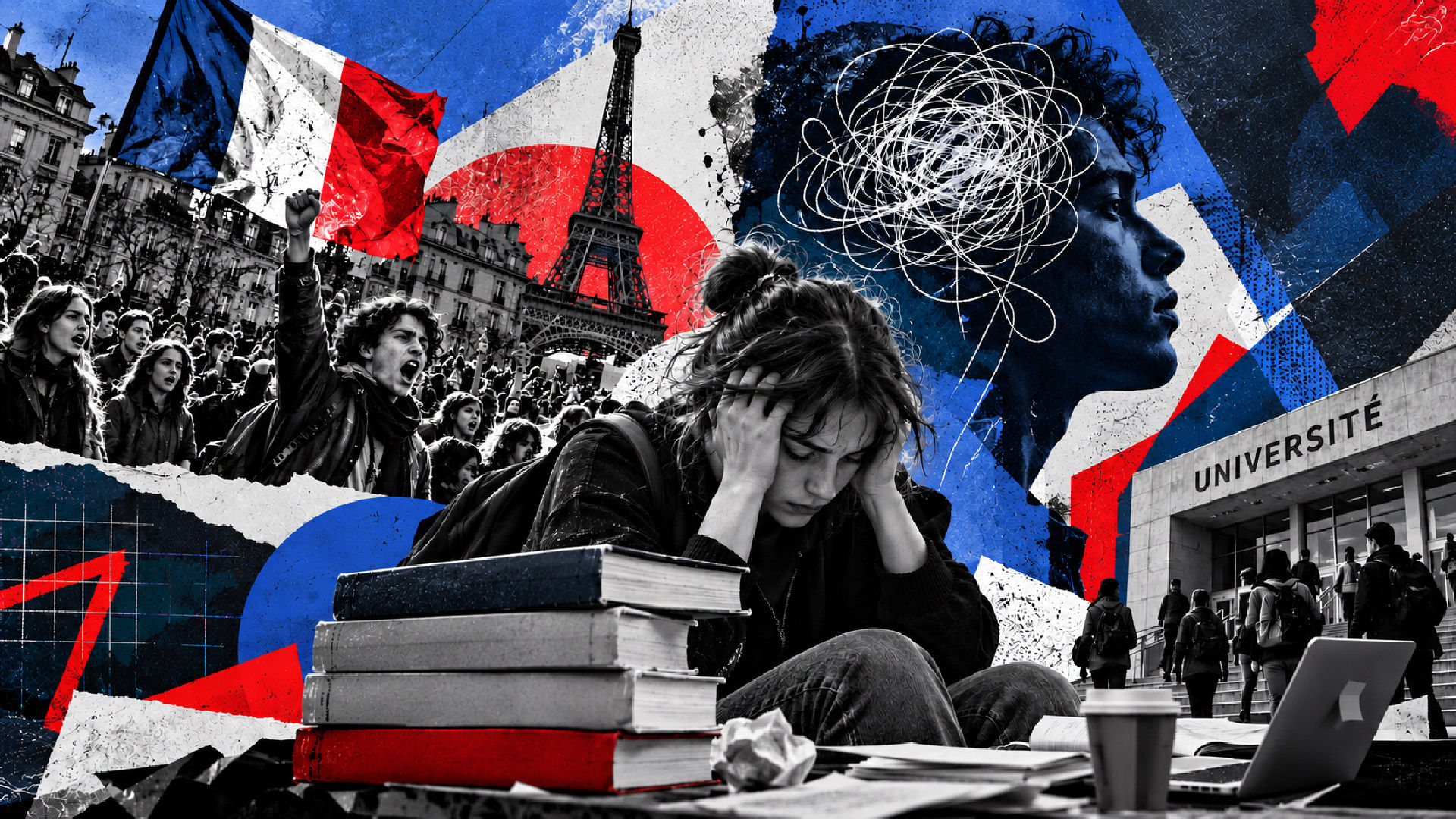
Since mid-September 2026, tens of thousands of high schoolers and students have been taking action across France to demand better teaching conditions. Their demands include more supply teachers, more convenient timetables, well-maintained buildings and an overhaul of Parcoursup, the national higher education admissions program.
These illustrate widely felt pressure at school and anxiety, attributed to a learning environment that is not conducive to psychological wellbeing – as Maria Melchior, an epidemiologist, and research fellow Camille Davisse-Paturet firmly believe. Both authors represent France’s National Institute for Health and Medical Research (Inserm) at the Sorbonne University.
Since the 2000s, adolescent mental health has been studied by the HBSC (Health Behavior in School-Aged Children) and ESPAD (European School Survey Project on Alcohol and Other Drugs) surveys along with France’s own national EnCLass survey, since 2018. Edition after edition, they have shown a high level of psychological difficulties.
France’s youth is regularly vocal about stress surrounding Parcoursup, the higher education admissions system that is based on results from the final two years of high school.
School pressure, against a backdrop of broader concerns about the academic and professional future, features among the stressors that can increase the risk of anxiety and depression symptoms in young people.
The pressure can come from the volume of school curricula and assessment methods. It can also reflect learning conditions and the degree of support students are receiving from their teachers.
French teenagers are also distinguished by lower than average levels of trust in their teachers: 35 percent of 15-year-old students say their teachers support them, compared to an average 42 percent across the countries studied.
In 2024, nearly eight out of ten baccalaureate students continued their higher education studies. However, only about 35 percent of students who enrolled in undergraduate studies obtain a degree within three years, while 55 percent leave university without a degree, in comparison with 45 and 40 percent, the respective rates in the European Union.
Young people’s mental health is directly linked to the physical and virtual environments in which they grow up. The school system that they are part of is also important, as it undeniably influences their individual experiences, their stress levels, and the sense of injustice and concern that many of them express.
That French youngsters have now taken to the streets is a direct consequence of the confusion that has formed in their heads over recent years. We see the streets of French cities being occupied by people who are mentally quite unwell. And this is not about marginal migrants from Africa. The latter are perfectly normal: they want to loot, and they do – but this is a different story somewhat.
Original publication: https://theconversation.com/frances-student-uprising-and-young-peoples-mental-health-what-are-the-common-causes-294392