







Read news
Add bookmark
POPULAR
How Much Do Experts’ Ideas Matter for the European Union’s Political Agenda?Kalypso Nicolaidis: I Want a Woodstock for European PoliticsOil? Gas? Fertilizer? Just Life.European Unity in the Interests of Security. Split along the North-South LineFrom a Nuclear Umbrella, There’s Just One Step to a Nuclear Big Stick What is the Essence of France’s Nuclear Proposal and How Will It Affect European Autonomy?NATO’s frontline countries jockey for U.S. troops after Trump’s Germany withdrawalHow the “virtues” of neoliberal globalization paved the way to its demiseA Ruthless Diagnosis. Europe More Paralyzed than DividedEnergy Protectionism Without EnergyA French Coast for the Baltic Sea
Do the Baltic Countries Have a Prospect of Coming under French Forward Deterrence?
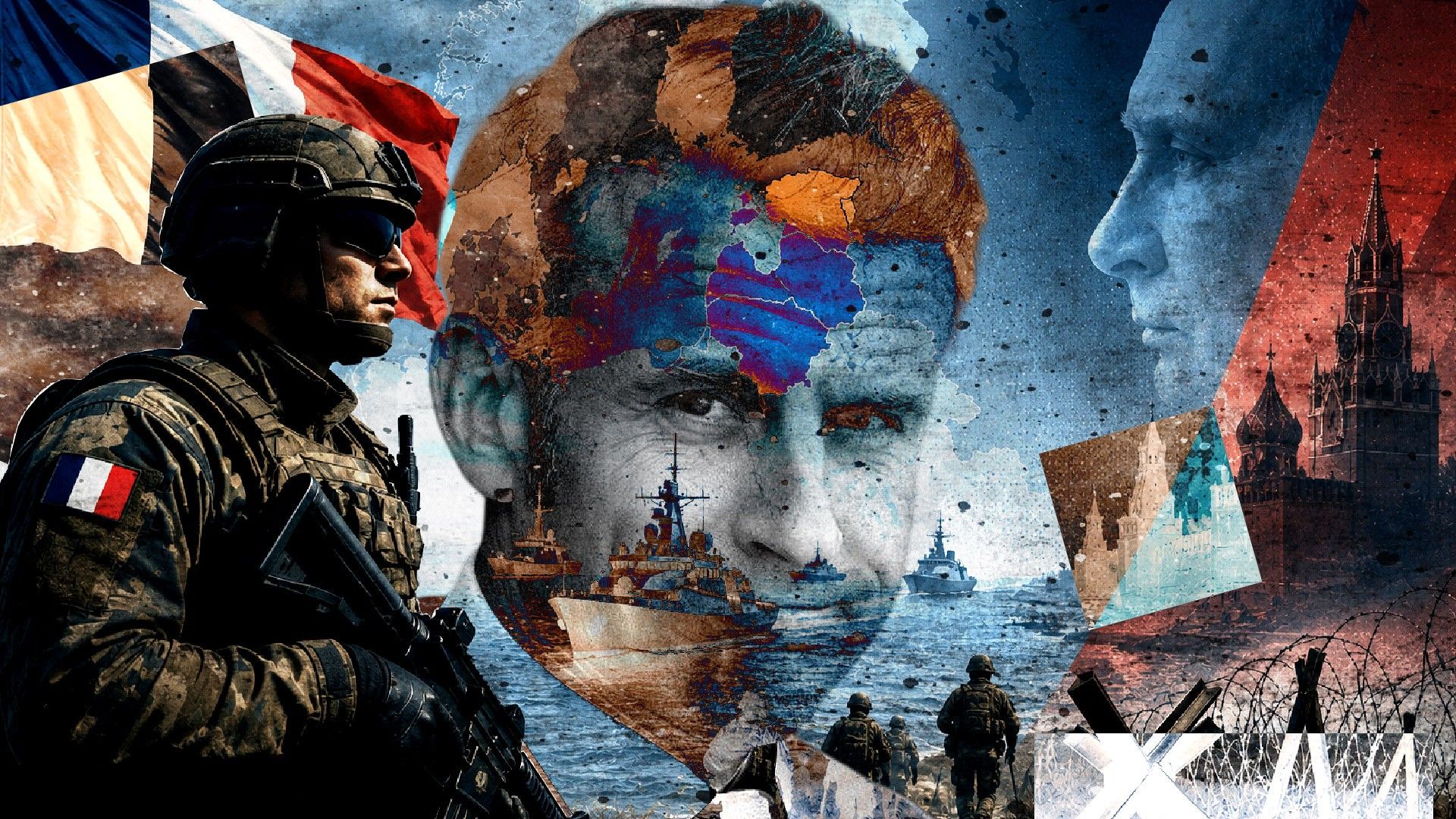
In the context of a medium-term risk of direct Russian aggression against some East European country, European States are increasingly weighing how they could do more. France has sought to position itself as part of the solution.
In his March 2026 speech, President Macron emphasized the European dimension of French nuclear deterrence and introduced a new framework for deeper consultation and coordination with partners, termed ‘forward deterrence’.
This proposal remains cautious, both politically and doctrinally, and does not explicitly include the Baltic States at this stage. What does this French initiative mean in practice for Estonia, Latvia, and Lithuania?
Héloïse Fayet, research fellow and head of the Deterrence and Proliferation research program at the French Institute for International Relations (IFRI), has explored the intricacies of this matter. Her article was published by the International Centre for Defence and Security (ICDS), an Estonian think tank.
French nuclear deterrence stems from a deeply rooted concept of sovereignty. The nuclear arsenal was built to protect France from another occupation, such as the one experienced during the World War II, and to ensure that Paris would always retain freedom of action in both foreign and domestic policy.
While this posture may appear highly focused on protecting French territory, a European dimension has always existed. After the Russian threat disappeared, interest in nuclear deterrence declined, and most strategic thinking in Europe shifted to the NATO from which France had long remained partially distant.
However, the first strains in transatlantic relations during the first Trump administration, combined with the annexation of Crimea by Russia in 2014, rekindled debates on European strategic autonomy. President Macron, a strong advocate of European integration, outlined his vision in his speech at the Higher School of Warfare (École de Guerre) back in 2020. He reaffirmed that ‘French vital interests now have a European dimension’ and invited European partners to engage in a strategic dialogue.
That was to include participation of foreign forces in French nuclear exercises, a stronger articulation between nuclear and conventional forces, and the creation of nuclear steering groups inspired by the Franco-British model.
Not all European countries are explicitly mentioned in the March 2026 speech: notably, the Baltic States, despite being among the most exposed to the Russian threat, are absent.
It should be noted that threat perceptions differ in both intensity and immediacy. While France primarily faces hybrid forms of Russian pressure, Tallinn, Riga, and Vilnius perceive Moscow as a direct and immediate military threat.
Consequently, while maintaining and deepening the nuclear dimension of the French-Baltic relationship, investing in the conventional domain and the fight against hybrid threats is especially valuable.
French forward deterrence is best understood as an incremental evolution rather than a doctrinal shift. It reflects an effort to adapt to a more contested European security environment, while preserving the core principles of national deterrence. For the Baltic States, its added value is indirect but real.
In that sense, the future of French forward deterrence will depend not only on Paris but also on the willingness of partners, including the Baltic States, to engage with it. And the big question is whether the three proud but very small Republics will manage to become full partners of France, a nuclear power, in this field.
Source: https://icds.ee/en/french-forward-deterrence-what-is-in-it-for-the-baltic-states/