







Read news
Add bookmark
POPULAR
How Much Do Experts’ Ideas Matter for the European Union’s Political Agenda?Kalypso Nicolaidis: I Want a Woodstock for European PoliticsOil? Gas? Fertilizer? Just Life.How the “virtues” of neoliberal globalization paved the way to its demiseThe EU’s Technocratic Trap in Libya: a Disgraceful Surrender of Brussels in the MediterraneanEuropean Urban Climate Resilience: Ambitious Plans are Hindered by the Lack of Funds and CoordinationWhy capitalism is fundamentally undemocraticRegular Ones Made IrregularEurope Keeps Making the Same Mistake, This Time with the Power GridsFrom “Green” Well-Being to “Pure” Competitiveness: How the EU Gradually Abandons the Social Component of Transition
Patricia Urban and Deniz Tekin from the CEPS, Brussels, in their memo From Green to Clean to Eco-Social: How to Put Wellbeing Back onto the EU’s Sustainability Agenda carefully but clearly recognize an important and alarming evolution of the European sustainable development policy. Over a relatively short period of time, there has been a significant shift in focus: from a rather broad interpretation of sustainability, which included social aspects and the idea of a “just transition”, to a more narrow and technocratic focus on industrial competitiveness and decarbonization of production processes.
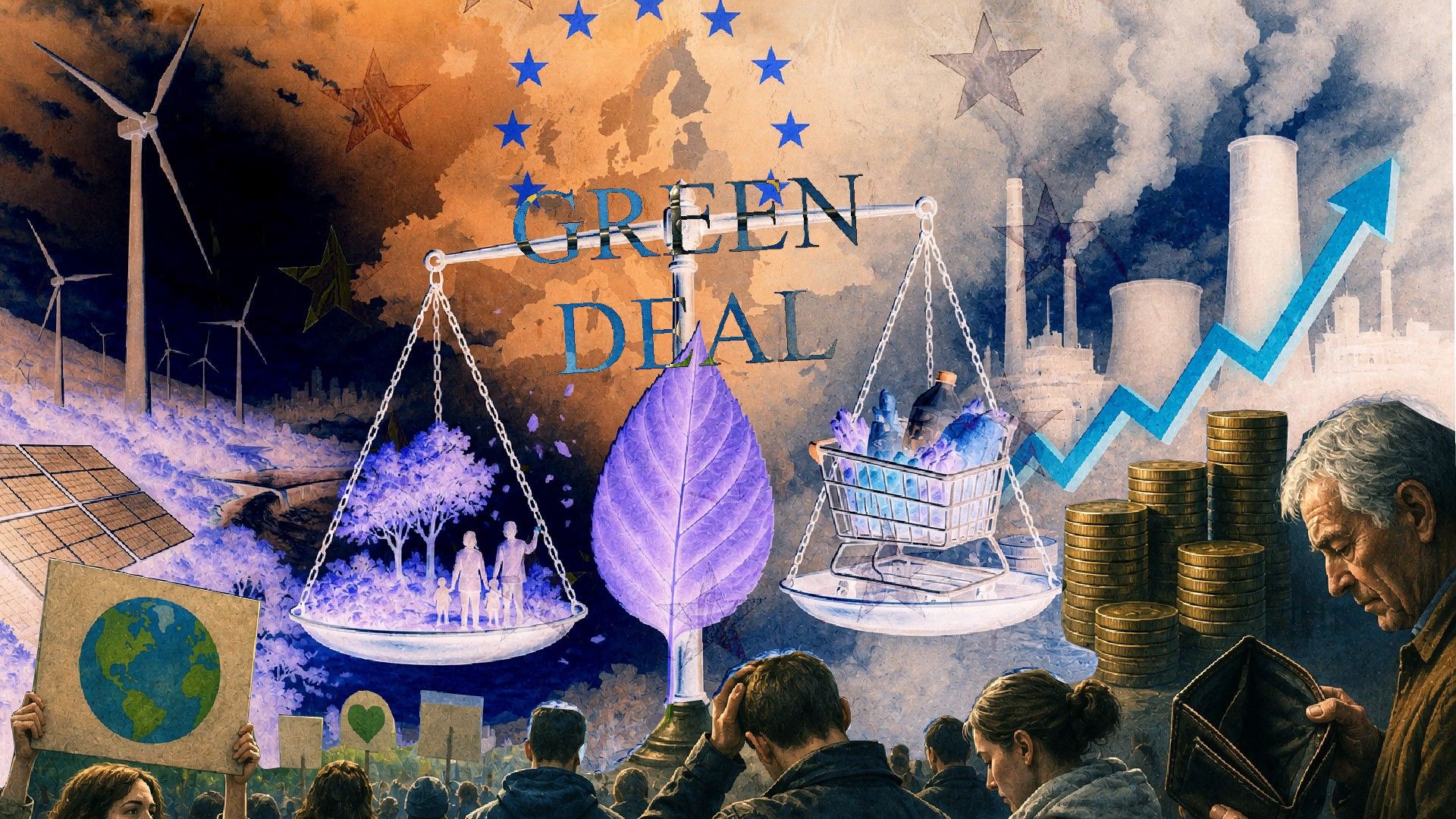
The Green Deal, in spite of all its shortcomings and contradictions, recognized the connection between environmental goals and social justice, at least at the level of rhetoric and partially at the level of instruments. It created certain mechanisms (albeit not always efficient) that were supposed to soften negative social consequences of transition for the most vulnerable regions and groups of population. The new flagship initiative - the Clean Industry Deal - is much more revealing as it openly focuses on the task of increasing European industry competitiveness. It treats social issues primarily through the lens of having to supply the industry with a high quality workforce. The very notion of well-being as a separate political value has practically disappeared from the official language.
It is particularly telling that even in those cases when social measures are still mentioned (such as retraining courses, quality of jobs, creating a special Observatory) they are largely dominated by the task of supporting and developing the industrial potential rather than protecting people from the side effects of transformation. Social policy is often treated not as an independent sphere but as a supplemental tool of achieving economic and industrial goals. It is a rather significant shift compared to the rhetoric of the times when the Green Deal was approved.
There is yet another typical and well-established sign of gradual degradation of the European project: what even a few years ago was at least declared as an important and independent goal (protecting the population, equality in distributing the costs of transition, improving overall well-being) is now either moved to the background or openly instrumentalized. The European Union looks more and more like a political entity which is willing to sacrifice its social dimension to the goal of at least partially catching up with the US and China in the industrial and technological race.
With that, it is important to understand that it is not just about the change of rhetoric. The change in priorities and willingness to allocate resources is what is behind the change in the language. The mechanisms that were established as part of the Green Deal to support the “just transition” are already criticized for inadequacy and new initiatives in the social sphere are increasingly connected with the task of improving competitiveness rather than protecting the people. As a result, you get a situation when the social agenda is kept only to an extent where it does not contradict industrial and fiscal priorities.
Particularly alarming is the fact that this change is taking place against the background of continuous and even growing inequality within European societies and also against the background of the majority of the population being unhappy with the consequences of previous stages of globalization and European integration. Instead of trying to respond to those challenges through a more serious social redistribution policy, European leaders prefer to narrow the frame of the discussion, downgrading complicated social and economic issues to the tasks of industrial policy and “quality jobs”.
Europe gradually abandons one of its distinctive features of the past - a desire to combine economic goals with a certain level of social security and solidarity. The previous model is replaced by a more cruel and competitive logic where social issues matter only as much as they impact efficiency and competitiveness of the economy. Such an approach can be more realistic in terms of the current balance of power within the EU but it significantly narrows the horizons of what is possible and reduces the ability of the European project to offer their citizens a convincing image of the future.
While the European political circles continue to believe that it is enough to keep the rhetoric about “just transition” alive and create new working groups, the real politics goes further and further from the initial declaration about the need to combine ideological and social agendas. The continent that keeps talking about competitiveness and increasingly less so about the well-being of their own citizens gradually loses one of its few remaining grounds for legitimacy in the eyes of the majority of their population.