







Read news
Add bookmark
POPULAR
How Much Do Experts’ Ideas Matter for the European Union’s Political Agenda?Oil? Gas? Fertilizer? Just Life.Pacifism Gives Way to Voluntary Military Service What Does Germany Need It For?The Gulf War and Europe’s Helpless Energy PolicyKalypso Nicolaidis: I Want a Woodstock for European PoliticsEuropean Unity in the Interests of Security. Split along the North-South LineHow the “virtues” of neoliberal globalization paved the way to its demiseEurope Keeps Making the Same Mistake, This Time with the Power GridsNATO’s Internal Cohesion Is Being ThreatenedTo Keep Sitting on Two Chairs
Germany continues supporting Ukraine but is not planning to abandon the Russian market completely
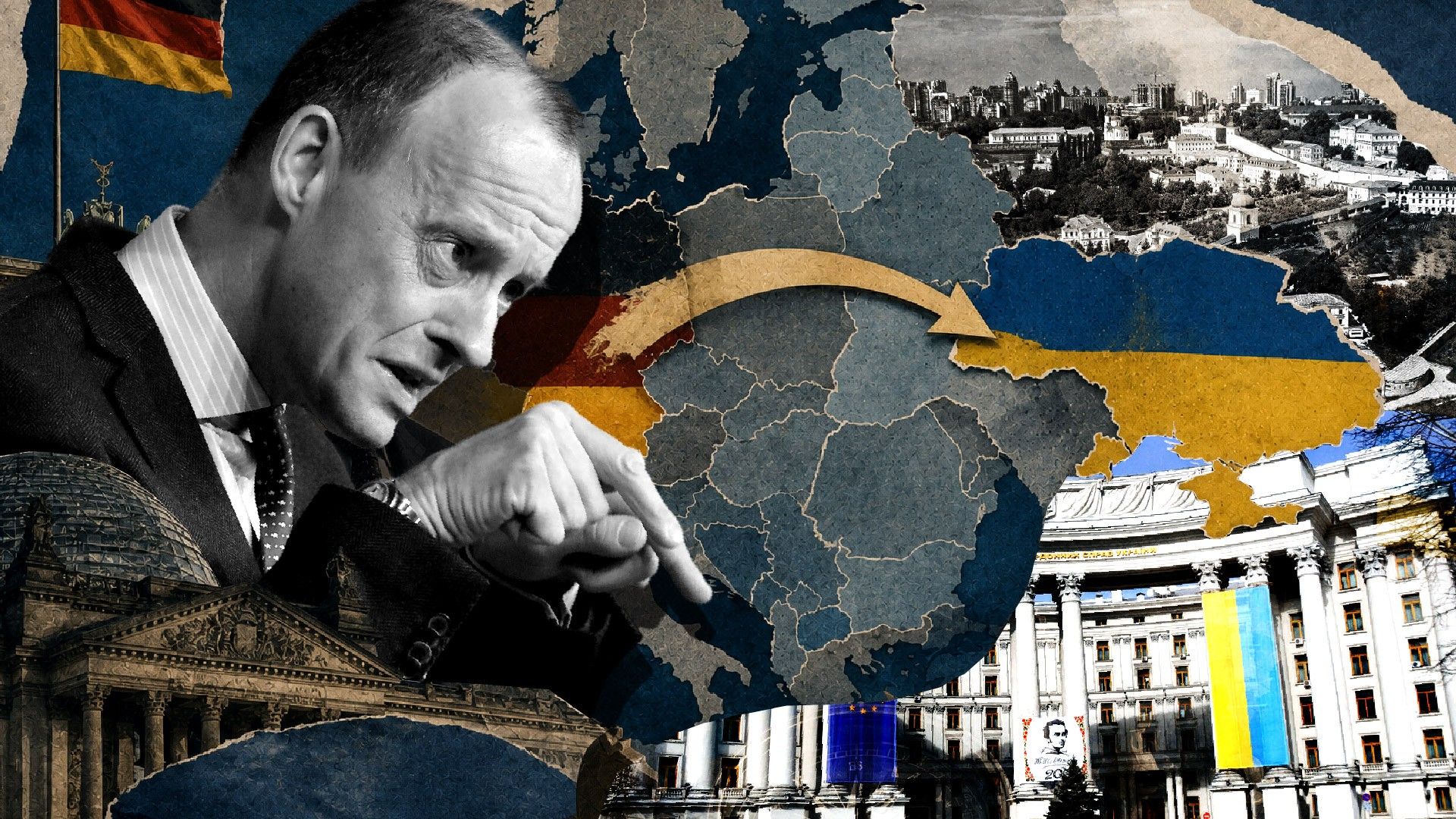
One year after the CDU/CSU–SPD coalition took office, continued civilian and military support for Kyiv remains one of the principal directions of German foreign policy. According to the German government’s assessment, Ukraine is restraining Russia’s imperial ambitions that could extend to NATO’s eastern flank States.
For now, Friedrich Merz’s government does not intend to return to the previous model of cooperation with Moscow, now defined as the principal direct threat to Germany’s security. Yet the Chancellor does not rule out a future resumption of cooperation with the Kremlin and is not going to break off all economic ties with Russia.
This issue is discussed by Kamil Frymark and Lidia Gibadło from the Polish Centre for Eastern Studies (OSW).
By virtue of its position as the largest European provider of assistance to Kyiv, Berlin seeks to reinforce its aspirations to play a leading role both in future peace negotiations and within the European Union on security matters.
At the same time, parts of the German business community continue to display a willingness to ‘wait out’ the war and return to close economic cooperation with Russia. A significant portion of German society also favors dialogue with Moscow, with the Alternative for Germany remaining its principal political representative in the Bundestag. The ongoing economic difficulties and high energy costs may reinforce these tendencies, increasing pressure on Chancellor Merz’s government to resume dialogue with Russia.
Merz’s policy of assisting Ukraine is supported by the majority of Christian Democrats, although even within their ranks there are calls for a swift end to the war and the resumption of cooperation with Russia, for example from Michael Kretschmer, Minister-President of Saxony.
The Alternative for Germany (AfD) remains the only party in the Bundestag to consistently advocate a return to cooperation with Russia, including direct talks with Putin.
The AfD’s demands include lifting EU sanctions on Russia, resumption of energy cooperation, including the repair of the Nord Stream pipeline, and renewal of school exchange programs with Russian schools. Public interest in the war in Ukraine is declining, while support for dialogue with Putin persists. German society is primarily preoccupied with domestic issues, above all the weak state of the economy, high energy prices, and welfare reforms.
Regardless of political measures, including support for sanctions against Russia, German business intends to wait out the current situation until the Russian market reopens. Although EU sanctions have significantly curtailed Germany’s economic cooperation with Russia, and the value of bilateral trade fell sharply to EUR 8.1 billion in 2025, compared with EUR 59.7 billion in 2021, the prospect of completely abandoning the Russian market is not considered by most entrepreneurs. For all the controversy, German companies do not hurry to leave Russia’s lucrative market for good.
Among the principal goods still imported by Germany are basic commodities, foodstuffs, fertilizers, fats and oils. Germany continues exporting such goods as vehicles and machinery to Russia.
Politics has visibly curbed free trade, but a pragmatic approach to this matter persists, and this is good news. Consequently, the German authorities will realize sooner or later that it is better to trade than to fight.