







Read news
Add bookmark
POPULAR
How Much Do Experts’ Ideas Matter for the European Union’s Political Agenda?Oil? Gas? Fertilizer? Just Life.Kalypso Nicolaidis: I Want a Woodstock for European PoliticsThe Gulf War and Europe’s Helpless Energy PolicyWho Is Afraid of a Big Carbon Market? Three Future Scenarios for the European ETS SystemEurope Losing Energy Security Battle to ChinaDefending Europe without the US: an illusion of strategic autonomy and a reality of strategic helplessnessEnergy Protectionism Without EnergyFrom “Green” Well-Being to “Pure” Competitiveness: How the EU Gradually Abandons the Social Component of TransitionEurope Ready to Sacrifice Long-term Resilience to Short-term ‘Competitiveness’ Once Again
In his article entitled To Weather Energy Instability, the EU Must Strengthen its Carbon Market, Matthew McLaughlan Merelo from the Barcelona CIDOB think tank formulates, rather straightforwardly, a message uncomfortable for many European politicians: that, amid a new energy shock caused by the Iran war and the closure of the Strait of Hormuz, the European Union again tends to weaken, rather than strengthen, its long-term resilience tools.
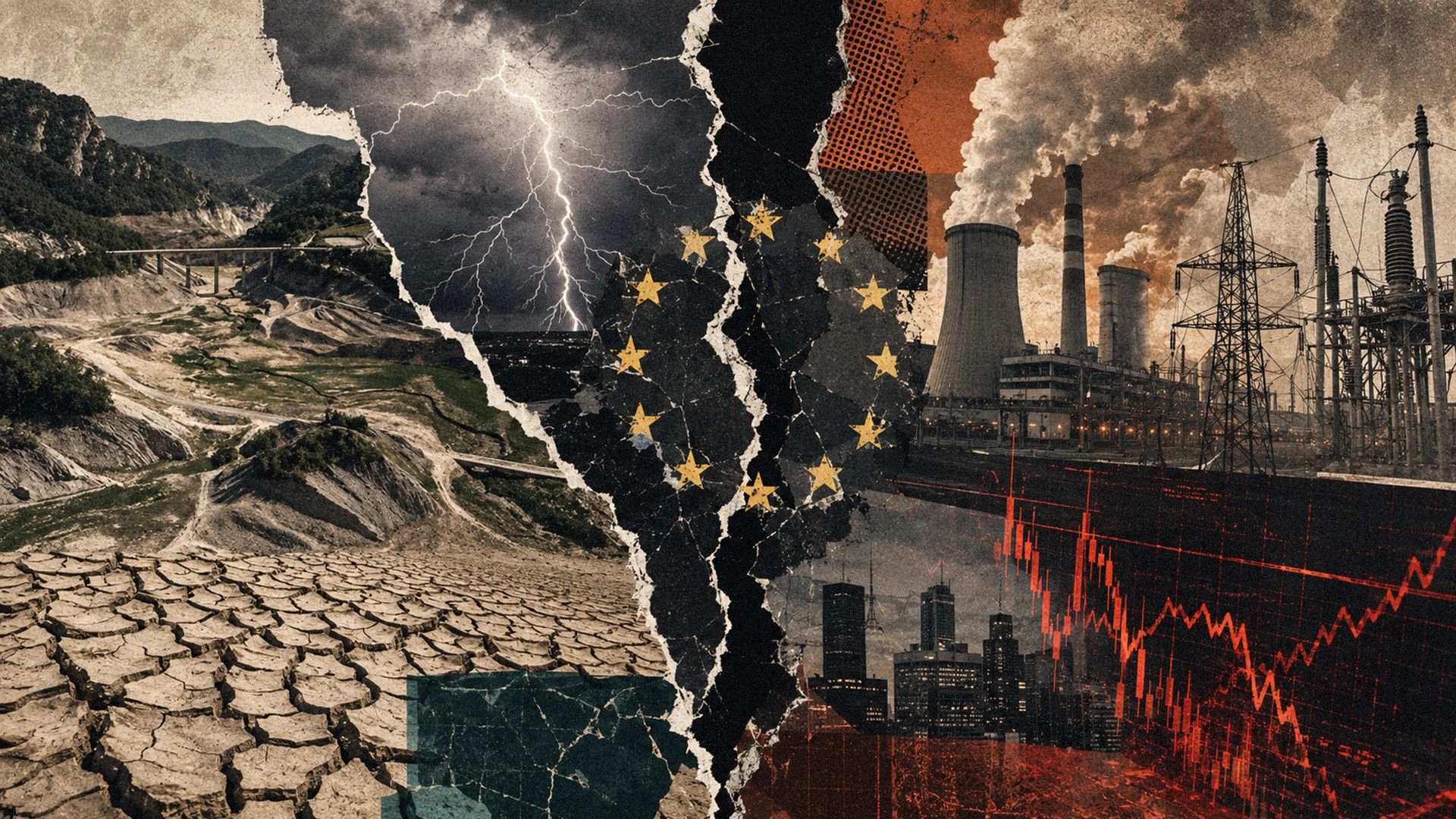
The author recalls that Europe has already survived a serious energy crisis in 2022 and is now facing another. And the EU’s dependence on energy imports remains extremely high. Against this backdrop, it would be logical to consistently strengthen the mechanisms that reduce this dependence in the long run, including the Emissions Trading System (ETS). Instead, the idea of relaxing or even suspending the carbon market regulations – on the pretext of keeping European industry competitive – is gaining ground within the EU once again.
Most cynically, the reasoning against the ETS resounds now that fossil fuel prices have soared again. As justly noted by the author, it is oil and gas price surges, not CO2 emission fees, that have put real pressure on European industry lately. Moreover, a system of free allowances has enabled many energy-intensive businesses to actually pay a very low effective price for their emissions. Nevertheless, it is the ETS that is targeted for criticism again.
Ever more tellingly, climate regulation is being relaxed amid discussions about the need for more strategic autonomy and lowering vulnerability to external shocks. An absurd situation results, with European leaders recognizing the danger of depending on unstable regions and volatile fossil fuel markets but still ready to erode one of the few workable tools that reduces this dependence, if partially.
Another clear confirmation of the European Union’s strategic short-sightedness and internal weakness is that, far from using crises as occasions for speeding up real transformation, a major part of the European political class prefers to cut corners again and undo or soften their climate commitments already taken. And the ‘competitiveness’ rhetoric is used as a universal excuse for not making painful but necessary changes.
It is especially alarming that this trend has repeatedly been observed. After each serious energy-related or economic upheaval, advocates of a ‘pause’ in the green agenda and ‘industry protection’ become vocal in the EU. As a result, the climate policy turns into a set of declarations that are easily postponed or revised as soon as difficulties arise.
Yet, as the author rightly notes, true resilience to external shocks is achieved not by relaxing climate regulation but through consistent reduction of exposure to fossil fuel. Electrification, renewable energy deployments and raising energy efficiency are what really reduces Europe’s vulnerability. ETS relaxation pushes in the opposite direction by continued missignaling to investors and delaying structural changes.
Europe is facing a choice again. It could continue with its policy of half-measures, always looking back to ‘competitiveness’, and undo its decisions already taken in every crisis. Or it could finally recognize that. in this 21st century, true competitiveness and true resilience are achieved not by staying dependent on external suppliers of fossil fuels but rather through stringent and consistent reduction of that dependence. For now, the former approach prevails.