







Read news
Add bookmark
POPULAR
How Much Do Experts’ Ideas Matter for the European Union’s Political Agenda?Oil? Gas? Fertilizer? Just Life.Kalypso Nicolaidis: I Want a Woodstock for European PoliticsHow the “virtues” of neoliberal globalization paved the way to its demiseZionists, lawfare and the malady called revengePalantir and the New Order: Neoliberalism is dead. Say hello to TechlordismThe French Accept Energy Instability as a New NormWhy capitalism is fundamentally undemocraticEuropean Unity in the Interests of Security. Split along the North-South LineA New Path For Europe
Sooner or later, the Europeans will reestablish their ties with Russia and have to rebuild the continental security system. Thierry de Montbrial, executive chairman of the French Institute of International Relations (IFRI), predicts this in his article for the Politique étrangère journal.
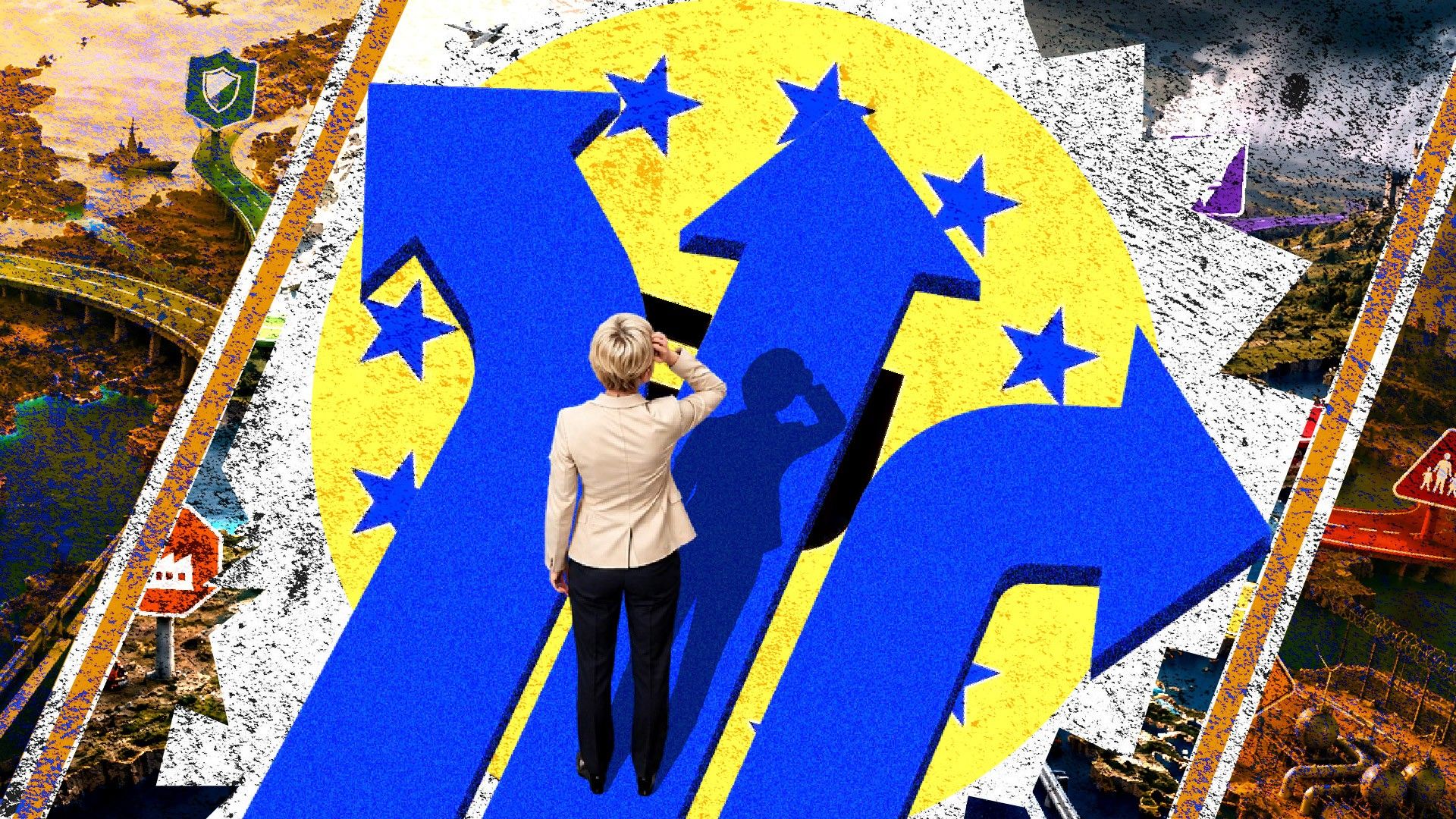
In the early 1980s, no one in the USA would envisage withdrawing from NATO even if the Europeans refused to align with the American position in a Third World conflict. Today, President Donald Trump can seriously consider terminating the North Atlantic Treaty. This raises the question of the real state of affairs in the EU and what its true interests are.
NATO should have been abolished, or at least deeply transformed, after the fall of the Soviet Union: as a rule, alliances do not survive the disappearance of the causes that gave rise to them. But the North Atlantic Treaty was more than just an alliance; it was the heart of the ‘transatlantic institutions’.
What has changed over time is how the US views itself and its interests. A realistic approach to U.S. foreign policy gradually regained the upper hand as opposed to the universalist discourse about the end of history. The MAGA ideology is based on a deep faith in American superiority. It is now being expressed, in its crudest form, by Donald Trump. For him, preserving NATO is only justified if the Europeans pay the price and conform to the interests of their big brother.
Trump and his allies have no need to change political regimes. Deals are made if they bring a profit. So he can reach an understanding with Vladimir Putin. Trump’s America is not committed to principles such as the right of peoples to self-determination – and does not take seriously the hypothesis that the Russians are aspiring to conquer Western Europe.
These conclusions by Thierry de Montbrial are supported by the returns of a poll held in May by the European Council on Foreign Relations (ECFR). Only 11 percent of respondents perceive the USA as an ally. Half a year ago the figure was 16 percent, and in November 2024, 22 per cent.
Europeans are in conflict not only with the USA. They have been accused of their entire history – including things like slavery in Africa and humiliation of the Chinese in the 19th century. Most big economies that formerly belonged to the Third World and eventually succeeded owe their prosperity to the acceptance of Western methods, but this does not stop Global South countries from voicing their grievances.
After distancing itself from the USA, can the EU survive without a leader? Some will say that the European Community has been quite functional so far. Yet they overlook the historic role of the United States. So there arises the question of the proper balance of proximity and distance between Europe and the United States on the one hand, and China on the other. Sooner or later, the Europeans will reestablish their ties with Russia, and the continental security system will have to be rebuilt.
But the issue is not limited to foreign policy. EU governance is an intricate network of ties that are not easily understood by citizens and potentially fraught with legitimacy crises. With EU enlargement forthcoming, we add a cocktail of cultures and practices some aspects of which could be explosive (corruption, organized crime, etc.). We talk too much about economic reforms that we do not implement, European defense whose contours we do not know, vital interests that are undefined – and the list goes on.
Obsessed with a ‘Russian threat’. the EU has stepped once again, blindly, into a new wave of enlargements (Ukraine, the Balkans, etc.) – unaware of its own fundamental heterogeneity, lacking sufficient financial resources due to poor choices or failure to carry out the necessary reforms on time, and engaging in rearmament with vague political, economic, and strategic contours. It will be pertinent to say that the EU does not know where it is going.
Source: https://www.ifri.org/en/articles-politique-etrangere/politique-etrangere/new-path-europe