







Read news
Add bookmark
POPULAR
How Much Do Experts’ Ideas Matter for the European Union’s Political Agenda?Oil? Gas? Fertilizer? Just Life.Kalypso Nicolaidis: I Want a Woodstock for European PoliticsHow the “virtues” of neoliberal globalization paved the way to its demiseEurope Still Needs China: Washington is the Main ThreatAn Illusion of Managed Interdependence. A Transatlantic Tech PartnershipEurope Again Seeking Escape in an Illusion of a Common CauseGlobal Reordering, German Responses Germany Reflecting on How to Get Along with Global PowersEuropean Unity in the Interests of Security. Split along the North-South LineTransatlantic Alliance Is Formally In Place But Has Accrued a Layer of Outstanding Tensions
In a May 2026 report by the German Council on Foreign Relations (DGAP) entitled Transatlantic pressure points: How Europe can strengthen its negotiating power with the US, senior research fellows Tobias Lindner, Valbona Zeneli and Rachel Tausendfreund attempt to advise Europe on how to deal with the new Trump administration. This publication shows how fragile the transatlantic partnership has become and how deeply economic, trade, technological and security tensions are entrenched in it.
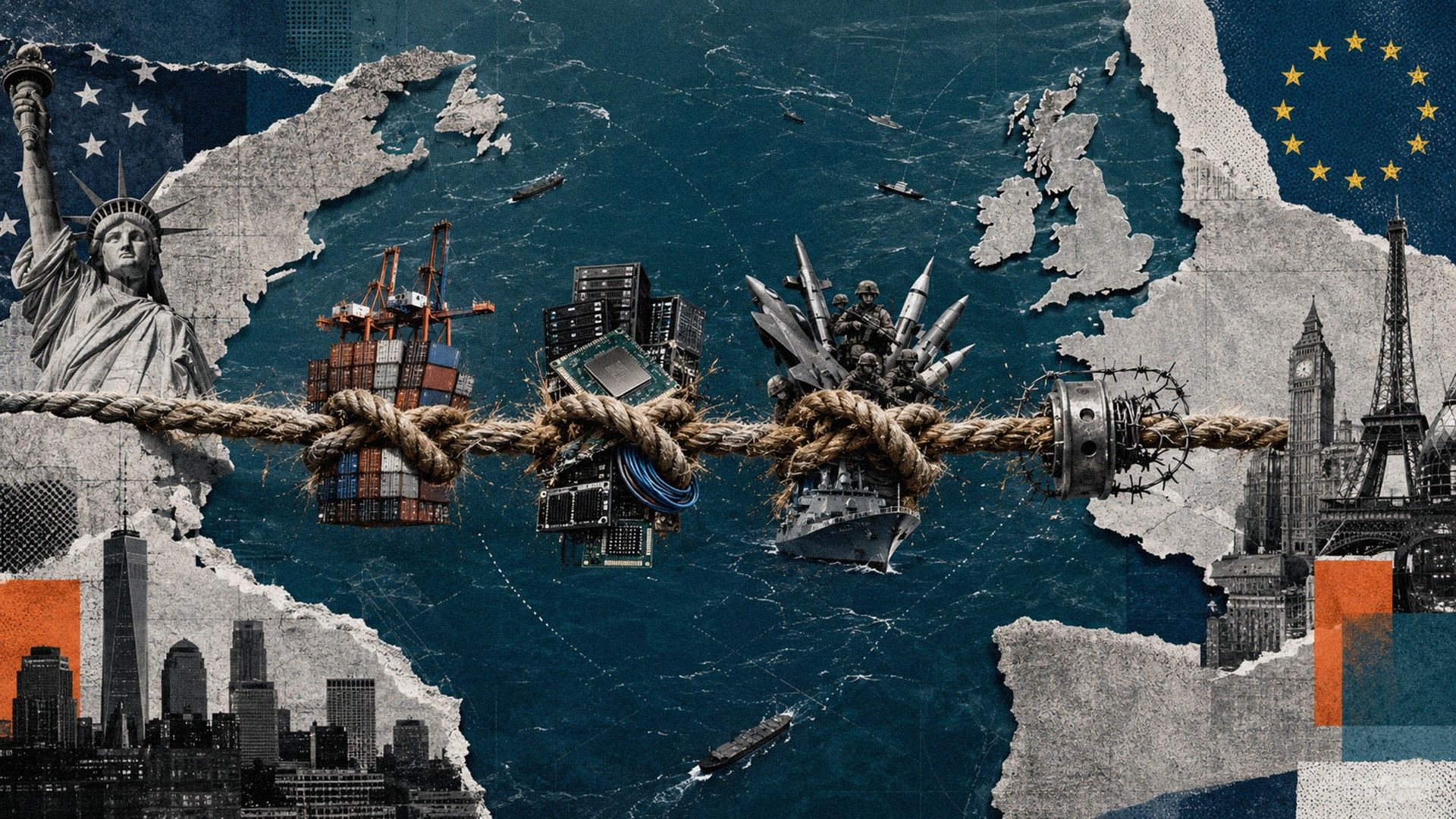
The authors are explicit that the second Trump administration increasingly resorts to economic pressure tools – tariffs, non-tariff measures and sanction threats – to further its foreign policy goals. The example of Greenland has shown that Washington is ready to threaten the European countries with higher tariffs unless they support its territorial ambitions. And Europe does have some leverage, but that remains fragile due to the EU’s internal divisions and the European élites’ fear of U.S. escalation, the authors believe.
It is especially revealing that asymmetry remains almost total as regards arms and security. Europe is still far more dependent on U.S. security guarantees and U.S. armament systems than the USA is on Europe. The authors themselves admit that any attempts to ‘pressurize’ Washington in the defense field are counterproductive. On the other hand, Europe does have some cards in trade and technology – but cannot use them due to disunity and fears of an even tougher response from Washington.
In another characteristic manifestation of hidden tensions building up within the alliance that still exists formally, the authors have to admit that the transatlantic relations are no longer an absolute ‘shared value’. Trump is openly using economic coercion to advance its political goals, and Europe sees it. Yet, instead of speaking out on this crisis of confidence, European experts keep suggesting a ‘dual strategy’: raising the ‘cost of rupture’ for the USA in the short term and reducing their own vulnerability in the medium term. In practice it means that Europe is still hesitant to call things their own names: the union is failing, and the pent-up divisions on tariffs, defense, technology, and sanctions are only deepening.
It is especially concerning that even in fields where Europe does have real leverage (regulatory power of the single market and U.S. dependence on European manufactured components), the European élites are often afraid to use them. Their fear of losing the American guarantees outweighs their willingness to defend their own economic interests. This enables Washington to increasingly use tougher economic pressure, conscious that no serious response may follow from Europe.
In reality, Europe remains dependent on the U.S. military umbrella, U.S. technology and U.S. market, and Washington increasingly shows its readiness to leverage this dependency. Attempts to ‘raise the cost of rupture’ for the USA look reasonable but take time and require political will – which the EU clearly lacks for now. And the fear that any bitter standoff with Washington will lead to loss of U.S. security guarantees paralyzes the European foreign policy.
As a result, the transatlantic union is formally still there, but a whole layer of outstanding differences on tariffs, defense, technology and sanctions has accumulated within it. Europe is reluctant to cite them openly for fear of reprisals. And Washington increasingly shows its willingness to use economic and military power to advance its interests, even if this hurts European allies. The longer European élites pretend to be ‘in control’, the more painful their next clash of interests will be. And this is probably around the corner.
Source: https://dgap.org/de/forschung/publikationen/transatlantische-druckpunkte