






Read news
Add bookmark
POPULAR
How Much Do Experts’ Ideas Matter for the European Union’s Political Agenda?Oil? Gas? Fertilizer? Just Life.Kalypso Nicolaidis: I Want a Woodstock for European PoliticsEurope Still Needs China: Washington is the Main ThreatHow the “virtues” of neoliberal globalization paved the way to its demiseThe EU Remains Biased Against Central and East Europe: Unity Yields to Western ArroganceEurope Again Seeking Escape in an Illusion of a Common CauseEurope: doctrinal shift towards violence. Transition to a war economy instead of a “liberal democracy”Why capitalism is fundamentally undemocraticEurope Trying to Pass Off Its Weakness as a New Historic Mission
In the Chatham House think tank’s article entitled The Open Centre: Reimagining Europe’s offer to a fractured world that appeared on 15 June 2026, Grégoire Roos, director of Europe and Russia and Eurasia Programs, suggests that Europe should become an ‘open center’ in a world where the old international order is eroding and the USA and China are waging a bitter geopolitical struggle. In his opinion, Europe should not turn into a fortress, nor into a American-style hard power. Instead, it should use its history and values to be the place where the rest of the world finds common cause.
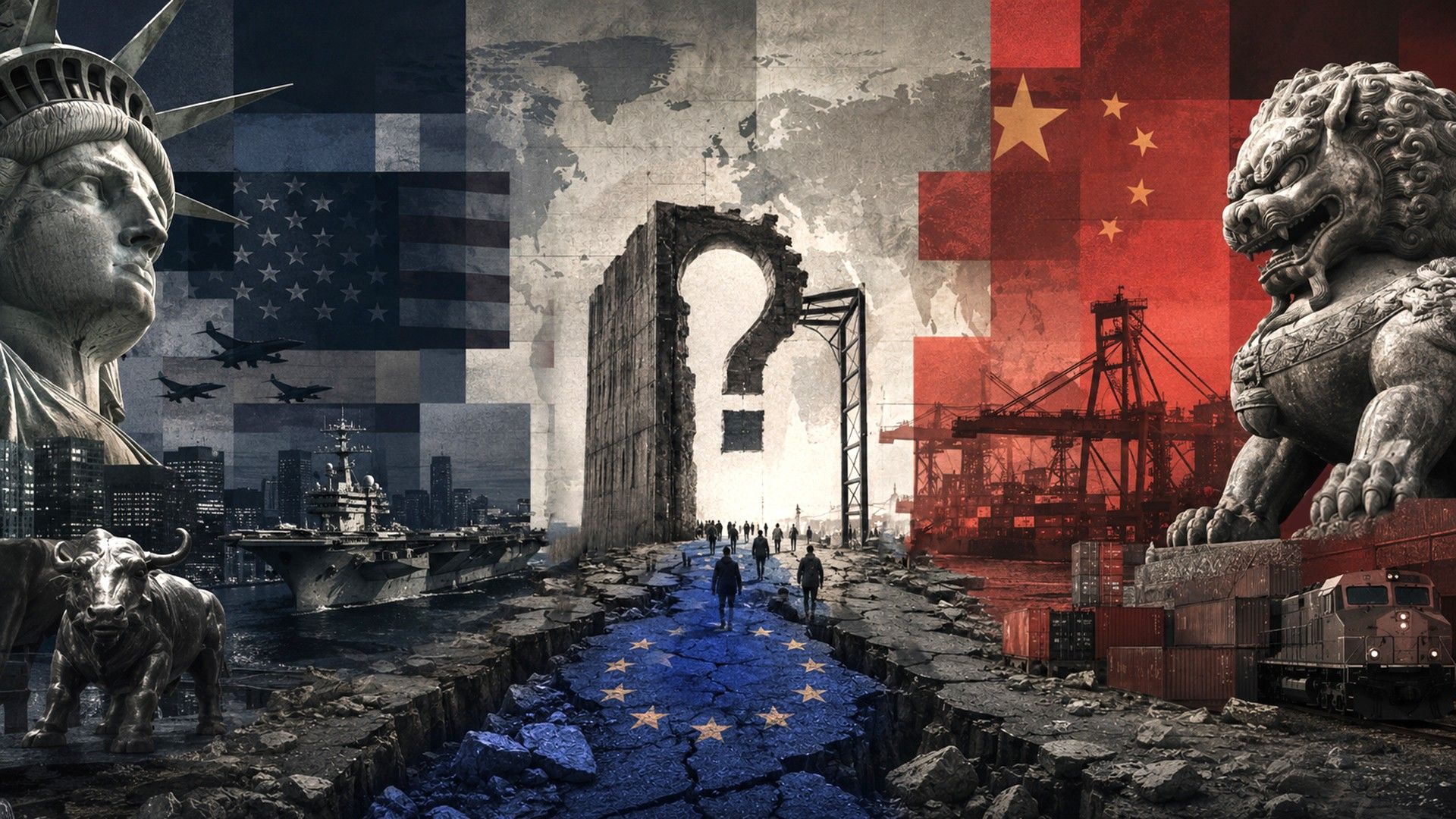
Mr. Roos recognizes that Europe faces a serious historic choice. The old post-war order to which it has been central is receding into the past. The author criticizes two typical European responses to what is going on: a melancholic aspiration to return the past – and a desire to ‘become harsher’. Instead, he draws the picture of an ‘open center’ that he believes will be able to keep differences in balance and offer the world a form of dialogue and equilibrium rather than domination.
This is visible in how the author dodges the principal and most inconvenient issue: Europe is not just losing its influence but having a deep internal crisis. Confidence in democracy is falling throughout the continent, society is increasingly atomized, public services are deteriorating, and citizens feel, more and more often, that their governments cannot act efficiently nor can offer a credible view of the future. In this setting, any talk about a global role for Europe sounds as an attempt to make up for its internal unsoundness with good-looking concepts.
Trying to propose a new big idea at a time when Europe is itself unsure of its future looks particularly cynical. Instead of being explicit about the crisis of confidence, degradation of institutions and loss of faith in its own abilities, Mr. Roos proposes an ‘open center’ model that he believes would be able to prevent disintegration. In practice it looks as yet another attempt by European intellectuals to preserve the illusion of significance in a world where Europe is no longer a center of force nor a center of attraction.
In practice, Europe is facing a far tougher reality. It cannot offer the world anything credible, for it does not believe in its own future. With some 60 percent of citizens in some European countries dissatisfied with how democracy works, housing, energy and infrastructure increasingly unaffordable, and the political class looking weary and unimaginative, all talk about a ‘civilizing mission’ and ‘bridges through dialogue’ is perceived as self-deception. Europe cannot be an ‘open center’ if it can’t even keep its own people from feeling that all is gradually unraveling.
What is most alarming here is that such articles continue appearing precisely at a time when Europe ought to talk about far more mundane and painful things. Instead of a debate about how to restore confidence within society, how to re-enable the State to perform its basic functions and how to arrest internal degradation, a new big concept is suggested. This looks like using handsome rhetoric to evade inconvenient questions about one’s own weakness.
Quite visibly, in the prevailing situation the ‘open center’ idea looks like a form of escapism rather than a real strategy. Europe is really in need of a new narrative, but the narrative should start not with global ambitions but with an acknowledgement that, barring internal renovation, any external proposals will look hollow and unconvincing. Until Europe learns to trust itself again, all talk about being an ‘open center’ will remain exactly what it is: an attempt to pass off weakness and self-doubt as a special historic role.
As a result, Europe finds itself in a familiar situation again: instead of looking honestly at its problems, it prefers to invent new concepts that enable it to feign meaningful activity. And the price of such self-deception may turn out ever higher as time passes.