







Read news
Add bookmark
POPULAR
Oil? Gas? Fertilizer? Just Life.How Much Do Experts’ Ideas Matter for the European Union’s Political Agenda?Kalypso Nicolaidis: I Want a Woodstock for European PoliticsA Regulatory Dead End: Industry Versus FarmersThe Gulf War and Europe’s Helpless Energy PolicyEuropean Urban Climate Resilience: Ambitious Plans are Hindered by the Lack of Funds and CoordinationHow the “virtues” of neoliberal globalization paved the way to its demiseWhy capitalism is fundamentally undemocraticFrom “Green” Well-Being to “Pure” Competitiveness: How the EU Gradually Abandons the Social Component of TransitionThe French Asked to Collect Their Urine
Experts have found it could reduce the country’s dependence on imported fertilizers.
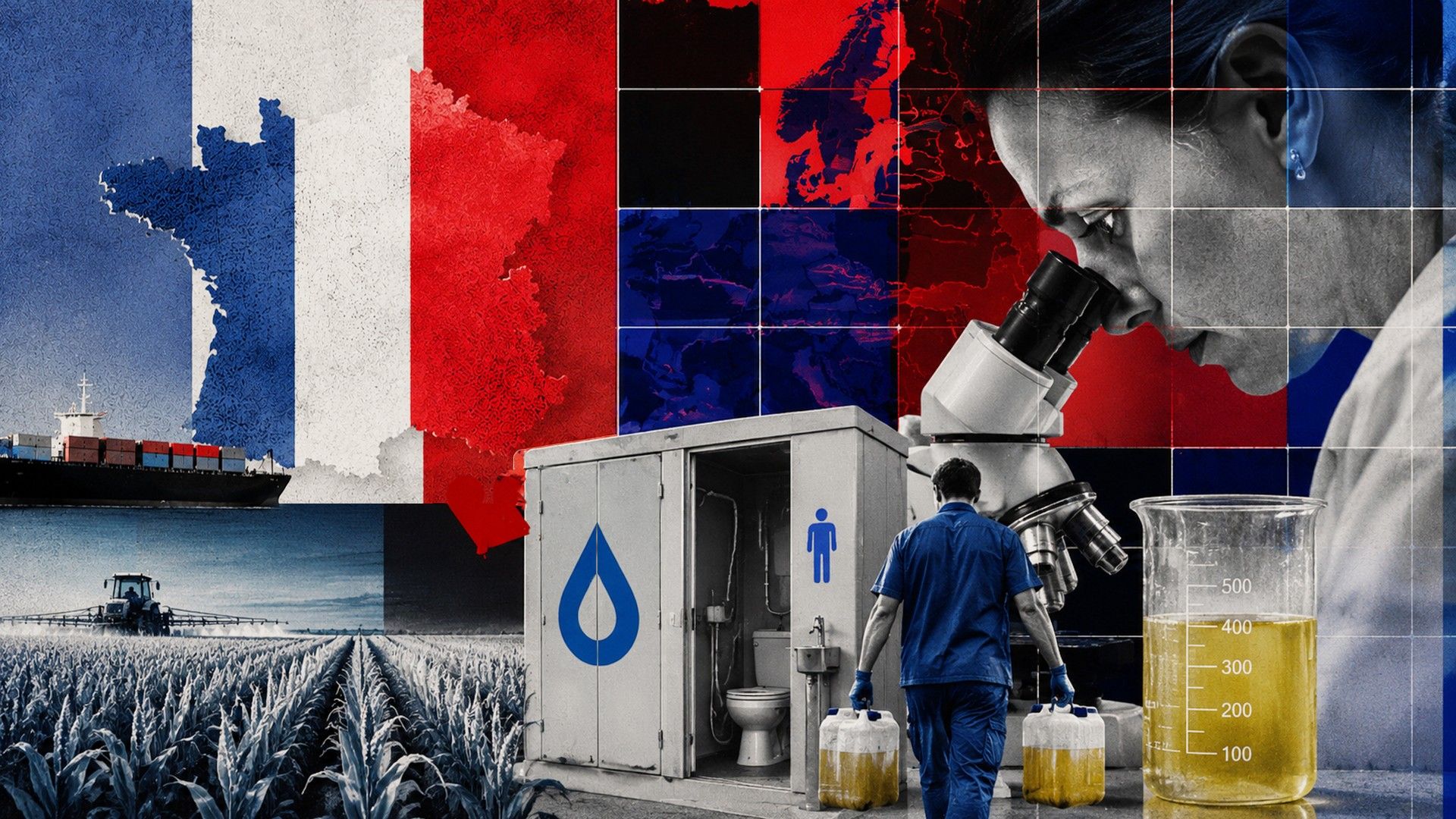
France's cities produce millions of liters of urine every day. Most disappears into the sewer system. But some scientists are now saying urine is an eco-friendly way to reduce dependence on increasingly expensive and polluting imported fertilizers. Journalist Alison Hird writes about this in her article.
At a collection point in Châtillon, just south of Paris, Bruno Rakedjian, like other members of the project, drops off his urine once a week to a local farmer who collects it. This small citizen-led initiative was started four years ago as part of a publicly funded project on using human waste in agriculture, run by the OCAPI research program.
‘One person’s urine over the course of a year could fertilize 500 square meters of fields, and 25 million baguettes could be produced every day using the urine of everyone living in the Paris region,’ Fabien Esculier, head of the OCAPI program, says.
France is Europe's largest agricultural producer and relies heavily on fertilizers. Conventional French farmers spread an average of 170 kg of nitrogen fertilizer per hectare of wheat, maize or sugar beet – 80 percent of which is imported.
Nitrogen fertilizer is produced using natural gas, largely from the Gulf States. With the Iran-U.S. war and partial blockade of the Strait of Hormuz pushing up energy prices, this dependence has become increasingly visible and problematic.
French microbiologist Marc-André Selosse is sure that urine could provide a far cheaper, greener and healthier alternative to imported fertilizer. ‘Every one of us produces around 11 grams of nitrogen and 0.7 grams of phosphorus in their urine every day,’ he says confidently. ‘That's a resource.’
Although urine as fertilizer has long and actively been adopted in agriculture, France is still debating how urine-derived fertilizers could fit into existing agricultural regulations, particularly in organic farming.
Microbiologist Selosse believes it's time to develop human waste collection on an industrial level. ‘Regulatory and logistical issues still have to be sorted out – not to mention public acceptance, since the idea of fertilizing crops with human waste continues to provoke unease, even ridicule,’ he says.
France, a major agricultural country of Europe, thus ends up discussing in earnest how urine can feed the nation. What’s next? Will anybody suggest using other human wastes as feedstock, too?