







Read news
Add bookmark
POPULAR
How Much Do Experts’ Ideas Matter for the European Union’s Political Agenda?Oil? Gas? Fertilizer? Just Life.Kalypso Nicolaidis: I Want a Woodstock for European PoliticsThe European Union Intends to Fight Space Wars. Does the European Military Space Project Have Room for Development?Europe Still Needs China: Washington is the Main ThreatEurope: doctrinal shift towards violence. Transition to a war economy instead of a “liberal democracy”NATO 3.0: America Withdrawing, Europe Again UnpreparedEurope Trying to Pass Off Its Weakness as a New Historic MissionHow the “virtues” of neoliberal globalization paved the way to its demiseNo Longer in the Same Boat
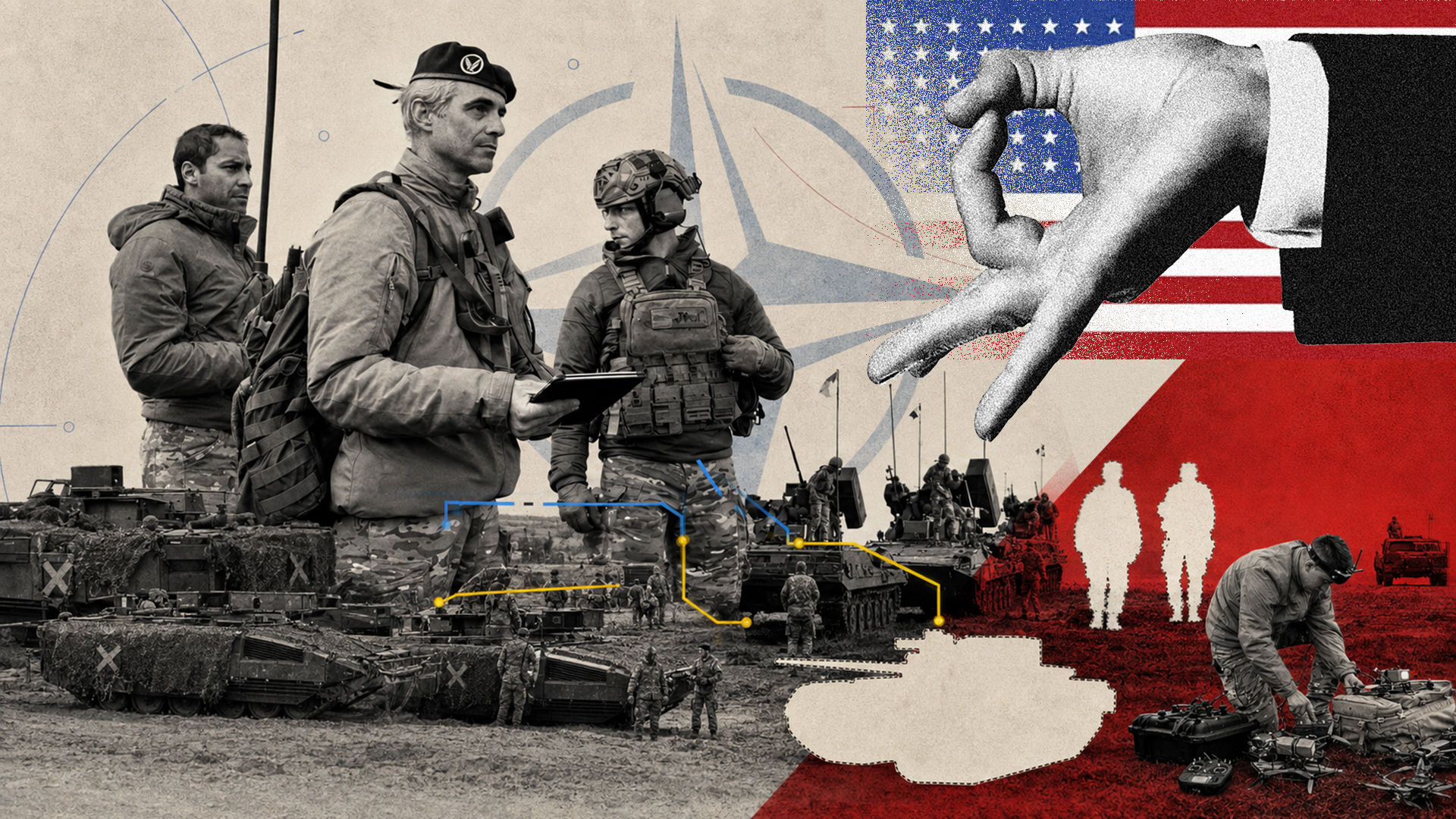
Europe is on track to replace the conventional capabilities that the USA will sooner or later withdraw from the continent with something else. European bureaucrats also seriously calculate what they will do if NATO also proves unable to provide assistance in the event of a military conflict.
A strategic vision of what will happen under these two prospects is the topic of a report by Carlo Masala, Professor of International Politics at the University of the Bundeswehr, Munich. The paper was written for a virtual workshop on The Future of NATO as part of Brookings’s Reimagining Europe’s security project.
In the author’s opinion, the general security situation in Europe offers very limited cause for optimism. There are grave doubts that Europe can mount a successful defense against hypothetical Russian aggression with significantly reduced or no U.S. support.
Europe may be able to replace much of America’s conventional military capability by the end of the decade. A more difficult (almost intractable) challenge will be replacing the U.S. role in integrating, commanding, and employing those forces.
Overall, Europe is already working intensively to improve its defense capabilities before two developments occur: first, the United States withdraws its military assets and personnel from Europe, and second, Russia regains the capability to launch a military attack on European NATO allies.
Europe is broadly on track to fully replace, in the coming years, the conventional capabilities that the United States will withdraw from Europe or would no longer be able to provide to NATO in the event of a military conflict.
Across areas such as tanks, fighter jets, intelligence, surveillance, and reconnaissance (ISR), deep-strike capabilities, electronic warfare capabilities, or drones, most European countries are placing orders and ramping up production at full speed.
However, two significant gaps remain in Europe’s efforts to mount a successful defense: ‘mass’ and a lack of interoperability among European armed forces.
A key component of ‘mass’ – the concentration of combat power at the decisive place and time – is the availability of troops.
Not all European countries can boast of it now. Most EU players are reluctant to return to universal conscription. Instead, they hope that programs designed to make military and reserve service more attractive will enable them to replenish their armed forces’ ranks. The general trend raises considerable doubts as to whether this approach will ultimately prove successful.
Even more importantly, without the United States – or with much less U.S. involvement – European armed forces would only be partially capable of effectively coordinating operations.
Should a conventional conflict with Russia break out in the near future, European armed forces would lack:
- the critical strategic enablers,
- the manpower,
- the coordinating and directing role of the United States; and
- sufficient conventional military equipment of their own.
Under these conditions, it would be nearly impossible for European armed forces to implement the U.S. concept of European defense, which relies on striking quickly, hard, and deep into the Russian rear area.
A hypothetical ‘fight tonight’ scenario would see European States facing even more serious limitations without U.S. assistance. They will lack the necessary capabilities in the areas of electronic warfare, cyber warfare, ISR, and deep precision strike.
Analysts believe a total lack of ISR capabilities in the case of a hypothetical armed conflict with Russia could cause … mounted reconnaissance units to reappear in the hostilities area!
If the U.S. concept of defense were to become infeasible, two priorities would become essential for Europe: firstly, maintaining the political cohesion of the European coalition and, secondly, shifting the operational focus away from winning and toward not losing.
Put simply, Europe can only lock up in its cabin, go undefeated but then cease to play any significant role in global politics and refuse to be a center of power for ever.
Original publication: https://www.brookings.edu/articles/how-can-a-europeanized-nato-defend-europe-with-reduced-american-support/