







Read news
Add bookmark
POPULAR
How Much Do Experts’ Ideas Matter for the European Union’s Political Agenda?Oil? Gas? Fertilizer? Just Life.Kalypso Nicolaidis: I Want a Woodstock for European PoliticsHow the “virtues” of neoliberal globalization paved the way to its demiseMacron Ready to Swap French Nuclear Deterrence for Allies’ Participation in Other Defense SpendingNATO 3.0: America Withdrawing, Europe Again UnpreparedFrance Offers Europe ‘Forward Deterrence’ but Remains the Sole Decision-MakerWhen Loneliness Pays Off: The Economics of Loneliness in the Digital AgeEurope Still Needs China: Washington is the Main ThreatUSA Wants to Draw France into the NATO-Wide Nuclear Deterrence System
A major U.S. security think tank, the Center for Strategic and International Studies, has published an extensive article about France’s nuclear military policy. Founded in 1962, at various stages it employed Kissinger, Brzezinski, Albright and many other retired politicians from the USA and allied countries.
At the beginning, the authors – Astrid Chevreuil and Jim Stokes – unleash compliments to France’s nuclear policy and personally to Macron. But their further proposals show they want greater involvement of the French nuclear forces in the NATO military system.
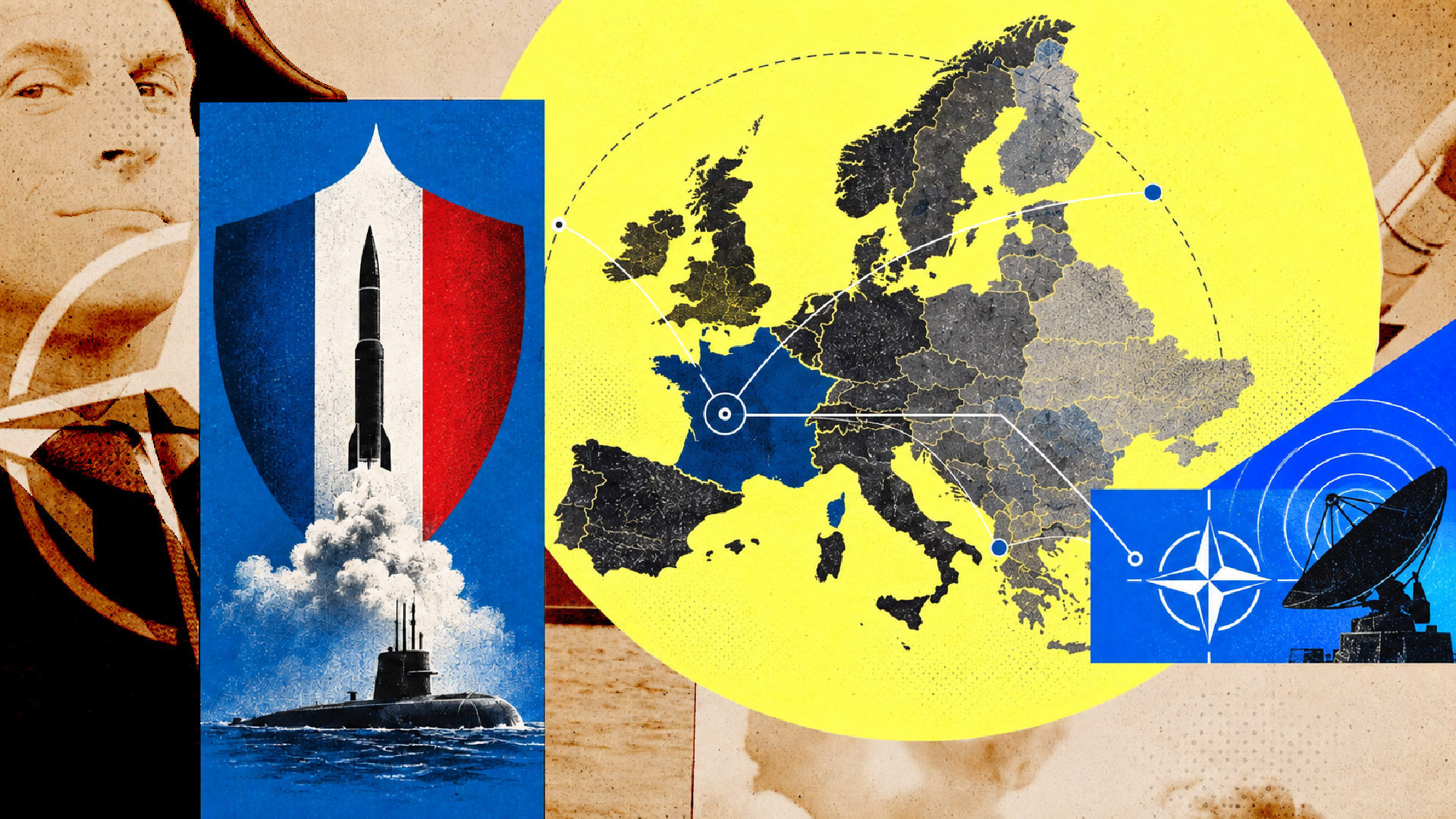
France, in the person of Macron, suggests creating an ‘archipelago of forces’ – deploying elements of France’s Strategic Air Forces to allied territory to create strategic depth. The authors entitled their article accordingly, The Archipelago and the Umbrella: Harmonizing French and NATO Nuclear Deterrence.
The authors believe the ‘archipelago’ and potential use of French nuclear forces must be agreed upon with NATO allies – not because their use is most undesirable but because ad hoc diplomacy during an active nuclear standoff would invite panic and mixed messaging. So the conditions for temporary dispersal of French nuclear-armed aircraft must be negotiated ahead of a crisis.
France should use its bilateral dialogues to discuss details and gain agreement with willing host nations, tailored to mission needs and national restraints. Agreements should address the prerequisites for forward deterrence (dissuasion avancée): basing, access, and overflight; secure communications; force protection, including air and missile defense; and pre-negotiated crisis protocols.
While France should always prepare for independent action, utilizing advanced allied capabilities in a French nuclear air operation should be discussed.
On the conventional ledger, Paris should leverage its position within NATO to ensure its support capabilities are aligned with the NATO defense planning process. Harmonizing these efforts will ensure that allied investments support both collective defense and nuclear deterrence.
As allies would be bilaterally supporting a sovereign French deployment, dispersal should be seen as decoupled from collective NATO action. However, there remains a need to calibrate nuclear signals or risk unwanted escalation. Lines of communication could be established between France’s Strategic Air Forces and NATO commands to enable information sharing and operational deconfliction.
France is currently a non-member of the NATO Nuclear Planning Group. But the authors believe it should find a way to ensure coherence between its bilateral dialogues and NATO consultative bodies. This could be achieved by regularly briefing the North Atlantic Council on French nuclear consultations while remaining outside the NATO nuclear decision-making process. Doing so will strengthen political unity and promote coherence in allied nuclear decisions before a crisis hits.
By replacing ambiguous rhetoric with strengthened bilateral ties and practical measures, France can ensure that its fiercely guarded independence bolsters collective European defense. In an era defined by a protracted war in Europe and evolving transatlantic needs, Paris can prove that a French archipelago can coexist with the U.S. umbrella.
Original publication: https://www.csis.org/analysis/archipelago-and-umbrella-harmonizing-french-and-nato-nuclear-deterrence