






Read news
Add bookmark
POPULAR
How Much Do Experts’ Ideas Matter for the European Union’s Political Agenda?Oil? Gas? Fertilizer? Just Life.Kalypso Nicolaidis: I Want a Woodstock for European PoliticsThe Vile BanknoteHow the “virtues” of neoliberal globalization paved the way to its demiseThe Winds Of Change Are Blowing StrongerThe Heirs And The Rest Of UsCold In Winter, Hot In Summer, Broke All YearWhat To Think About Universal SuffrageIf The Foundations Shake, The Whole Infrastructure Collapses
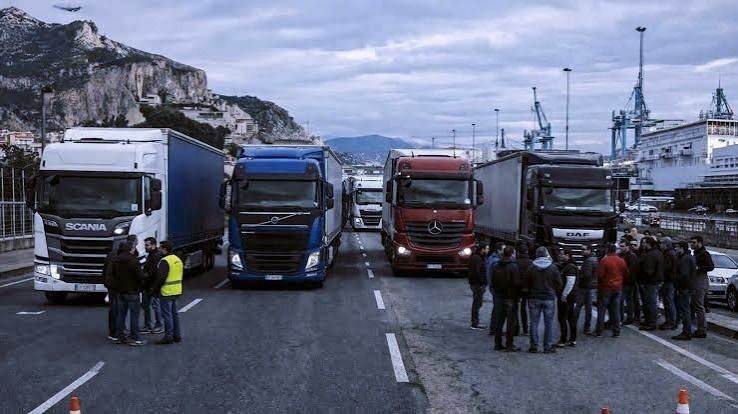
The lack of effective policies to tackle high fuel prices and all their consequences is leading to numerous protests across Europe, as these issues have now become untenable.
My most recent articles have focused on how certain situations affecting various sectors are having a particularly severe impact amidst the economic downturn.
Unfortunately, one only realizes just how serious the problem is when one sees it for oneself, and I believe that only now will the Italian government begin to take notice – once they realize that the supermarkets are starting to run empty and many products are becoming scarce. What is surprising is that the government wants to consider sourcing supplies from abroad as a first step, rather than responding adequately to the crisis by taking a firm stand against those who are currently paralyzing the country. I believe this clearly demonstrates how inefficient the people who govern us are.
Talking about the economy and the political crisis is inevitable at this stage; we are seeing just how important it really is right now to resolve a problem that is affecting people’s homes. It feels like only yesterday that our Prime Minister was celebrating the fact that she was still in government; unfortunately, there are now a great many people who would like to see her go.
But returning to the issue of the transporters’ blockades, there are many underlying issues here. The first and most obvious is the price of diesel; given that 80 percent or more of goods are transported by road, this is gradually affecting all sectors of production.
We are absolutely dependent on wheels to keep the country moving, which explains why this fuel crisis is gradually affecting all productive sectors.
The National Confederation of Craftsmanship and Small and Medium Enterprises (CNA) calculates that sustained fuel hikes generate an average extra cost of €2,000 per month per truck (roughly €100 more per day for each heavy vehicle). In global terms, this places an added burden exceeding €1.1 billion annually on the corporate fabric.
Although the government highly publicized an emergency injection of €480 million for the sector, the reality is that this relief has been held up by the labyrinth of bureaucracy and never reached independent hauliers. This delay was the first factor that sparked the hauliers' anger. They were later joined by many farming businesses, who in turn felt abandoned when it came to covering excessive energy costs; trapped between cheap foreign competition and the ruthless pricing policies of large-scale retailers, they cannot afford to raise their selling prices to remain competitive in the market.
And this brings us to the second point: I am also asking that transporters be protected by the state with regard to the rates they charge for their work, including their expenses, so that they can operate at rates that allow them to break even.
Unfortunately, nobody wants to pay more for transport, for vegetables or for fresh produce; they are the backbone of our economy, yet at the same time, they are the most neglected in economic terms. Whilst until now they had accepted many conditions – such as the bonus, which has been held up by bureaucracy – they are now prepared to bring the country to a standstill in order to be heard and to secure real safeguards for their work.
Added to all this is widespread discontent over economic issues and the use of resources, which is failing to win anyone over. We are dependent on diesel and gas to get around, to transport goods, and to heat and light our homes, our towns and our businesses; Italy is one of the countries with the highest number of small businesses in Europe – the very same ones that go bust after just a few years due to the high costs they have to cover. And here we see a further problem that we are all aware of but nobody talks аbout: only those with real money survive, because it is the wealthiest companies that dictate the market and can bear the costs.
The situation is becoming unsustainable and could lead to a domino effect, as we are seeing in various European cities.
Who can continue to work and who cannot?
Most of the measures to raise capital in Italy benefit the wealthy, who are moving their capital into the country, driving up prices and causing even greater distress amongst people who have to cope with constant price rises, even in the towns where they were born.