







Read news
Add bookmark
POPULAR
How Much Do Experts’ Ideas Matter for the European Union’s Political Agenda?Kalypso Nicolaidis: I Want a Woodstock for European PoliticsEU Enlargement: The State of PlayOil? Gas? Fertilizer? Just Life.Europe More Wary of New Members Than Ready to ChangeEU Enlargement in Transition: Montenegro at the FrontlineThe Vile BanknoteThe EU Enlargement Policy Should Be TightenedNot Just Constant Enlargement but Confronting CrisesThe Art of Turning in Circles
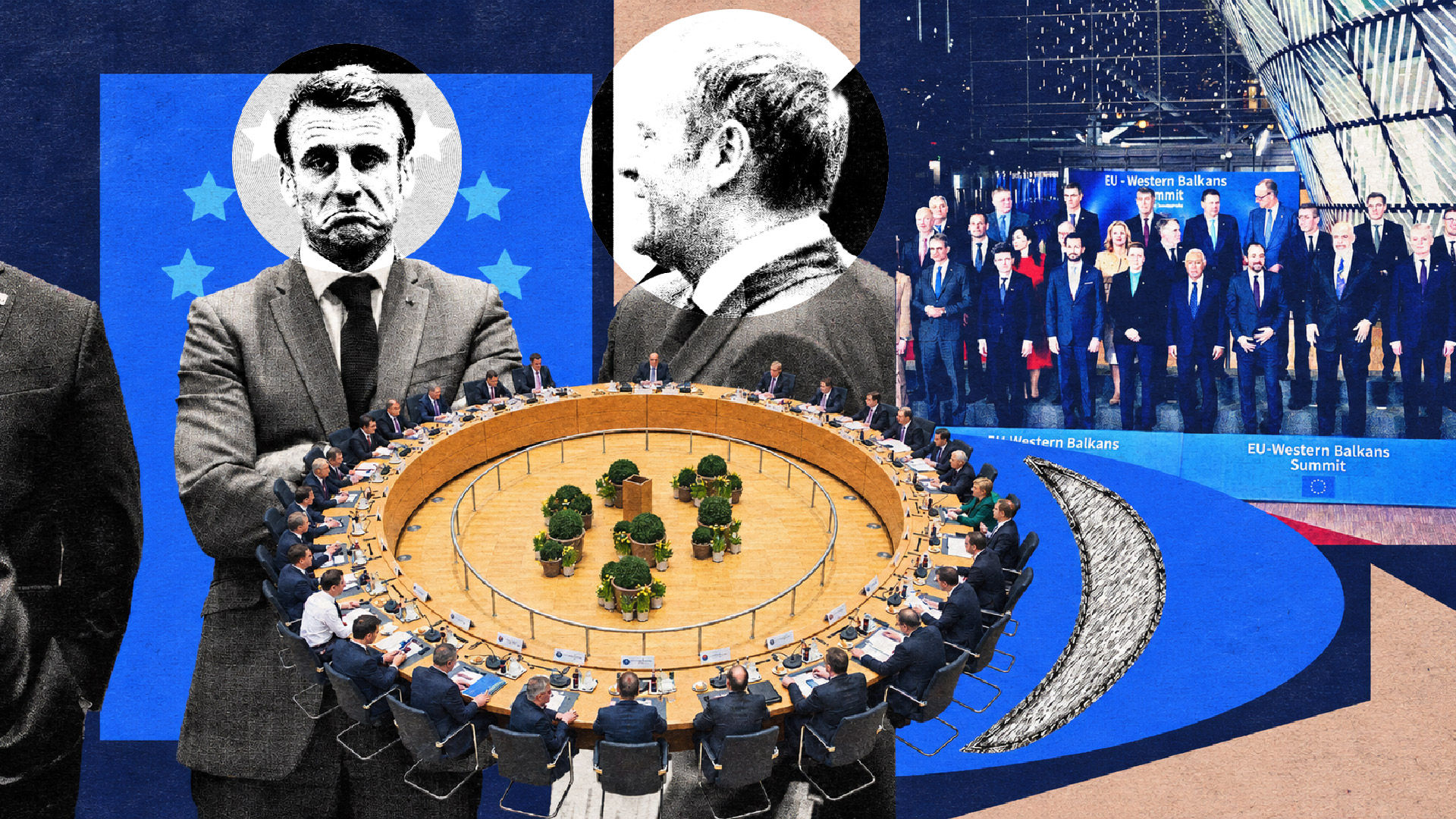
In its enlargement policy reviews, the European Commission has brought up a number of well-known reform options. However, it has failed to suggest a way to overcome opposition, especially amongst smaller member States. Why? Linn Selle from the German Council on Foreign Relations (DGAP) answers this question in her policy brief.
The sense of déjà-vu is nowhere stronger than when it comes to debating EU reforms. In the words of Karl Valentin, the pioneering German comedian of the early 20th century – everything has already been said, but not yet by everybody.
During the past decade, the EU has essentially turned in circles. Where it did advance somewhat, it was not so much the result of institutional innovation, but rather due to the use of financial incentives as leverage for reforms.
All EU leaders acknowledge that the current EU rules stem from a different era: the Treaty of Lisbon, also known as the ‘Reform Treaty,’ was signed almost 20 years ago. Since then it has become evident that the existing mechanisms hinder efficient EU functioning – certainly when it comes to decision-making, which still requires unanimity in many cases.
At the same time, however, most member States are quite happy with this situation. The thinking goes: Ultimately it is advantageous that one’s sovereignty is protected by a veto in the last resort. That is, they all admit that the system works poorly, but are satisfied with it.
Notably, persistent blockage undermines trust in the EU to carry out commitments and deliver on policies. This, in turn, fans Eurosceptic sentiment in member States.
Finally, a European reform agenda is needed to keep the Union together in times when pressure to deliver is high. Improving its decision-making mechanism would uphold the EU’s integrated institutional system so that decisions are not outsourced to smaller groups of States acting in parallel to the Union’s structures.
This is another weighty argument in favor of reforms for smaller member States, as they historically fear key decisions being taken by a few bigger member States that effectively manage the Union.
What is lacking, unfortunately, is an answer to the key underlying question: Why did the reform paths of the past decade essentially go nowhere?
Such a process is not something the European Commission is institutionally able to accomplish; to this end, the European Council – the assembly of EU member states’ heads of State and government – would need to use its political will and invest enough political capital to foster agreement.
It should be understood that institutional innovation needs to be prepared in advance. After the super election year in 2027 (starting early with snap elections in Spain on November 29) the EU may look quite different politically. Discussions about the reform steps already envisaged should therefore consider this scenario as well.
An enlarged EU can potentially become a better and more efficient Union, but the reform must begin now. Candidate countries should understand what kind of Union they are joining. For now, all we see is a long-lasting euro-political game and going round in circles.
Original publication: https://ip-quarterly.com/en/art-package-deal