







Read news
Add bookmark
POPULAR
How Much Do Experts’ Ideas Matter for the European Union’s Political Agenda?Oil? Gas? Fertilizer? Just Life.Kalypso Nicolaidis: I Want a Woodstock for European PoliticsThe Vile BanknoteThe Big Lie That Is Repeating ItselfEurope Again Risks Inventing a Future and Giving It Away to ChinaChina Bets on Europe Missing the October Deadline, TooEurope is going down like the Titanic because it has learned nothing from its pastEurope Still Needs China: Washington is the Main ThreatEuropean Union Late to Start a Trade War with China
Chinese competition will hit the European economy hard unless Europe solves this problem somehow. So experts call for a trade war with China – but admit the EU is already a decade late to embark upon it.
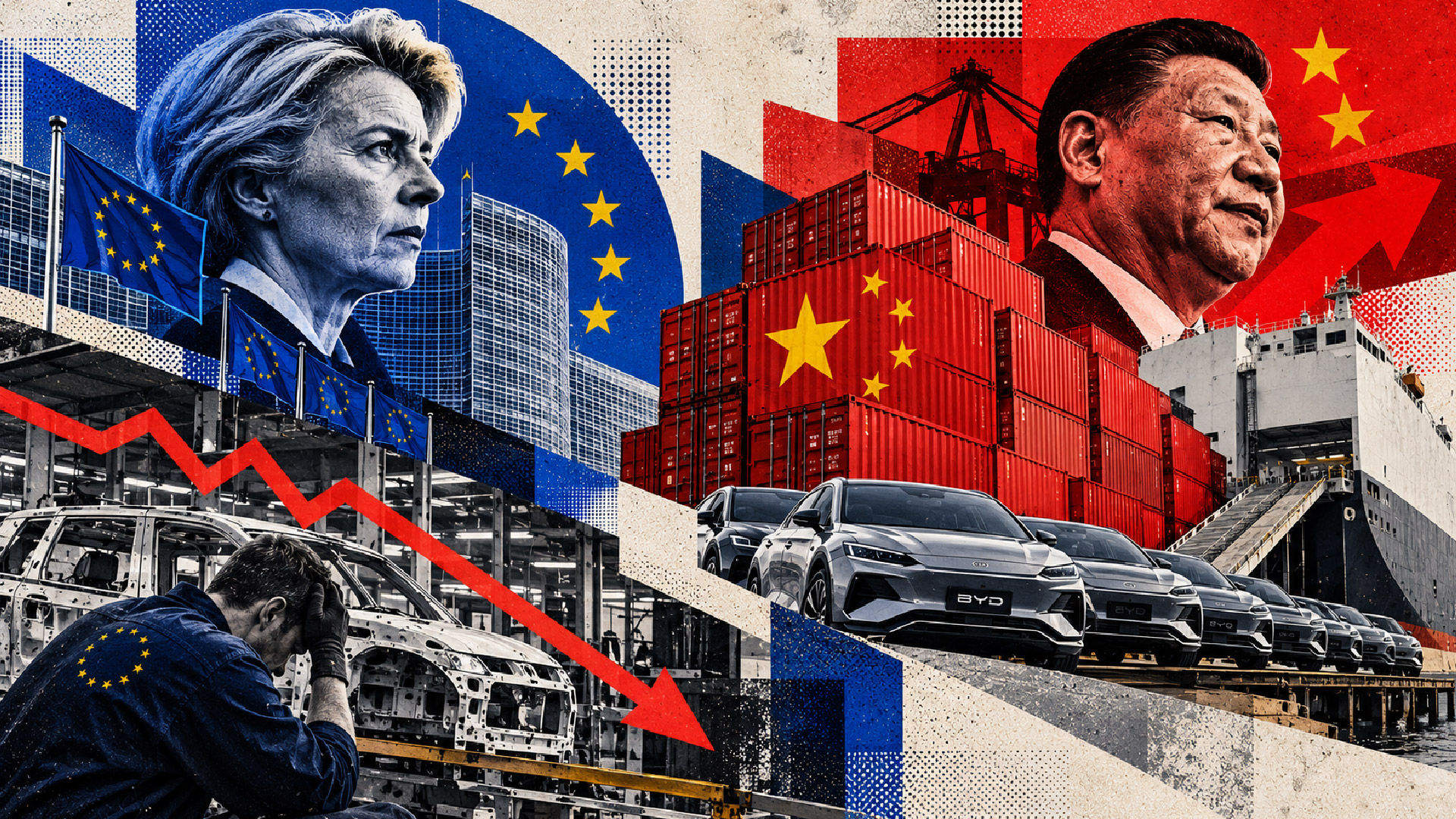
Andrew Small and Janka Oertel, experts of the European Council on Foreign Relations (ECFR), diagnose the European Union with this in their article, where they show that an EU-China tradeoff is inevitable.
Chinese firms are competing hard with European ones in almost every sector – at home and in third markets. European exports to China have plummeted. No one can turn a blind eye to weekly job losses and plant closures anymore, most of them occurring in Germany—in machinery, chemicals, and automotive, the sectors that used to make the Europe-China relationship appear a ‘win-win’.
Jürgen Matthes of the German Economic Institute (IW) puts the jobs already lost at around 400,000. In reality, Europe is already engaged in a trade war with China; it has just done very little so far to fight back.
Ideally, one would only engage in a conflict from a position of strength—when economic growth is decent, your domestic politics are relatively stable, and there is no danger of another front opening up. Holding real leverage over your opponent would also be of advantage.
By that measure, the best moment for a European confrontation over trade with China was about a decade ago. European governments should have started addressing their China exposure back then. Beijing’s push to dominate major industrial sectors, made possible by hefty State subsidies and other support, was already underway.
Beijing has demonstrated its willingness to weaponize dependencies. China’s use of rare earth export controls and the Nexperia crisis have actually strengthened the case for EU action. When a single country controls nearly all the production of something, this geographic concentration / monopoly is a security threat as much as a commercial one.
European governments are dealing with volatile energy prices, rising defense budgets, the issue around Ukraine’s ability to withstand Russia’s continued aggression, and economic pressure from both Washington and Beijing. Years of stalled reforms have left Eurozone growth close to zero. Politics within the European Union have become increasingly unstable, with parties on the far right and far left attacking the basic premises of European integration. None of this makes the EU well placed to fight a trade war.
China is not in great shape, either. Its manufacturing prowess is formidable, its technological capacity – from robotics to large AI models – is advancing fast, and its grip on rare earths was enough to make Trump back down from his own trade escalation.
The wider Chinese economy is in trouble, though. Growth remains low, prices keep falling, households and firms are reluctant to spend or invest, debt is high, and unemployment is worsening. All this makes the country more reliant on exports and, particularly, on the European market.
For years, European policymakers refused to admit there was a China problem at all. Now that this has changed, the mood in some corners has switched straight to fatalism, from ‘there is no problem’ to ‘nothing can be done’.
If the Europeans cannot get on top of their China problem, their economies will take a serious hit even if all the other challenges they face are magically addressed. They would see an even faster decline in living standards, rapid deindustrialization, and the political consequences that come with it – nationalistic voices already on the rise would likely further gain in strength, and the fragmentation of the EU would be a plausible consequence.
Original publication: https://ip-quarterly.com/en/eu-and-china-inevitable-showdown