







Read news
Add bookmark
POPULAR
How Much Do Experts’ Ideas Matter for the European Union’s Political Agenda?Oil? Gas? Fertilizer? Just Life.Reweaving Silk Roads: The Middle Corridor’s Role in EU Economic SecurityKalypso Nicolaidis: I Want a Woodstock for European PoliticsTurkey Offering Europe Its Mediation Again, Europe Again Ready to Accept ItTwo Corps for the BalticsMacron’s Nuclear Ambitions, A Risky Gamble that Could Cost Europe DearTrump Pulling Troops Out of Germany. Canceled Missile Deployments to Erode the Foundations of NATO DeterrenceFrance Offers Europe ‘Forward Deterrence’ but Remains the Sole Decision-MakerFriedrich Merz Sees Germany Significantly Larger than It Is
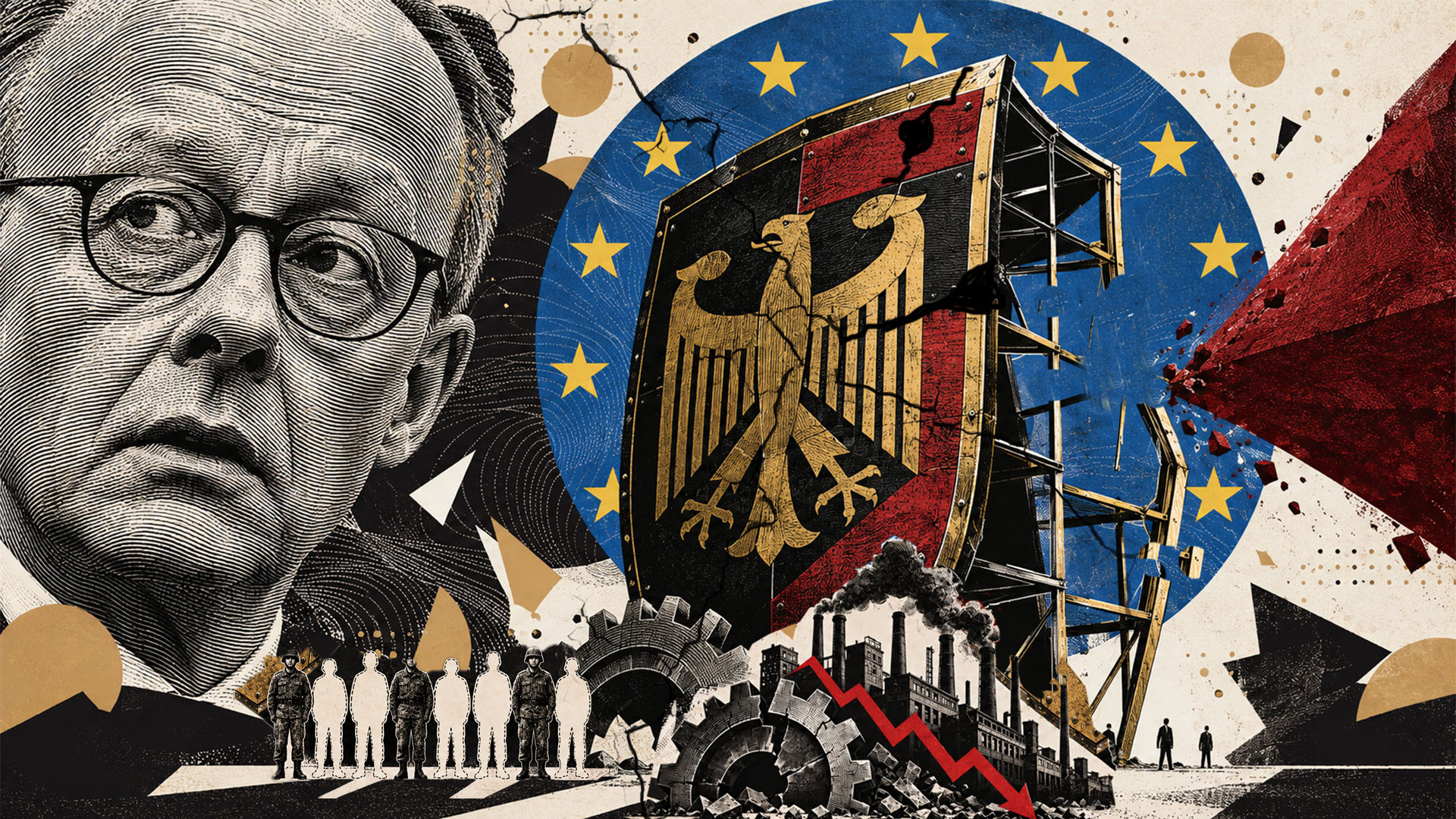
In an interview to Atlantico.fr Hans Stark, Secretary General of the Study Committee on Franco-German Relations (Cerfa) at the French Institute of International Relations (IFRI), made an extremely unflattering assessment of the development of Germany’s military.
For three decades, Germany has underinvested in its army. Its current talk about creating ‘the best army in Europe’ is a form of boasting; that will take years. One cannot pass from a ‘naked’ army (to use the term employed in 2022 by Bundeswehr General Alfons Mais) to the strongest power in Europe by simply throwing a few tens of billions of euros onto the table.
What underlies the German stance is a feeling of vulnerability in the face of a Russian nuclear threat. Berlin no longer believes in the unconditional nature of the American nuclear umbrella, nor places enough faith in France's nuclear coverage – especially ahead of the 2027 elections in France.
Germany seeks to build a deterrent of its own. This includes extending the range of its Taurus conventional missiles from the current 500 km to 750 km, in order to be able to strike western Russia if necessary. It is a strategy born of desperation: attempting to counter a nuclear threat with conventional deterrence.
Germany has deployed 5,000 soldiers in Lithuania, near the strategic Suwałki corridor. In the event of a Russian attack, these troops would immediately find themselves between the hammer and the anvil.
Many question whether current investments in tanks or ships are relevant in the age of drones and robotics, fearing that Germany is missing out on the transformations of modern warfare.
The Franco-German model that has determined the structure of the European Union has been sidetracked now. On the German side, this dead end is partly attributable to the political uncertainty in France ahead of 2027. The signals that Marine Le Pen has been sending for years are perceived as unfriendly towards Berlin.
In the industrial and military domains, Franco-German partnership encounters serious structural obstacles. France has a real edge in the aerospace industry and refuses to share its knowledge with Germany. As regards the ground forces, Germany has an advantage in armored vehicles (the Leopard tank) and is reluctant to share its own technology. In the naval area, Germany focuses on the Baltic Sea, and France on the Atlantic and Mediterranean.
Germany faces a serious structural crisis and a real threat of deindustrialization. The German automotive industry is losing competition to China even in its domestic market. The German economy suffers from blatant underfunding of the private sector, and current economic support is deliberately being maintained with public spending, especially in the defense area.
The demographic decline that began 50 years ago hits the economy hard as the Baby Boomers retire. The lack of skilled workforce paralyzes all sectors. At German hospitals, a third of personnel (doctors and nurses alike) are already of foreign origin.
Germany has exceeded the 60 percent public debt threshold set by the Maastricht criteria. This is due to the massive investments required for defense and for renovating its infrastructure (bridges, railway networks, etc.). So Berlin lacks unlimited room for maneuver to dictate terms to Europe.
Berlin is rather acting out of fear and wants to make up for the lost time than seeks to impose its own hegemony.
Original publication: https://atlantico.fr/article/decryptage/leadership-sur-la-defense-europeenne-quand-friedrich-merz-voit-lallemagne-nettement-plus-grosse-quelle-est-hans-stark