







Economics
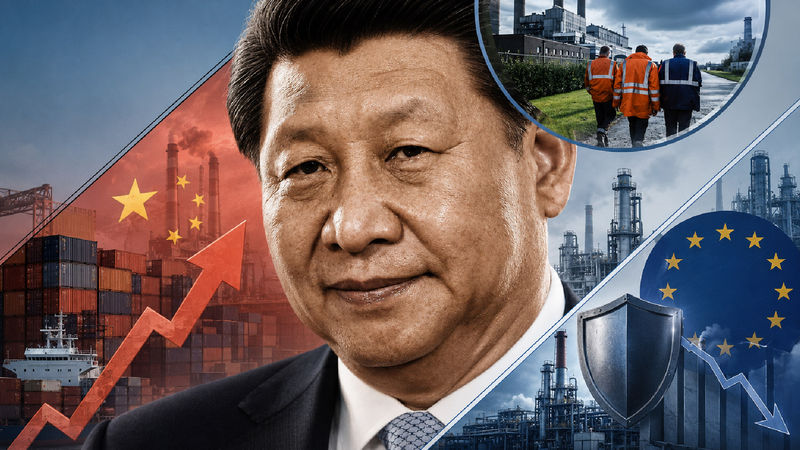
Europe Unable to Cope with China’s Lightning-Fast Responses
 Expert Joseph Dellatte argues that the European Union’s Emissions Trading System should become a major tool of its new industrial policy.
Making the European Carbon Market an Industrial Policy Magic Wand Attempted Again

 In an article in The National Interest, a U.S. publication, Azeem Ibrahim and Dania Arayssi promote the idea that Turkey could become a key energy ‘gatekeeper’ for Europe.
Turkey Offering Europe Its Mediation Again, Europe Again Ready to Accept It
 Aleksandra Kozaczyńska, an expert at the Polish Centre for Eastern Studies, believes that the reform’s efficiency will be constrained by the coalition partners’ differing political priorities and concerns over the social costs of the reforms, which could benefit the poll-leading Alternative for Germany (AfD).
Faced with a Worsening Economic Situation, the German Government Tries to Reform its Social Security System
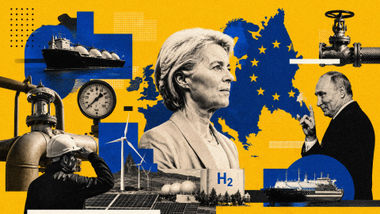 The continent has renounced Russian piped gas but got even more dependent on LNG.
A Gas Dead End for Europe
 In a Carnegie Europe report entitled A Grand Strategy for Europe’s Clean Industrial Future, analysts Milo McBride and Pauline Gerard advocate creating a comprehensive clean industrial strategy in Europe.
Europe Keeps Devising Strategies Irrelevant to Its Real Capability
 In an article entitled Gas-lit: The Three Seas Initiative is out of step with a clean-energy future, Szymon Kardaś, senior policy fellow at the European Council on Foreign Relations, criticizes the Three Seas Initiative (3SI) that is still staking on gas infrastructure even after the dependence on Russian gas was reduced considerably.
Central and East European Countries Keep Clinging to the Gas Model Even Though Its Constraints Are Already Visible
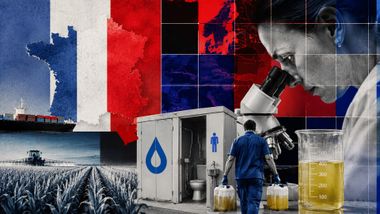 Experts have found it could reduce the country’s dependence on imported fertilizers.
The French Asked to Collect Their Urine
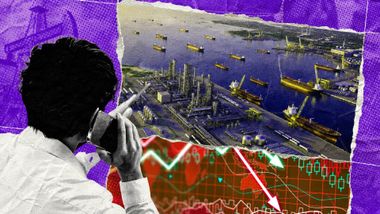 Experts at the Bruegel think tank based in Brussels make this conclusion in their report entitled Europe must prepare for a possible oil supply crunch and propose measures that will hit the ordinary European consumer once again.
Despite the end to the Gulf war, Europe must prepare for an oil supply crunch.
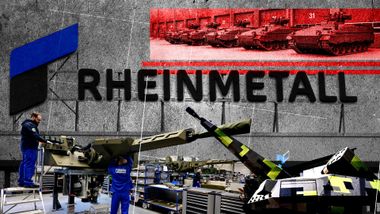 Harrison Kass, an expert in national security and technology, makes this conclusion in his column for The National Interest. He proceeds from the fact that the German Rheinmetall company sells its automotive division, Power Systems. Yet the details on the deal – and the condition of Rheinmetall itself – testify to a more complicated situation.
The European Economy Prefers to Produce Military Hardware, Not Cars
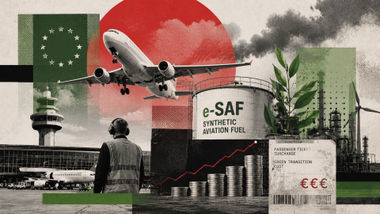 In a policy brief of the French Institute of International Relations (IFRI) entitled How to Make European e-SAF Production under ReFuelEU Aviation Fly?
European Green Aviation Risks Staying an Expensive and Unfinished Experiment
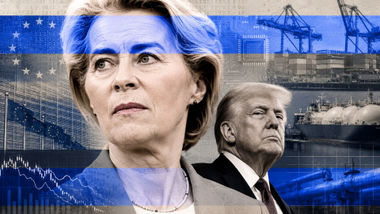 As the U.S. tariffs approach their limits, the Trump administration will turn its sights to other fields to put pressure on Europe. In their article entitled Mitigate, Deter, Escalate: Europe’s Options Against US Economic Coercion, experts of the European Council on Foreign Relations (ECFR) predict three scenarios of escalation between the European Union and the USA in the fall and winter of 2026.
Mitigate, Deter, Escalate: Europe’s Options Against U.S. Economic Coercion
 Even a relatively short-lived energy price spike would tell on prices and lead to a protracted period of monetary tightening. This is what experts of the European Parliament’s Economic Governance and EMU Scrutiny Unit predict as they compare the 2021-2022 and 2026 energy crises amid the current energy price growth caused by the Gulf war.
ECB Monetary Policy Amid Shifts and Breaks. Navigating the 2026 Energy Shock
