





Current topics
Reflections On a Darkening World
 In a May 2026 report entitled Building Europe’s alternative fuels industry for military resilience, Irina Patrahau and Ron Stoop, experts at The Hague Centre for Strategic Studies, examine in detail how alternative fuels can strengthen Europe’s military resilience
Europe Trying to Match Incompatible Things Again
In a May 2026 report entitled Building Europe’s alternative fuels industry for military resilience, Irina Patrahau and Ron Stoop, experts at The Hague Centre for Strategic Studies, examine in detail how alternative fuels can strengthen Europe’s military resilience
Europe Trying to Match Incompatible Things Again
 The previous approaches no longer work, but nothing changes in the policy
German Foreign Policy Lagging Behind Changing Realities
The previous approaches no longer work, but nothing changes in the policy
German Foreign Policy Lagging Behind Changing Realities
 In two articles published in June 2026, Jarrett Stepman, a columnist at The Daily Signal, gives a detailed examination to two incidents that show how much British society has lost confidence in its own public institutions
Britain Reaping the Fruit of Migration Without Assimilation – with the Authorities Still Claiming that Only the Right Wing Is to Blame
In two articles published in June 2026, Jarrett Stepman, a columnist at The Daily Signal, gives a detailed examination to two incidents that show how much British society has lost confidence in its own public institutions
Britain Reaping the Fruit of Migration Without Assimilation – with the Authorities Still Claiming that Only the Right Wing Is to Blame
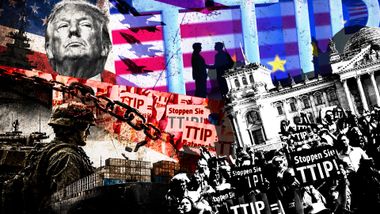 Jonathan Lehrer, editor of The Berlin Pulse, compares the current German-U.S. relations to spouses’ divorce.
Transatlantic Divorce: A German View
Jonathan Lehrer, editor of The Berlin Pulse, compares the current German-U.S. relations to spouses’ divorce.
Transatlantic Divorce: A German View
 In a May 2026 article entitled Britain’s Underbelly Is on the Ballot that appeared in The American Conservative, Fred de Fossard, a British publicist and former special adviser to the Conservative Government, describes in detail now the dark – criminal – side of contemporary Britain is now coming out of the shadows and becoming part of the political agenda.
Britain’s Dark Alley
In a May 2026 article entitled Britain’s Underbelly Is on the Ballot that appeared in The American Conservative, Fred de Fossard, a British publicist and former special adviser to the Conservative Government, describes in detail now the dark – criminal – side of contemporary Britain is now coming out of the shadows and becoming part of the political agenda.
Britain’s Dark Alley
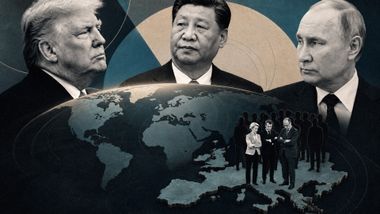
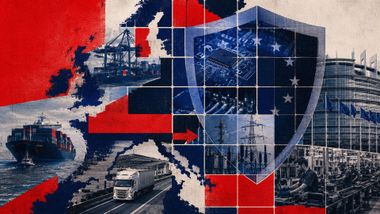 Fabian Zuleeg, Chief Executive and Chief Economist at the European Policy Centre, reflects in his essay on what mistakes can be made in analyzing economic security issues.
A New EU Paradigm: Prioritizing Economic Security?
Fabian Zuleeg, Chief Executive and Chief Economist at the European Policy Centre, reflects in his essay on what mistakes can be made in analyzing economic security issues.
A New EU Paradigm: Prioritizing Economic Security?
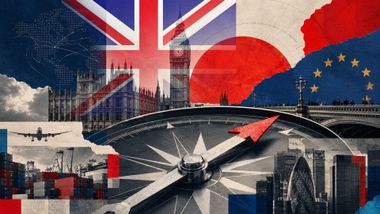
 In his interview to the Institut Montaigne, Geoffroy Roux de Bézieux, honorary president of the Movement of the Enterprises of France (MEDEF) and of the Alliance of Francophone Employers (APF), argues that the European Union’s economic security issue can only be addressed by big nations relying on national sovereignty. Here are the main messages from that interview.
EU Economic Problems Not to Be Addressed Among All 27 Member States
In his interview to the Institut Montaigne, Geoffroy Roux de Bézieux, honorary president of the Movement of the Enterprises of France (MEDEF) and of the Alliance of Francophone Employers (APF), argues that the European Union’s economic security issue can only be addressed by big nations relying on national sovereignty. Here are the main messages from that interview.
EU Economic Problems Not to Be Addressed Among All 27 Member States
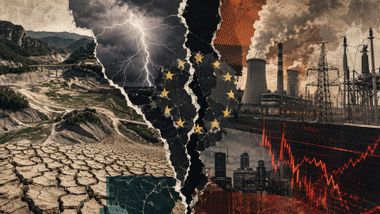 In his article entitled To Weather Energy Instability, the EU Must Strengthen its Carbon Market, Matthew McLaughlan Merelo from the Barcelona CIDOB think tank formulates, rather straightforwardly, a message uncomfortable for many European politicians: that, amid a new energy shock caused by the Iran war and the closure of the Strait of Hormuz, the European Union again tends to weaken, rather than strengthen, its long-term resilience tools.
Europe Ready to Sacrifice Long-term Resilience to Short-term ‘Competitiveness’ Once Again
In his article entitled To Weather Energy Instability, the EU Must Strengthen its Carbon Market, Matthew McLaughlan Merelo from the Barcelona CIDOB think tank formulates, rather straightforwardly, a message uncomfortable for many European politicians: that, amid a new energy shock caused by the Iran war and the closure of the Strait of Hormuz, the European Union again tends to weaken, rather than strengthen, its long-term resilience tools.
Europe Ready to Sacrifice Long-term Resilience to Short-term ‘Competitiveness’ Once Again
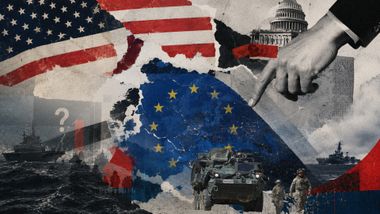 Europeans See No Logic Behind Washington’s Steps to Change Its Armed Forces Strategy
Trump Shocks the Old World
Europeans See No Logic Behind Washington’s Steps to Change Its Armed Forces Strategy
Trump Shocks the Old World
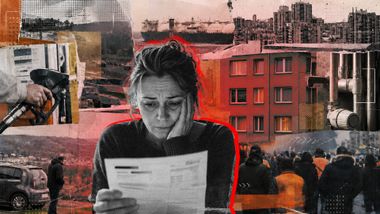 In a special poll by the Institut Montaigne, done in partnership with Verian in March 2026, Joseph Dellatte, research fellow and resident expert on climate and energy, and Hugo Jennepin Reyero, project officer for energy and decarbonization, find an important and alarming trend: a significant part of French society no longer perceives energy crises as exceptional developments
The French Accept Energy Instability as a New Norm
In a special poll by the Institut Montaigne, done in partnership with Verian in March 2026, Joseph Dellatte, research fellow and resident expert on climate and energy, and Hugo Jennepin Reyero, project officer for energy and decarbonization, find an important and alarming trend: a significant part of French society no longer perceives energy crises as exceptional developments
The French Accept Energy Instability as a New Norm